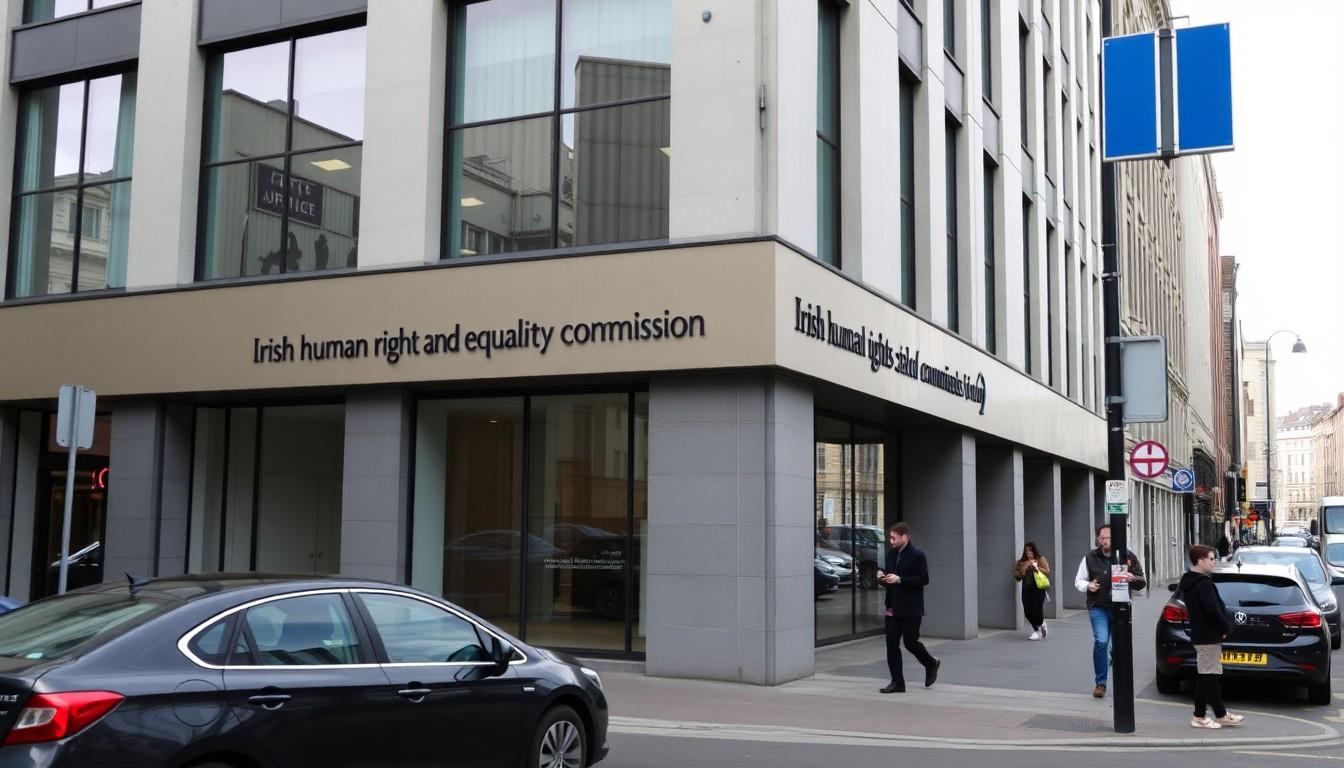
Communities across Ireland are urging the Government to tackle rising hate with a properly funded national action plan. The call, backed by the Irish Human Rights and Equality Commission, comes as LGBTI+ people and other minorities report growing abuse online, in public and within local communities, highlighting why prevention must go beyond policing.
Hate is becoming harder to ignore
The warning is stark: hate is rising in Ireland, and its effects can be felt long before an incident reaches the criminal courts. At a conference in Dublin, community representatives described a spectrum running from everyday slights and intimidation to hate speech and physical attacks.
Liam Herrick, chief commissioner of the Irish Human Rights and Equality Commission, said the trend represented one of the country’s most serious equality and human rights challenges. The organisation fully supports a national plan designed to address both the causes and consequences of hate.
That broader approach matters. According to Irish Government policy, tackling racism requires action across public services, education, communities and institutions, rather than relying on enforcement alone.
Why online abuse is changing the picture
Technology has made it easier for hostile messages to travel quickly, find an audience and follow people into their everyday lives. A comment posted in one place can become a stream of abuse within minutes, leaving targets with little sense of safety or escape.
LGBTI+ organisations say the impact is particularly severe among young people. Belong To chief executive Kieran O’Donovan said 72 per cent of LGBTI+ community members had experienced online or verbal abuse, while one in four had experienced physical abuse.
Those figures help explain why campaigners are asking for prevention, education and community investment alongside stronger responses to crime. Ireland’s recent public initiatives, including the Ireland Against Racism Fund, show how funding can support local organisations, but advocates say a coordinated national framework is still needed.
Public life is changing for LGBTI+ people
For many LGBTI+ people, the issue isn’t only what happens after an attack. It’s the quiet calculation that comes before it: whether to hold a partner’s hand, wear certain clothes or visit a particular area.
Tim Hanley of LGBT Ireland said some people were changing their behaviour because they feared hostility. That kind of self-censorship can shrink public life, even when no formal complaint is made.
There is an uncomfortable contrast here. Ireland has seen major progress, including marriage equality and expanding Pride activity beyond the largest cities. Yet campaigners say legal gains don’t automatically guarantee that people feel safe using the freedoms those laws protect.
What a national plan should include
The proposed plan is intended to tackle the conditions in which hate grows. That could mean better education, support for affected communities, improved reporting routes, investment in local cohesion projects and clearer accountability across public bodies.
It should also connect existing work. Ireland already has a National Action Plan Against Racism and dedicated funding programmes, while political leaders have faced calls to reject inflammatory narratives that can make minorities more vulnerable.
A useful plan would need reliable targets and regular public reporting. Without that, “action” risks becoming a familiar phrase rather than something communities can see in schools, neighbourhoods and public services.
Community support remains a powerful counterforce
The picture isn’t entirely bleak. Kate O’Connell of the National Youth Council of Ireland noted that youth workers were seeing hostile attitudes become normalised in some settings, but also pointed to more rural Pride events and a stronger public display of solidarity.
That matters because social cohesion isn’t built only through national statements. It grows through youth groups, schools, local organisations and ordinary public gestures that make inclusion visible and routine.
The next test is whether Ireland can turn that energy into sustained policy. For people already looking over their shoulders, a properly resourced plan would be more than a political promise. It would be a practical signal that safety and belonging are shared responsibilities.
A national plan could help make equality feel real in everyday life, not just on paper.
Source Reference Map
Story idea inspired by: [1]
Sources by paragraph:
- Paragraph 1: [2], [3]
- Paragraph 2: [2], [4]
- Paragraph 3: [2], [6]
- Paragraph 4: [2], [3]
- Paragraph 5: [2], [5]
- Paragraph 6: [2], [3]
- Paragraph 7: [2], [4]
- Paragraph 8: [2], [5]
- Paragraph 9: [2], [4]
- Paragraph 10: [2], [6]
- Paragraph 11: [2], [3]
- Paragraph 12: [2], [4]
- Paragraph 13: [2], [5]
- Paragraph 14: [2], [6]
- Paragraph 15: [2], [3]