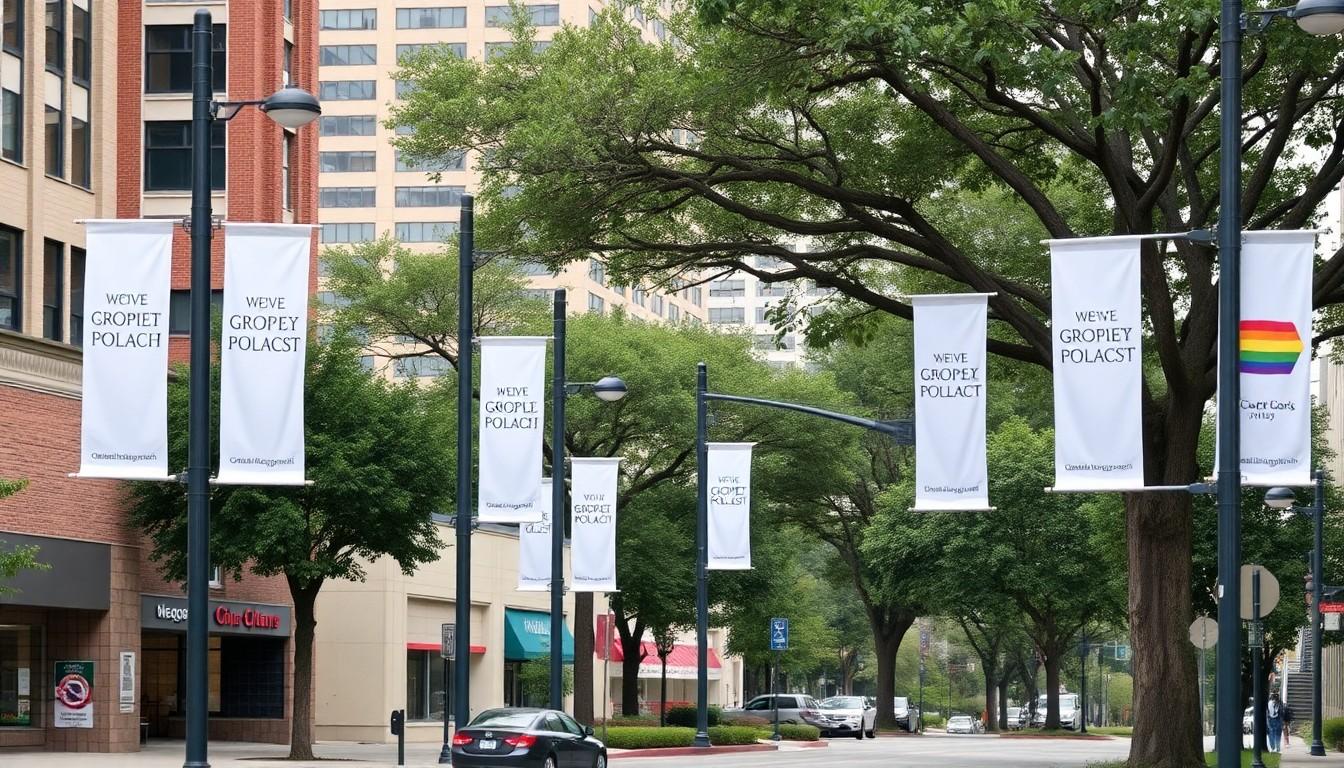
Colourful Pride banners are back along Houston’s lower Westheimer, restoring a much-loved LGBTQ symbol to Montrose. The new displays mark a fresh chapter for the historic queer neighbourhood after the removal of its rainbow crosswalk, while giving residents and visitors a bright, unmistakable reminder that Pride remains part of the area’s identity.
Essential Takeaways
- Ten banners installed: Intersex-Inclusive Pride flags now hang from light poles between Taft Street and Montrose Boulevard.
- Community-led campaign: Pride Houston 365, local advocates and elected officials worked together on the return.
- A familiar symbol restored: The banners revive Montrose’s designated banner district after nearly a year without the rainbow crosswalk.
- Public celebration followed: Leaders gathered at Avondale Promenade Park to mark the installation.
- More than decoration: The displays offer visibility, reassurance and a strong sense of place for Houston’s LGBTQ community.
Pride colour returns to lower Westheimer
There’s something quietly powerful about seeing ten Pride flags appear along a familiar street. On lower Westheimer in Montrose, the bright banners now line the stretch between Taft Street and Montrose Boulevard, bringing colour and recognition back to one of Houston’s best-known LGBTQ neighbourhoods.
The Intersex-Inclusive Pride flags were installed on 25 September, ahead of a community gathering at Avondale Promenade Park four days later. Local coverage from Click2Houston and the Houston Chronicle described the project as a return of a highly visible civic symbol, rather than simply a seasonal decoration.
Why the banner district matters
Montrose has long been associated with Houston’s LGBTQ history, nightlife and community life. Its banner district helped make that identity visible to anyone walking, driving or cycling through the area, so the return carries emotional weight beyond the fabric and metalwork.
The installation follows the removal of the neighbourhood’s rainbow crosswalk nearly a year earlier. Axios reported that the gap had become part of a wider conversation about how public spaces represent LGBTQ residents, while the Houston Press highlighted the significance of reviving the banner district itself.
A broad coalition brought the display back
The effort was led by Jack Valinski, Pride Houston 365 president Kerry-Ann Morrison and Harris County Attorney Abbie Kamin. Council Member Joe Panzarella and Mayor John Whitmire also supported the project, bringing community organising and city-level backing together.
That combination matters. Public symbols often take more than good intentions to restore, requiring permits, funding, coordination and political support. Reporting from the Houston Chronicle and GayXW linked the installation to that broader collaboration, showing how local advocacy can turn a familiar idea into something visible on the street.
What the new Pride flags represent
The choice of Intersex-Inclusive Pride flags is significant, as the design recognises a wider range of LGBTQ identities within one public display. For regulars on Westheimer, the effect is immediate: a softer, brighter streetscape, but also a clear signal that inclusion is being stated rather than assumed.
Houston’s mayor has also been part of the discussion around funding and public support for the displays. The Houston Chronicle’s political coverage placed the project within the city’s ongoing debate over representation, civic spending and the role of public spaces in reflecting the communities that use them.
Montrose gets a renewed sense of place
The banners won’t solve every challenge facing Houston’s LGBTQ community, of course. But they do something practical and human: they make a historic neighbourhood recognisable, welcoming and visibly connected to its own story.
For visitors, the advice is simple. Look up as you travel along lower Westheimer, take in the full run of flags and remember that landmarks can be both symbolic and everyday. As the Houston Press and Click2Houston coverage suggests, sometimes a street feels different because one small but meaningful detail has returned.
The result is a modest public installation with a sizeable emotional footprint. In Montrose, colour is back in the air.
A visible welcome can still make a powerful difference.
Source Reference Map
Story idea inspired by: [1]
Sources by paragraph: