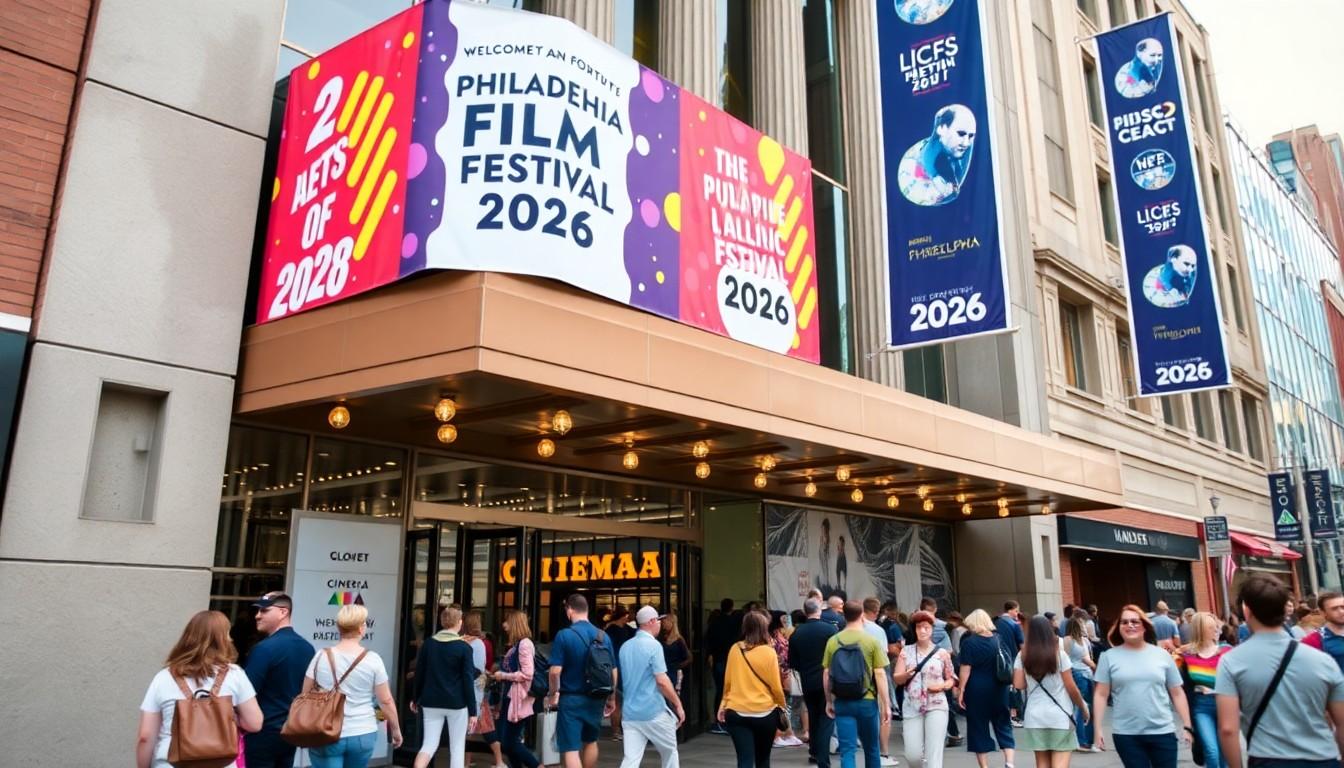
Film fans are heading to Philadelphia from 15 to 25 October for the 35th Philadelphia Film Festival, where more than 100 features, shorts and documentaries will screen across the city. The standout LGBTQ+ films range from bold international dramas to intimate coming-of-age stories, making this a particularly rich year for queer cinema.
Essential takeaways
- A packed programme: The festival runs for 10 days and includes more than 100 films across Philadelphia venues.
- Big names and fresh voices: Pedro Almodóvar, Andrew Haigh and Lukas Dhont appear alongside emerging filmmakers.
- Queer stories come in many forms: Expect dramas about grief, family, identity, desire, community and political resistance.
- Several films are emotionally intense: Bring tissues for the moving animated feature Tangles.
- Tickets and listings: The official Filmadelphia website has the latest programme details and booking information.
Philadelphia's 2026 festival has queer cinema at its heart
The Philadelphia Film Festival has reached its 35th year with a programme that feels both expansive and sharply attuned to the moment. Across cinemas in the city, audiences can move from glossy international filmmaking to quieter discoveries by directors still finding their voice.
The LGBTQ+ selection is especially varied. There are stories of secret relationships, complicated families, trans and third-gender communities, political pressure and the ordinary, sometimes awkward business of falling in love. In other words, this isn't a single-issue strand. It's a broad portrait of queer life, with plenty of room for humour, melancholy and surprise.
The festival's official programme confirms a schedule running from 15 to 25 October, with tickets and screening information available through Filmadelphia. With so much on offer, a little planning will save filmgoers from making impossible choices at the last minute.
Almodóvar, Andrew Scott and major festival names
One of the most anticipated titles is Bitter Christmas, Pedro Almodóvar's self-aware drama about artistic inspiration, pain and the slippery boundary between lived experience and storytelling. Its vivid visual style and layered structure should appeal to viewers who enjoy cinema that knows it's cinema, even if its narrative games may divide audiences.
Other high-profile titles include Elsinore, starring Andrew Scott as the late actor Ian Charleston, and Coward, from out gay writer-director Lukas Dhont. The latter explores a relationship between two soldiers during the First World War, promising the kind of restrained emotional tension that stays with you after the credits.
Andrew Haigh's A Long Winter, adapted from a story by Colm Tóibín, adds another period drama to the line-up, while Jordan Firstman's Club Kid follows a gay man discovering that he's a father. The festival's wider 2026 line-up also includes films associated with directors such as Danny Boyle and Martin McDonagh, according to coverage by PhillyVoice.
Five films likely to spark the biggest conversations
For viewers looking beyond established names, La Gradiva sounds like a quietly absorbing discovery. Marine Atlan's feature debut unfolds during a school trip to Naples, following Toni, his secretly loved best friend James and the outsider Suzanne. Its deliberately unhurried pace may not suit everyone, but for audiences who enjoy atmosphere and finely observed conversation, the long running time could feel like a genuine invitation to linger.
Tangles takes a more openly heartbreaking route. This black-and-white animated adaptation of Sarah Leavitt's graphic memoir follows Sarah as her mother develops Alzheimer's and caregiving begins to reshape the family's future. The imagery turns emotional confusion into something tangible, and the film's tenderness comes with a practical warning: tissues are not optional.
There is also Clarissa, a contemporary Nigerian reworking of Virginia Woolf's Mrs Dalloway. Set in Lagos, it retains Woolf's interest in memory, desire and inner life while bringing those themes into a very different social and political landscape. Sophie Okonedo leads a cast that also includes Ayo Edebiri, whose queer character forms part of Clarissa's emotional history.
Mouse is another grief-centred drama, this time about a teenager mourning her best friend. A new relationship, an unexpected bond with the friend's mother and a musical tribute help Minnie find a way through loss. It sounds emotionally direct rather than showy, which can be exactly what makes a coming-of-age film land.
Emerging filmmakers bring sharper, riskier stories
The festival's newer voices offer some of its most distinctive viewing. In Test, Brock Yurich plays Eddie, a bodybuilder chasing professional status while dealing with an alcoholic mother, an intense coaching relationship and feelings he can't neatly control. The contrast between Eddie's visibly powerful body and his private vulnerability gives the film a striking emotional hook.
Canadian mystery Labrador - Autopsy of Silence takes a slower, more atmospheric approach. Set aboard a freighter, it follows Alupa after his secret partner Alex is killed and suspicion falls on him. The mystery matters, but the film's real weight appears to come from the loneliness and uncertainty left behind by Alex's death.
In Nepal-set Elephants in the Fog, Pirati is a third-gender community member being considered for leadership while also navigating love, family conflict and the disappearance of a younger relative. The story brings questions of transphobia, belonging and communal responsibility into a setting rarely represented on screen, which makes it one of the programme's more culturally revealing choices.
These films may not have the immediate recognition of a major director's latest release, but that's part of the festival appeal. A good discovery often arrives without much noise, then follows you home.
Documentaries turn the spotlight on resistance
First They Came for My College examines the hostile takeover of New College of Florida, a liberal arts institution with a substantial queer and trans student population. The documentary follows board meetings, staff and department changes, and students and parents pushing back against a political campaign to reshape the school.
It's a particularly timely inclusion because it connects campus politics with broader arguments about diversity, education and who gets to feel safe in public institutions. The subject is angry by nature, but the film's value lies in documenting how resistance works in practice, not simply announcing that it exists.
Alongside it, Time Warp follows a local production of The Rocky Horror Picture Show in Rock Springs, Wyoming. With a queer theatre director and a cast of LGBTQ+ performers and allies, the production becomes more than a fun night out. It becomes a temporary sanctuary, and a visible challenge to the idea that queer people should make themselves smaller in conservative communities.
That pairing gives the festival a welcome breadth. One documentary looks at institutional power; the other finds courage in performance, friendship and a touch of theatrical glitter.
How to plan your Philadelphia Film Festival visit
Start with the official Filmadelphia listings, then build a shortlist rather than trying to see everything. The most popular screenings are likely to include the major-name titles, while the newer international films may offer more flexibility, depending on venue and timing.
If you're choosing by mood, go for Tangles or Mouse when you're prepared for an emotional afternoon. Pick Bitter Christmas for colourful, self-reflexive filmmaking, La Gradiva for patient character work, and Test for something more physically intense and psychologically charged.
It also pays to leave room for one wildcard. Festivals are at their best when a film you barely recognise turns out to be the one you can't stop discussing afterwards. Philadelphia's 2026 queer selection looks well placed to provide several of those moments.
With major premieres, bold new voices and films that make room for joy as well as struggle, this year's festival is well worth exploring.
Source Reference Map
Story idea inspired by: [1]
Sources by paragraph:
- Paragraph 1: [2], [4]
- Paragraph 2: [3], [5]
- Paragraph 3: [2], [6]
- Paragraph 4: [4], [7]
- Paragraph 5: [2], [3]
- Paragraph 6: [4], [5]
- Paragraph 7: [6], [7]
- Paragraph 8: [2], [4]
- Paragraph 9: [3], [5]
- Paragraph 10: [6], [7]
- Paragraph 11: [2], [4]
- Paragraph 12: [3], [6]
- Paragraph 13: [5], [7]
- Paragraph 14: [2], [3]
- Paragraph 15: [4], [6]
- Paragraph 16: [5], [7]
- Paragraph 17: [2], [4]
- Paragraph 18: [3], [5]
- Paragraph 19: [6], [7]
- Paragraph 20: [2], [4]
- Paragraph 21: [3], [6]
- Paragraph 22: [5], [7]
- Paragraph 23: [2], [3]