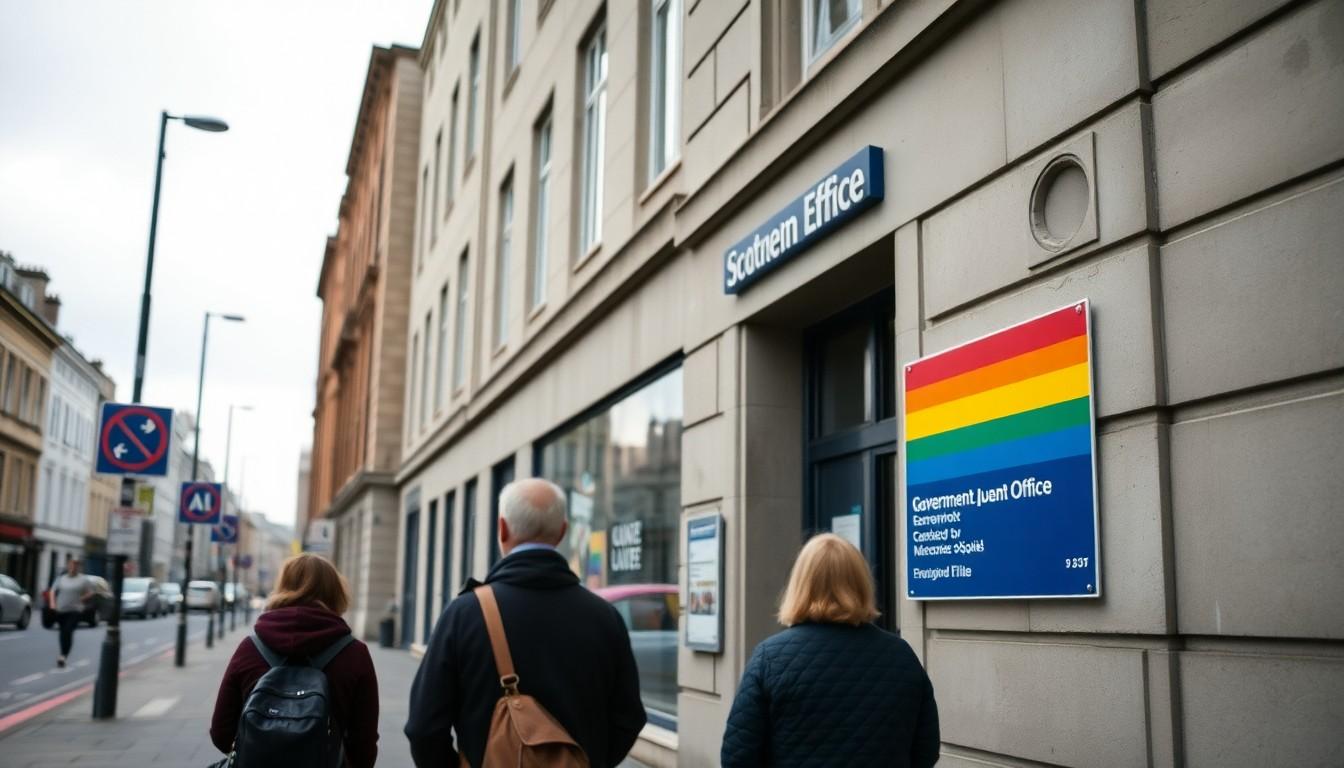
Scottish ministers face renewed scrutiny over plans to ban conversion therapy, after Christian campaigners questioned whether consultation has been broad enough. The dispute centres on who gets heard, whether Westminster should take responsibility, and how public money has been used to support people reporting conversion practices in Scotland.
Essential Takeaways
- Christians want a fuller hearing: The Christian Institute says repeated meeting requests received limited responses.
- Westminster may take the lead: Scotland has indicated it could support UK-wide legislation rather than revive its own shelved plans.
- Judicial review is part of the argument: Critics say responsibility may be moving north to Westminster to reduce political and legal exposure.
- Helpline spending is under scrutiny: Government records show public funding for a service whose reported call figures were very low.
- The policy remains sensitive: Supporters focus on protection from harm, while critics fear legitimate prayer, counselling and pastoral care could be caught.
Consultation is at the heart of the row
The sharpest criticism isn't about whether people should be protected from coercive or abusive practices. It's about whether Scotland's proposed conversion therapy ban is being shaped through a sufficiently broad conversation.
The Christian Institute says Scottish Equalities Minister Simita Kumar told a Holyrood committee that officials regularly meet LGBTQI stakeholders. Joanna Timm, a spokeswoman for the institute's Let Us Pray campaign, has argued that Christian groups haven't received comparable access, according to Christian Today.
That imbalance matters because the legislation could affect churches, counsellors and faith-based organisations as well as specialist support services. A policy can have a worthy aim and still need careful safeguards, especially when words such as "conversion" and "harm" require precise legal definitions.
Why Westminster is now in the frame
Scotland previously developed its own proposals, but those plans were later put aside. The Scottish Government has instead indicated that it wants to be included in legislation brought forward from Westminster, a move that changes both the political route and the accountability debate.
Government material describes the wider policy as an effort to end practices intended to change or suppress a person's sexual orientation or gender identity. The stated objective is protection from damaging conduct, rather than interference with ordinary religious belief or voluntary support, according to Scottish Government policy documents.
Critics, however, see the constitutional route as significant. Out For Scotland has said ministers suggested Westminster legislation could reduce the likelihood of judicial review and take some political pressure away from Holyrood. That claim has added an extra layer to an already charged discussion: who writes the rules, who answers for them, and who can challenge them?
A promising policy still needs precise boundaries
The Scottish Government's consultation response sets out the case for action while acknowledging the complexity of distinguishing abusive practices from lawful conversations about faith, identity and personal wellbeing. That distinction is where much of the public debate is likely to settle.
For churches and families, the practical question is simple enough: could a ban unintentionally criminalise prayer, preaching or a person's decision to seek advice? For campaigners supporting the ban, the concern runs in the opposite direction: could broad exemptions leave people exposed to pressure disguised as counselling?
Clear wording will be crucial. The safest framework should focus on coercion, threats, deception and serious psychological or physical harm, while making room for people to discuss beliefs and make voluntary choices. Nobody wants a law that looks reassuring on paper but creates confusion in a counselling room.
The helpline figures are adding pressure
Separate criticism has focused on a publicly funded helpline for people affected by conversion practices. Freedom of information records published by the Scottish Government provide the official paper trail behind the spending and service arrangements.
The Christian Institute says almost £72,000 was paid to LGBT Health and Wellbeing to operate the helpline. It also highlighted a very small number of calls reported in the final quarter of 2025, with four calls cited in the related campaign material. The group argues that this raises questions about value for money, although a low call count alone can't show whether a service is unnecessary.
Helplines can be valuable even when demand is uneven. They may offer specialist support, reassurance and a discreet first step for people who aren't ready to approach public services. Still, taxpayers are entitled to ask how contracts are assessed, how outcomes are measured and whether funding matches actual use.
What happens next?
The Scottish Government's published policy work shows that conversion practices remain an active issue, even though the route to legislation has changed. The next stage will depend on how Westminster handles the proposal and whether ministers address concerns about consultation before the legal text is finalised.
For readers trying to make sense of the dispute, the useful test is not which side produces the loudest headline. It's whether the final rules protect people from coercion while preserving lawful religious expression, voluntary counselling and open discussion. That balance won't be easy, but it will determine whether the ban earns public confidence.
The argument now needs less political theatre and more transparent engagement.
Source Reference Map
Story idea inspired by: [1]
Sources by paragraph:
- Paragraph 1: [4], [5]
- Paragraph 2: [1], [7]
- Paragraph 3: [5], [7]
- Paragraph 4: [4], [5]
- Paragraph 5: [1], [4]
- Paragraph 6: [5], [7]
- Paragraph 7: [4], [5]
- Paragraph 8: [5], [7]
- Paragraph 9: [3], [6]
- Paragraph 10: [2], [3]
- Paragraph 11: [3], [6]
- Paragraph 12: [4], [5]
- Paragraph 13: [5], [7]
- Paragraph 14: [4], [7]