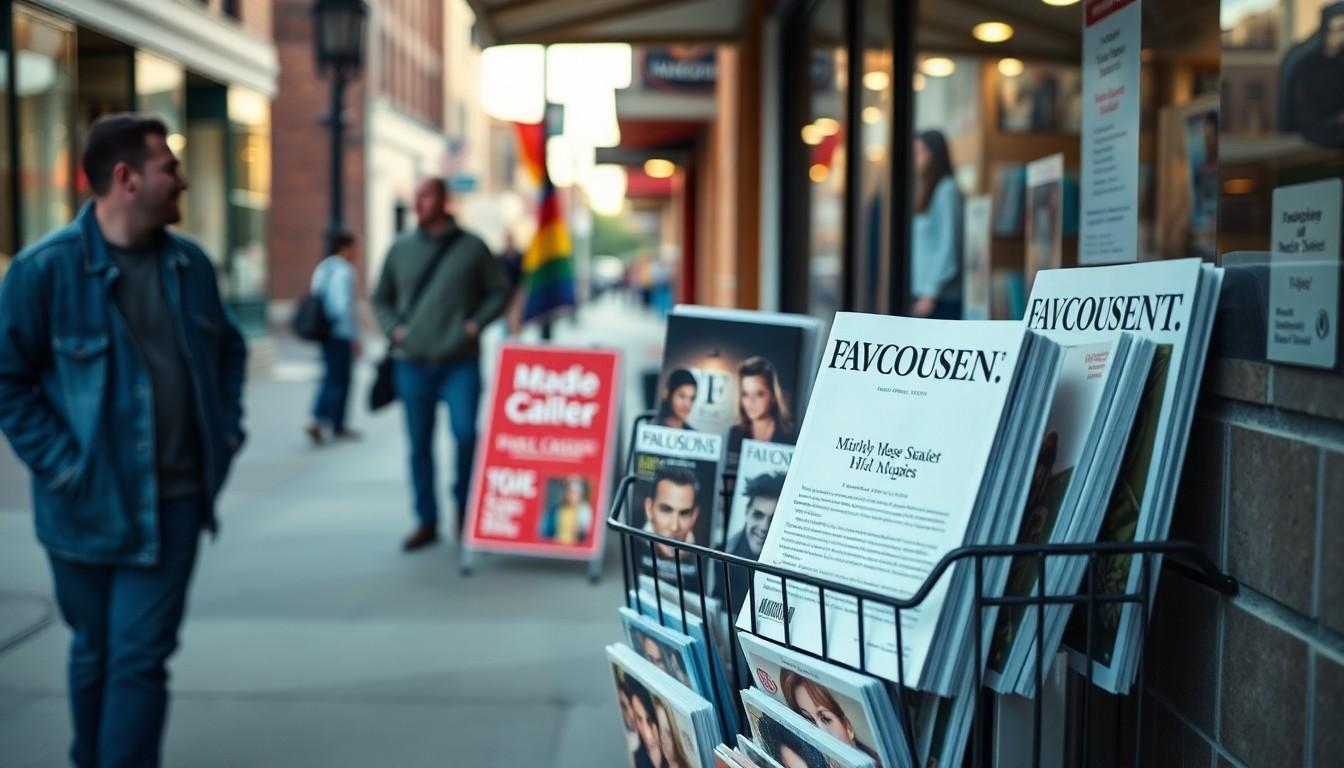
Readers and advertisers are rallying around Q Minnesota, a new free print and digital magazine created to serve the state’s LGBTQ+ community after Lavender ended its 31-year run. Launched in the Twin Cities, the colourful publication brings local stories, culture and community news into cafes, libraries and other welcoming public spaces.
Essential Takeaways
- A quick response: Q Minnesota’s first issue arrived within months of Lavender’s closure.
- Free and accessible: Readers can find it online and at community-minded venues across Minnesota.
- Local by design: Coverage includes artists, sport, identity and access to gender-affirming care.
- Built for continuity: Monthly editions are planned, alongside an annual guide issue.
- Advertiser support matters: Former Lavender advertisers helped restore a visible route into the community.
A magazine fills the gap Lavender left behind
The first issue of Q Minnesota has the satisfying heft of a proper magazine, with glossy colour pages, bold photography and illustrations that invite you to linger. That physical presence is central to the project, not a nostalgic extra.
When Lavender closed after more than three decades, readers lost more than a publication. They lost a familiar object that could be picked up in public, shared with friends and discovered by someone who might not yet have found their community. Q Minnesota’s founders saw that absence almost immediately. Bring Me The News reported that Nell Gelhaus and editor-in-chief Andy Lien began discussing a replacement during the summer, with the idea moving rapidly from conversation to print.
That speed was deliberate. According to CBS News Minnesota, the new title emerged at a moment when organisers felt local LGBTQ+ journalism remained urgently needed, rather than something that could be put on hold while the market settled.
Why print still matters to LGBTQ+ readers
Digital publishing is fast, flexible and easy to distribute. Still, a free magazine on a cafe table has a different kind of power. It can reach someone who isn't searching for LGBTQ+ news, and it can quietly signal that they belong in the room.
Lien, who previously worked at Lavender, told Bring Me The News that many readers have a personal memory of discovering the earlier publication. That emotional connection helps explain why Q Minnesota has chosen a full print edition alongside its online presence.
The approach also reflects a wider publishing lesson: community media isn't only about delivering information. It creates rituals, meeting points and keepsakes. The smooth cover, bright pages and recognisable local voices all make the publication feel tangible in a way a social post rarely does.
Local stories keep the mission grounded
Q Minnesota's opening issue covers a broad mix of subjects, including Minnesota artists, the Minnesota Gay Flag Football League and the uncertainty surrounding gender-affirming care. The range is important because LGBTQ+ life can't be reduced to one political storyline or a single cultural scene.
The magazine's own website presents the project as a community publication with a strong local focus, while its editorial standards set out expectations around fairness, independence and responsible reporting. That framework gives the title room to be lively and welcoming without losing journalistic purpose.
Coverage of sport, creativity and everyday life matters just as much as coverage of policy. A reader should be able to see both the pressure facing the community and the ordinary joys that make it worth celebrating.
Advertisers helped make the magazine free
A free publication still has to pay for design, printing, distribution and reporting. Q Minnesota has leaned on advertising to keep copies available without a cover price, bringing in Barry Leavitt, a former Lavender sales manager, to help rebuild those relationships.
The commercial case is clear. When Lavender closed, businesses that had relied on it also lost a direct way to reach LGBTQ+ customers and readers. Bring Me The News reported that several advertisers contacted Leavitt soon after the closure, helping give the new magazine an early foundation.
That partnership is more than a funding arrangement. It shows how community publishing works best when readers, businesses and journalists all see value in the same public space. A welcoming magazine rack can be good journalism, useful local advertising and a small act of visibility at once.
What readers can expect next
The launch issue is only the beginning. Q Minnesota plans to publish monthly, with a larger Q guide scheduled for January. That regular rhythm should help it become part of readers' routines rather than a one-off response to Lavender's disappearance.
The title also arrives with a clear sense of political and social purpose. As MSP Magazine noted in its coverage of the project, the new publication is shaped by the belief that progress isn't guaranteed and that different parts of the LGBTQ+ community remain connected.
For readers, the practical advice is simple: look for copies in cafes, libraries and community hubs, or read the magazine online. Pick up a spare for a friend, too. Sometimes the most useful piece of local media is the one someone discovers by chance.
Q Minnesota is betting that visibility still works best when it can be held, shared and found in the wild.
Source Reference Map
Story idea inspired by: [1]
Sources by paragraph:
- Paragraph 1: [2], [3]
- Paragraph 2: [4], [5]
- Paragraph 3: [3], [6]
- Paragraph 4: [2], [7]
- Paragraph 5: [5], [7]
- Paragraph 6: [1], [3]
- Paragraph 7: [1], [6]
- Paragraph 8: [2], [7]
- Paragraph 9: [5], [7]
- Paragraph 10: [1], [2]
- Paragraph 11: [1], [3]
- Paragraph 12: [2], [6]
- Paragraph 13: [1], [5]
- Paragraph 14: [2], [7]
- Paragraph 15: [2], [5]