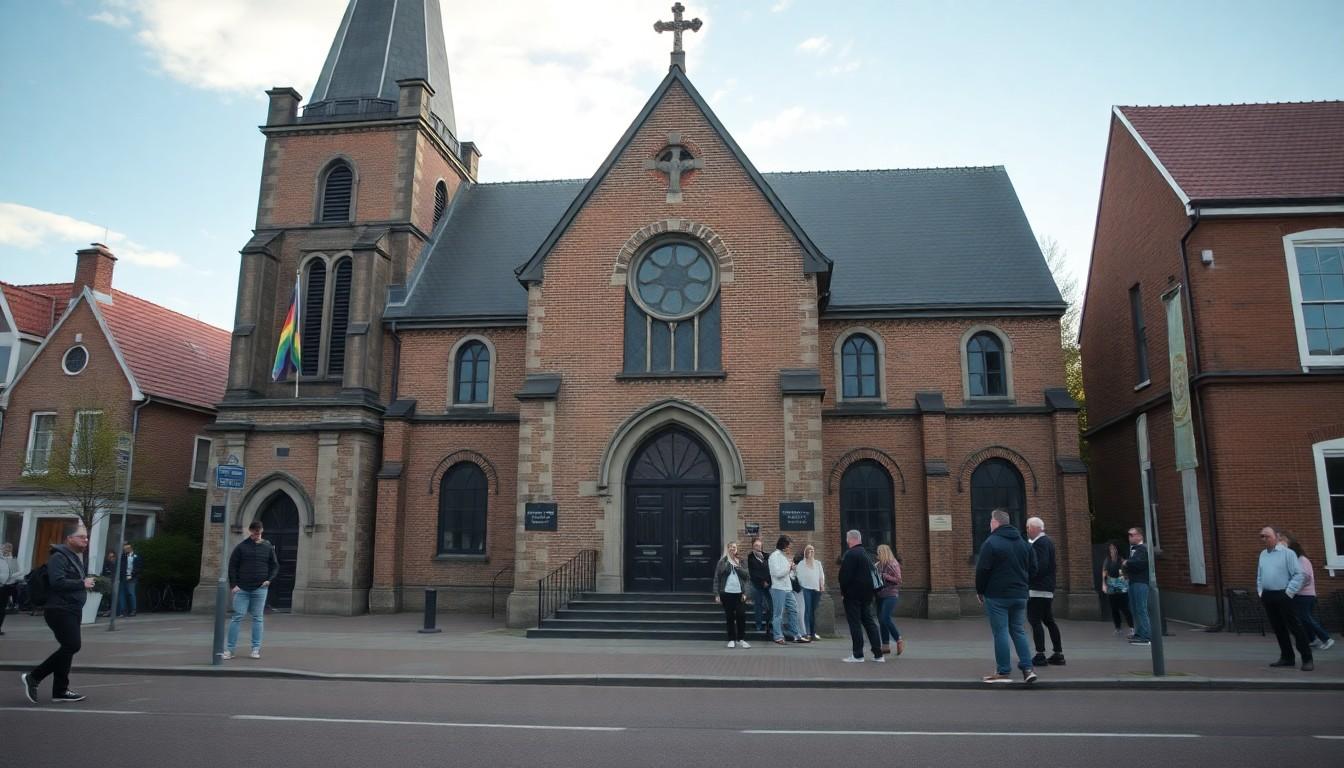
Residents in Wezep are preparing to raise rainbow flags ahead of Coming Out Day, turning a familiar church setting into the focus of a wider Dutch argument about LGBT+ visibility, local government and public belonging. The gesture comes after Oldebroek ended its dedicated LGBT+ policy and stopped flying the flag at its town hall.
Essential Takeaways
- Public show of support: Rainbow flags are due to be raised at the Kruiskerk in Wezep before Coming Out Day.
- Mayor attending: Oldebroek mayor Adriaan Hoogendoorn is expected to be present, according to local reporting.
- Policy change: The municipality has scrapped its specific LGBT+ policy and ended rainbow-flag displays at the town hall.
- Community response: Organisers say 175 free rainbow flags have been requested by residents.
- National criticism: The row has attracted criticism from senior Dutch politicians, who say the issue is about inclusion rather than party politics.
A rainbow-coloured flashpoint in Wezep
A handful of bright flags will carry considerable political weight when they're raised at the Kruiskerk in Wezep. The ceremony is linked to Coming Out Day, but it's also a direct response to Oldebroek's decision to withdraw its dedicated LGBT+ policy and stop flying a rainbow flag from municipal buildings.
The setting matters. A church is not a neutral backdrop in a debate involving Christian parties, LGBT+ rights and public symbols. For supporters, the flags offer reassurance and visibility. For opponents, they represent a political message they don't want the municipality to endorse. Local coverage has framed the event as both a celebration and a protest. (RD; Hart van Nederland)
Mayor Adriaan Hoogendoorn's planned attendance adds another layer. Organiser Kjeld Mooi has welcomed the mayor's presence, particularly because Mooi has spent months challenging the council's approach to LGBT+ policy and rainbow-flag displays. (RD; Huis aan Huis Oldebroek)
Why Oldebroek stopped flying the flag
The change followed a political shift in the municipality. Christian Verbond Oldebroek won a strong mandate in the latest council elections and now governs with the SGP and Algemeen Belang Oldebroek. The new coalition subsequently backed the removal of the municipality's specific LGBT+ policy and the town hall flag display. (Huis aan Huis Oldebroek; Hulzmedia)
Wethouder Tom de Nooijer has been a prominent voice behind the decision. He has argued that flying the rainbow flag unfairly suggests local residents are intolerant, while previously describing the symbol as incompatible with his Christian outlook. Those comments have made the policy change far more visible than a routine council decision might otherwise have been. (RTL Nieuws; RD)
The disagreement is really about what public institutions should communicate. One side sees an official rainbow flag as recognition and protection for LGBT+ residents. The other sees it as an ideological statement. That tension is why a single piece of fabric has become such a potent local symbol.
Residents answer with their own flags
The community response has been practical as well as political. Oldebroekvooruit, the initiative led by Mooi, has offered free rainbow flags to residents, with 175 reportedly requested in recent days. That's a striking indication that the council's decision hasn't ended the conversation; it may have moved it from the town hall to front gardens, windows and community spaces. (Hart van Nederland; RTL Nieuws)
There is something quietly effective about that approach. A municipal ban or policy change can control what appears on official buildings, but it's much harder to control how residents express solidarity in their own neighbourhoods. If the flags appear across Wezep, the debate will become more personal and visible.
For anyone following similar disputes, the useful distinction is between an official government display and private expression. The first reflects an institution's stated position. The second shows how residents themselves feel, and those views can be much more varied than a council vote suggests.
National politicians weigh in
The controversy has also travelled beyond Gelderland. Former state secretary Eric van der Burg criticised a social-media image posted by De Nooijer that showed a prohibition sign over a rainbow flag. The intervention suggested that national politicians viewed the post as more than a local cultural disagreement. (RD)
Prime Minister Rob Jetten also questioned why a flag in bright, cheerful colours had become so difficult for the governing party. His comment captured the frustration of supporters who see the rainbow flag as a straightforward sign of acceptance rather than a provocation. (ND; RTL Nieuws)
That national attention can cut both ways. It gives LGBT+ residents and campaigners a larger platform, but it can also harden local positions. What began as a municipal policy decision is now part of a broader Dutch argument about religious conviction, equal treatment and the role of symbolic gestures in public life.
The next test is what happens after the ceremony
The flag-raising will provide a visible moment of unity, but it won't settle the underlying disagreement. The council's policy has changed, and the coalition appears committed to its position. Meanwhile, campaigners have shown that support for LGBT+ visibility remains active in the community. (Huis aan Huis Oldebroek; Hulzmedia)
The most revealing outcome may come afterwards. Will the flags remain a one-day expression around Coming Out Day, or will residents keep them flying as a response to the municipality's stance? Either way, Oldebroek has become a reminder that local symbols can carry national significance.
A local flag debate has become a very public conversation about who feels seen.
Source Reference Map
Story idea inspired by: [1]
Sources by paragraph: