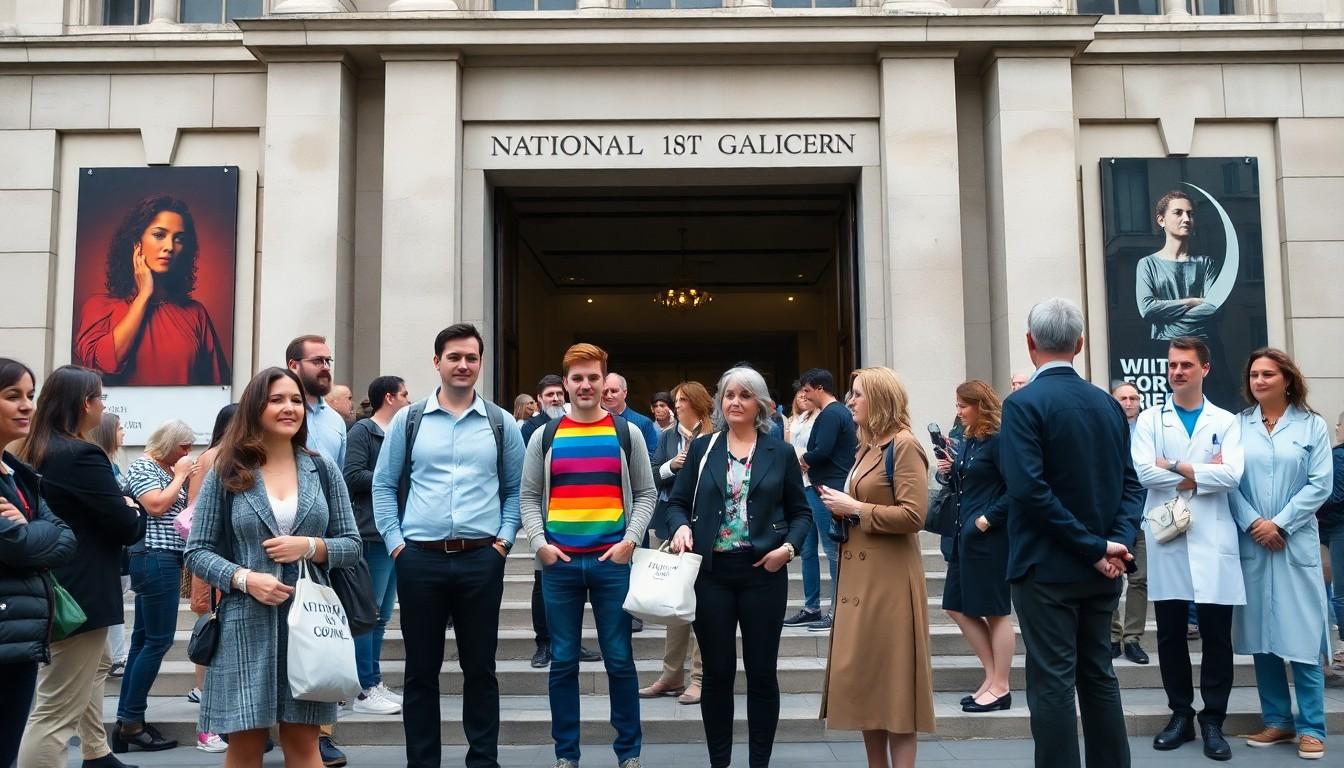
Visitors to London’s National Portrait Gallery will soon step into Tim Walker’s queer visual world, where fantasy meets lived history. Opening on 9 October 2026, Fairyland: Love and Legends brings together 250 portraits created over five years, offering a vivid, tender record of the people and stories Walker once needed to see.
Essential Takeaways
- Major new exhibition: Fairyland: Love and Legends runs from 9 October 2026 to 7 February 2027 at the National Portrait Gallery.
- A five-year project: The show features 250 specially made portraits spanning activists, artists, performers, healthcare workers and survivors.
- Personal inspiration: Walker connected the project to a gay-rights demonstration held in London on the day he was born.
- Fantasy with feeling: His theatrical style sits alongside stories shaped by homophobia, the AIDS crisis and queer resistance.
- A broad portrait of community: Famous faces appear alongside people whose work and care have often gone less recognised.
Tim Walker turns his lens towards the queer world
Tim Walker’s photographs have long been known for their dreamlike sets, elaborate styling and storybook drama. In Fairyland: Love and Legends, that visual language becomes more intimate, carrying the emotional weight of a community rather than simply creating an eye-catching scene.
The National Portrait Gallery describes the exhibition as a major new photography project developed over five years. Its 250 portraits bring together people connected by queer history, creativity, care and survival, making the show feel less like a celebrity display and more like a living family album.
Walker’s work has already included striking portraits of figures such as Lady Gaga and Frank Ocean. This time, however, the focus is on a wider constellation of lives, including people whose influence may be familiar within queer communities but rarely receives the same public spotlight.
A birthday coincidence gave the project its starting point
The exhibition’s emotional spark came from an unlikely discovery. Walker learned that a London demonstration connected to gay rights took place on the day he was born in 1970, creating a direct link between his own life and an earlier generation’s fight for visibility and change.
That detail gives the project a powerful sense of inheritance. The people pictured aren’t presented as distant historical figures, but as those who helped make later queer lives more possible, even when progress was fragile and hard won.
According to the National Portrait Gallery’s exhibition information, the project also reflects Walker’s memories of growing up gay amid school homophobia and the AIDS crisis. The result is imaginative, but it isn’t weightless. Beneath the feathers, colour and theatrical staging sits a clear understanding of what it took to survive and be seen.
Why Fairyland matters beyond the famous names
One of the exhibition’s strengths is its range. Activists and performers appear alongside nurses, artists and people who lived through the HIV/AIDS epidemic, broadening the story beyond the most recognisable cultural figures.
That balance matters because queer history is often remembered through its brightest public stars, while the quieter work of care can disappear. By placing healthcare workers and survivors within the same visual conversation as musicians and performers, Walker acknowledges the networks that kept communities alive.
The National Portrait Gallery’s announcement positions the exhibition as both celebratory and reflective. It’s a generous approach, and a timely one: the history of queer life is made not only by those on stage, but also by those organising, nursing, grieving, teaching and showing up.
Ian McKellen’s portrait brings the message into focus
Among the portraits is Ian McKellen’s Love, an image built around hands spelling out its title. It’s an unusually direct gesture from a project that often works through symbolism, and that simplicity gives the portrait its force.
The image also captures the warmth running through the exhibition. Walker’s fantasy isn’t used to hide reality; instead, it gives affection, identity and memory a larger stage. The effect is less polished distance and more emotional invitation.
Art Fund lists Fairyland: Love and Legends among London’s notable upcoming exhibitions, while the National Portrait Gallery presents it as a substantial new chapter in Walker’s practice. For visitors, that combination of spectacle and sincerity could make the show especially memorable.
What visitors can expect in London
Fairyland: Love and Legends opens at the National Portrait Gallery on 9 October 2026 and continues until 7 February 2027. The exhibition’s setting adds another layer, placing contemporary portraiture inside one of London’s most established spaces for national memory and identity.
The gallery describes the title as a reclamation of a word once used to shame queer people. That transformation is central to the project: a hostile label becomes a place of imagination, belonging and shared storytelling.
If you’re planning a visit, allow time to look beyond the grandest images. The quieter portraits and less familiar names may offer the most affecting discoveries. Walker’s statement that difference can be a source of power gives the exhibition an optimistic centre, but its real strength may be the reminder that visibility is built collectively.
It’s a small but meaningful act of recognition for anyone who once searched a magazine, television screen or record sleeve for proof they weren’t alone.
Explore the exhibition for a vivid, tender portrait of queer life and legacy.
Source Reference Map
Story idea inspired by: [1]
Sources by paragraph:
- Paragraph 1: [4], [5]
- Paragraph 2: [3], [4]
- Paragraph 3: [5], [6]
- Paragraph 4: [4], [5]
- Paragraph 5: [3], [5]
- Paragraph 6: [4], [6]
- Paragraph 7: [5], [6]
- Paragraph 8: [4], [5]
- Paragraph 9: [3], [4]
- Paragraph 10: [5], [6]
- Paragraph 11: [4], [5]
- Paragraph 12: [3], [4]
- Paragraph 13: [4], [5]
- Paragraph 14: [5], [6]