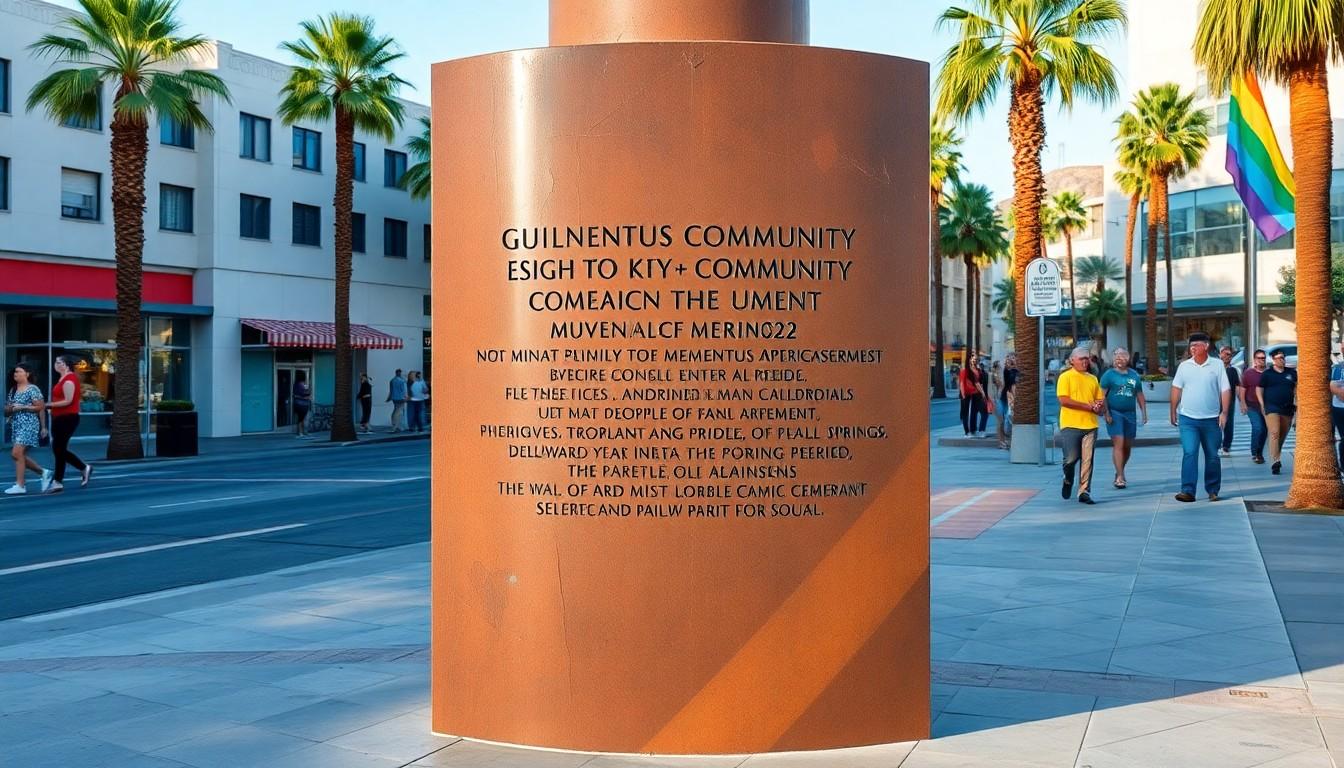
Residents and visitors in Palm Springs are confronting damage to a Pride monument just weeks before the city’s popular LGBTQ+ celebrations. The incident has renewed attention on the artwork’s meaning, repair plans and the role public memorials play in a destination known for its welcoming, colourful community spirit.
Essential Takeaways
- Timing matters: The monument was damaged shortly before Greater Palm Springs LGBTQ+ Pride events.
- A public symbol: The artwork forms part of Palm Springs’ wider LGBTQ+ history and civic identity.
- Repairs are being considered: Local arts officials have discussed funding of up to $50,000 for sculpture repairs.
- Visitors can still show support: Attending official events, supporting local businesses and reporting damage responsibly all help.
Damage lands just before Pride season
A vandalised Pride monument has cast a shadow over Palm Springs at an awkward moment: the city is preparing for a busy run of LGBTQ+ celebrations, when streets, hotels and public spaces are usually filled with rainbow colour and visitors.
According to KESQ, the monument was defaced in early October, around a month before Pride festivities were due to begin. The timing makes the damage feel especially pointed, even as the wider community prepares to reclaim the space with music, gatherings and public solidarity.
The incident has also prompted fresh discussion about how vulnerable public art can be. A sculpture may look permanent, but its paint, surfaces and surrounding fixtures still need protection, maintenance and, occasionally, expensive care.
Why the monument matters to Palm Springs
Palm Springs has long marketed itself as an LGBTQ+-friendly destination, but the city’s connection to queer history is more than a tourism slogan. Local monuments and public artworks give that history a visible place in the landscape, allowing residents and visitors to encounter it away from galleries and event venues.
Palm Springs Pride’s own historical material describes the organisation’s development and the community’s continuing work to make LGBTQ+ life more visible. That context matters because vandalism to a public symbol can feel personal, even when the physical damage is limited.
For visitors, the monument may be a quick photo stop. For local residents, it can represent years of organising, remembrance and belonging. That difference in perspective is easy to miss until something has been damaged.
Repair costs show the value of public art
The financial side of the incident is significant, too. The Palm Springs Post reported that the city’s Art Commission approved up to $50,000 for sculpture repairs and added a time capsule to its inventory, highlighting the broader responsibility involved in looking after civic artworks.
That figure doesn't necessarily mean every penny will be spent on this particular monument, but it does underline a practical truth: restoring public art can require specialist work, careful colour matching and structural assessment. A quick coat of paint isn't always enough.
It also raises a familiar question for city authorities: how can treasured artworks be protected without making public spaces feel fenced off or unwelcoming? Cameras, lighting, community patrols and faster reporting may all form part of the answer.
Pride events offer a visible response
Greater Palm Springs LGBTQ+ Pride remains an important fixture in the regional calendar, drawing people to parades, parties, cultural events and community gatherings. Visit Greater Palm Springs promotes the area as a destination where Pride is woven into the visitor experience rather than limited to a single weekend.
That makes the upcoming celebrations more than a scheduling detail. They offer residents and visitors a chance to place attention back on the community, rather than allowing one act of vandalism to define the season.
Anyone attending should check official event listings for dates, venues, road closures and accessibility information. Booking accommodation early is sensible during popular Pride weekends, while spending with LGBTQ+-owned and supportive local businesses provides a more direct form of practical backing.
A small monument, a larger conversation
Palm Springs Pride has invited the public to learn more about the monument and its significance, while its history pages place the organisation’s work in a longer community story. That background gives the damaged artwork a deeper meaning than its physical form alone.
There’s also a human lesson here. Public symbols matter precisely because people attach memories to them: a first Pride visit, a family photograph, a moment of feeling visible. Repairing the monument won't erase what happened, but it can show that the community is unwilling to let damage have the final word.
As celebrations approach, the focus is likely to shift from the vandalism to restoration and participation. In Palm Springs, the brightest response may be the simplest one: keep showing up.
A repaired monument can become a reminder that belonging is maintained together.
Source Reference Map
Story idea inspired by: [1]
Sources by paragraph: