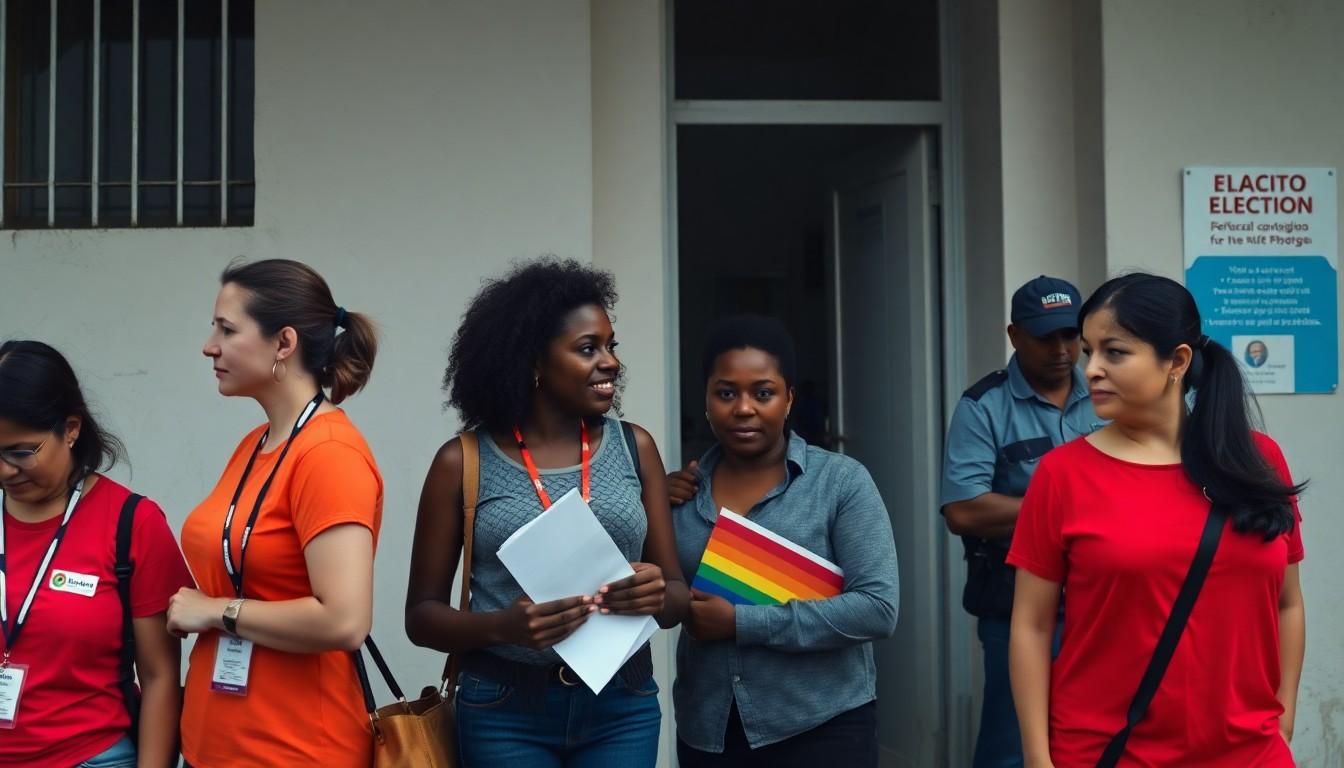
Voters have delivered a striking boost for LGBT+ representation in Brazil, with 35 candidates elected across national and state legislatures. The result matters not only because the number has climbed sharply since 2022, but because more women, Black people and trans leaders are reaching decision-making spaces despite a campaign marked by online abuse and political violence.
Essential Takeaways
- More elected representatives: LGBT+ winners rose from 18 in 2022 to 35 in 2026.
- Stronger presence in Brasília: The number of LGBT+ federal deputies increased from four to 13, while the Senate retained one representative.
- A more diverse group: Twenty-seven elected representatives are women, 22 are Black and seven are trans or travesti women.
- Wider geographical reach: LGBT+ candidates won seats in 14 states, up from eight, although no representative was elected in the North.
- Violence remains widespread: Ninety-four per cent of surveyed candidates reported experiencing political violence during the campaign.
LGBT+ representation has more than tripled in Brazil’s lower house
The headline figure is impossible to miss. According to the Institute Plena Cidadania’s VoteLGBT data, the number of elected LGBT+ candidates has nearly doubled since Brazil’s previous general election, reaching 35 from a total of 519 LGBT+ candidacies.
That growth was especially visible in the Chamber of Deputies. Representation rose from four elected LGBT+ deputies in 2022 to 13 in 2026, a jump that changes the visibility of LGBT+ issues in the country’s most important legislative arena. Across the Senate, Chamber of Deputies, state assemblies and the Federal District chamber, the elected candidates collectively received more than 10.7 million votes.
The result also reflects a broader electoral shift. Data published by CNN Brasil shows that the number of LGBT+ candidacies rose by 57 per cent compared with 2022, suggesting that the breakthrough began before election night, with more people deciding to stand for office.
Women, Black and trans leaders are shaping the result
This isn't simply a story about larger numbers. It’s also about who those numbers represent. Women account for 27 of the 35 elected LGBT+ candidates, while 22 are Black, giving the new group a distinctly intersectional profile.
Seven trans and travesti women were elected, equivalent to roughly one in five LGBT+ winners. Their arrival in legislative chambers carries particular weight in a political environment where trans people remain frequent targets of public hostility. Representation won't solve discrimination overnight, but it can change who gets heard when laws and public services are debated.
The election also brought LGBT+ representatives into six states that had not previously elected one, including Bahia, Espírito Santo, Goiás, Mato Grosso do Sul, Paraíba and Santa Catarina. As the electoral mapping platform Eleições Fehra indicates, the national picture is becoming less concentrated, even though the South-east still holds most of the seats.
The map is broadening, but the North is still missing
The South-east elected 20 of the 35 representatives, although its share of the total fell from 72.2 per cent in 2022 to 57.1 per cent. Meanwhile, the North elected none, a gap that underlines how uneven political representation remains across Brazil.
The North-east made one of the clearest advances, moving from two elected LGBT+ candidates to seven. The Centre-west and South also increased their totals, reaching four representatives each. In practical terms, that means more regional experiences can now enter debates that are often shaped by the country’s biggest urban centres.
Party affiliation remains heavily concentrated on the left. VoteLGBT’s official information shows that all 35 elected LGBT+ candidates stood for left-wing parties, with the Workers' Party and PSOL accounting for most of the seats. That pattern is connected not only to ideology, but also to campaign infrastructure and access to party funding.
More candidates still face hostile campaigns
The electoral gains arrived alongside a sobering warning. In a survey of 197 LGBT+ candidates, 94 per cent said they had experienced at least one form of political violence, while 81.8 per cent reported serious incidents.
Social-media attacks, hate campaigns and online harassment were among the most common experiences, reported by 68 per cent of respondents. On average, candidates described around six incidents each, and nearly half said they had faced seven or more. The internet may widen a candidate's reach, but it can also turn a campaign feed into a steady stream of abuse.
Among the 11 elected representatives who answered the survey, every one reported serious political violence. All mentioned online attacks and attempts to silence them, while 90.9 per cent reported verbal abuse, insults or anti-LGBT+ rhetoric. These figures make the electoral achievement feel both hopeful and hard-won.
The next test is turning votes into policy
The report says LGBT+ citizenship was a priority for 87.9 per cent of elected representatives. Their wider agendas include anti-racism, women's rights, education, environmental protection, labour rights, housing and action against hunger.
Bisexual and pansexual candidacies also grew strongly, rising from 103 to 207, while elected representatives in those groups increased from seven to 16. That is a useful reminder that LGBT+ politics isn't a single-issue project. It brings together different identities and concerns, often alongside the everyday questions of jobs, safety, schools and healthcare.
The Institute Plena Cidadania and VoteLGBT argue that the result demonstrates public support for LGBT+ participation despite the hostility candidates encountered. The real measure now will be whether this stronger presence leads to durable policy, safer political participation and representation that reaches beyond election season.
A larger voice is valuable, but it needs room to speak.
Explore the data and follow how Brazil's new LGBT+ representatives turn electoral gains into action.
Source Reference Map
Story idea inspired by: [1]
Sources by paragraph: