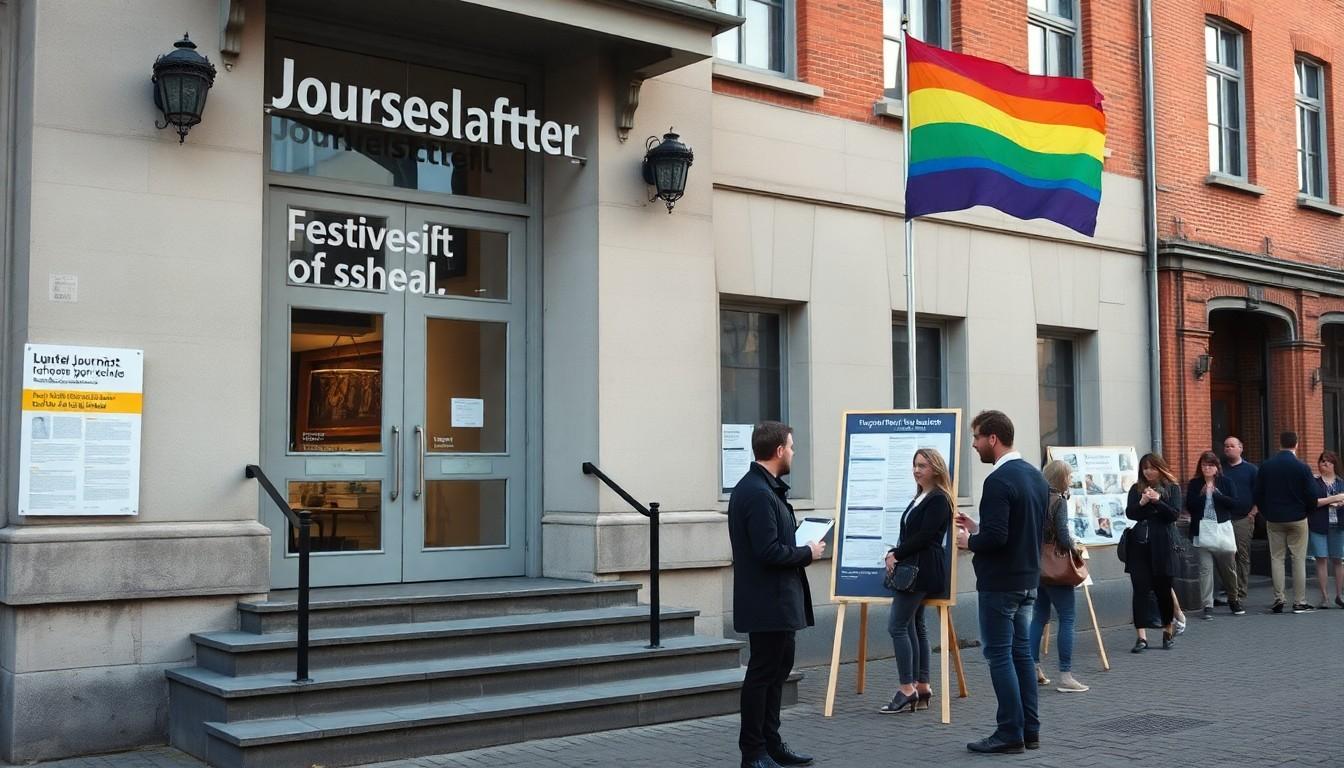
Journalists are being urged to look harder at the language, assumptions and newsroom cultures shaping the news in the Netherlands. The warning matters as reported anti-LGBTQ+ discrimination rises, while research continues to show that diverse media teams and fair reporting are essential to public trust and equal representation.
Essential Takeaways
- Language carries weight: Labels can reduce people to stereotypes, especially in coverage of migration, poverty and sexuality.
- Progress is uneven: Newsrooms may be more aware of inclusion, but representation hasn't necessarily improved at the same pace.
- Discrimination is rising: Reports of anti-LGBTQ+ discrimination in the Netherlands have increased sharply since 2022.
- Diversity builds trust: Research links a broad media landscape with strong audience confidence.
- Small newsroom choices matter: Hiring, editing and headline writing all shape who feels seen and safe.
The newsroom mirror is hard to ignore
A journalism festival in Deventer offered an unusually fitting setting for a discussion about visibility. The event took place in a former hidden church, a building once designed for people who couldn't worship openly. Today, the room hosted journalists, but the underlying question was much the same: who gets to be fully visible in public life?
The speaker's argument was direct. News organisations need to think more carefully about language that stigmatises or strips people of their humanity. That includes familiar terms used in reporting on migration and disadvantage, which can sound neutral in a headline while quietly turning individuals into a problem to be managed. Dutch government guidance on combating discrimination likewise stresses the importance of protecting LGBTQ+ people from exclusion and violence.
Old jokes, new pressures
The reflection also reached back to earlier years in journalism, when openly homophobic jokes could be dismissed as harmless banter. That reaction is revealing. A workplace doesn't need to be openly hostile every day to make people feel that certain parts of themselves are best kept quiet.
The Netherlands has made genuine progress, but the broader picture remains uncomfortable. Reports published by NL Times indicate that discrimination targeting LGBTQ+ people rose by 81 per cent between 2022 and 2025. For journalists, that isn't just a social trend to cover. It's a reminder that the assumptions inside a newsroom can influence which stories are noticed, how they are framed and whose experiences are treated as credible.
Representation remains the unfinished story
The media can report on overlooked communities while still failing to reflect them internally. Discussions at the festival highlighted the continuing lack of people of colour in journalism, alongside difficulties faced by women and queer staff in cultures shaped by long-standing habits.
That gap matters because diversity isn't simply a question of appearance. Reporters bring different knowledge, language skills and lived experience to editorial meetings. A wider range of voices can challenge lazy assumptions before they reach publication, which is particularly important when covering identity, discrimination or vulnerable groups.
Research from Vrije Universiteit Amsterdam describes the Netherlands as having a diverse media landscape with high audience trust, but those strengths shouldn't be treated as permanent. The Media Monitor from the Dutch Media Authority offers a framework for examining the sector's structure and development, making it easier to see where progress is real and where it remains largely aspirational.
Fair reporting starts with practical choices
Inclusive journalism isn't achieved by adding a single diversity story to the schedule. It begins with everyday decisions: who is interviewed, which experts are considered authoritative, whether a headline uses a loaded label and whether a person is described as an individual rather than a category.
Editors can also ask simple questions before publication. Would this wording be used if the subject belonged to a more powerful group? Does the story explain relevant context, or does it invite readers to make assumptions? And has anyone with genuine knowledge of the community had a chance to challenge the framing?
The Reporters Without Borders analysis of press freedom and journalism's public role is a useful reminder that independent reporting depends on more than the absence of state censorship. It also requires conditions in which journalists can question prejudice, including prejudice within their own institutions.
Caution can become a form of hiding
The former church offered a final, pointed image. On its ornate facade stood Prudence, represented by a woman looking into a mirror. Caution can be a virtue, especially when reporting carries real consequences, but it can also become an excuse for silence.
That distinction feels increasingly important as tolerance declines and more people feel unable to be open about who they are. Gay Justice and other equality organisations continue to campaign for stronger protection and accountability, while the Dutch government sets out measures aimed at tackling discrimination and violence against LGBTQ+ people. Journalism can't solve those problems alone, but it can either reinforce the climate around them or help change it.
A newsroom that examines its own habits is doing more than polishing its language. It's deciding whether the public sphere should be a place where people can recognise themselves, safely and without apology.
More thoughtful reporting starts with a simple question: who is missing from the frame?
Source Reference Map
Story idea inspired by: [1]
Sources by paragraph: