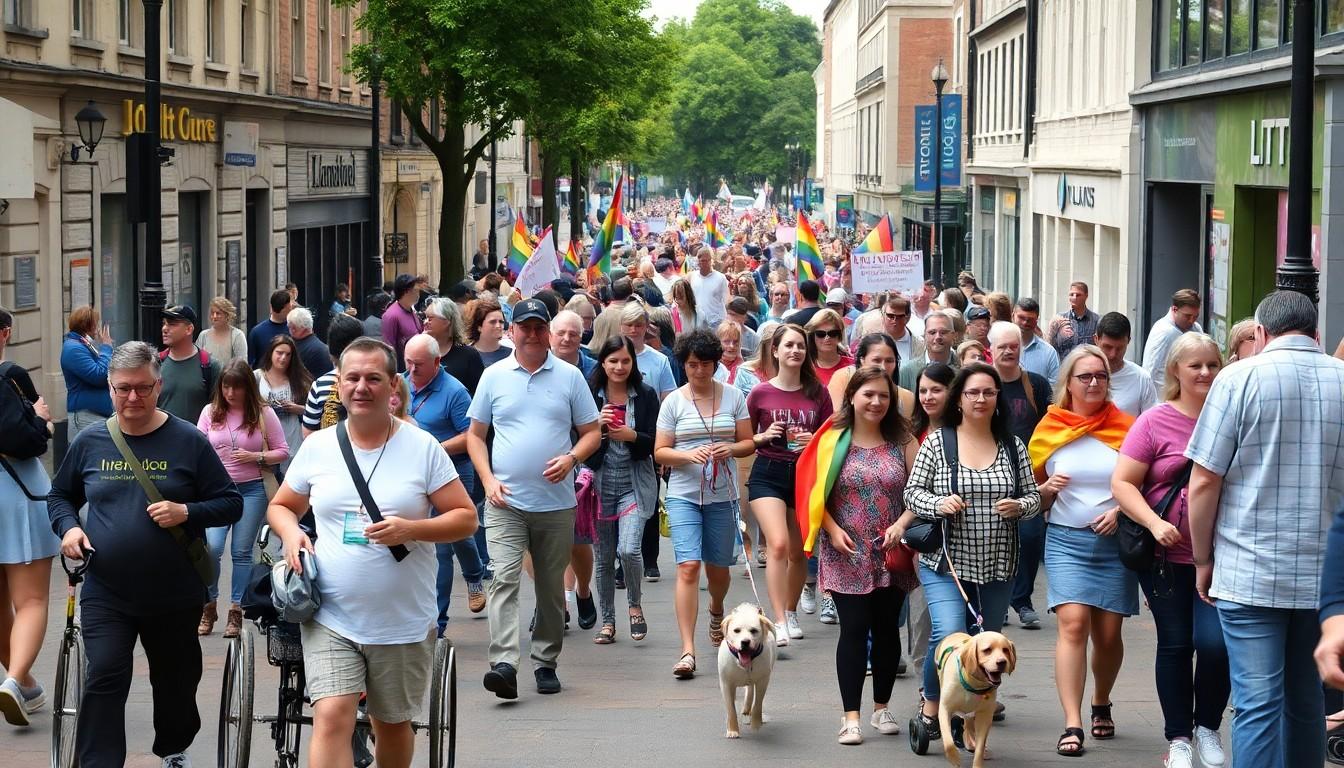
Hundreds of people gathered in Bristol city centre for the first Bristol Dyke March, creating a colourful, welcoming show of solidarity for lesbians, sapphics and queer women. From College Green to Castle Park, families, dogs and people of varied identities joined a protest that linked visibility with wider social justice.
A new march makes its mark on Bristol
The strongest image from Bristol's first Dyke March was its sheer variety. Hundreds walked through the city centre on Saturday afternoon, with families, dogs and people of diverse abilities and identities adding to the warm, open atmosphere. Bristol24/7 reported that the route ran from College Green to Castle Park, giving the demonstration a visible presence in some of the city's busiest public spaces.
This wasn't framed as a party parade alone. Organisers described the event as a political protest and visibility march for lesbians, sapphics and queer women, while also stressing solidarity with other marginalised communities. That combination gives the march its particular character: celebratory on the surface, but serious underneath. [2]
Why Dyke Marches remain politically important
Dyke Marches grew from grassroots queer organising and are generally intended to centre lesbians, queer women and sapphic communities, including people who can feel overlooked within wider LGBT+ spaces. The movement has appeared in cities around the world, often combining public visibility with demands for safety, equality and recognition. [3]
The name itself has a complicated history, as "dyke" has long been used as an insult but has also been reclaimed by many lesbians and queer women. That tension is part of the point. A march can turn a word once used to shame people into a banner of pride, defiance and belonging. The global history of Dyke Marches shows how local events can reflect shared struggles far beyond one city. [4]
Bristol's message was proudly intersectional
Posters at the march showed support for the trans community, while chants included "say it loud say it clear, all rights are welcome here", according to Bristol24/7. The event's organisers also said the dyke movement recognises that different forms of oppression are connected, placing the march within a wider conversation about solidarity. [2]
That matters because queer communities aren't neatly divided into separate boxes. People can experience discrimination linked to sexuality, gender identity, race, disability or other aspects of their lives at the same time. Bristol's march made that broader approach visible without losing its focus on queer women and sapphic people.
From protest to community gathering
The day continued after the march with a community event at Sparks in Broadmead. Later, a FLINTA social took place at Old Castle Green in Old Market, extending the gathering from a public demonstration into a more informal space for connection. [2]
That mix of protest and social time is familiar in Dyke March culture. The San Diego Dyke March's reported return, for example, reflects continuing interest in events that combine political visibility with community-building. People don't only want a route through the city; they also want somewhere to meet, talk and feel less alone. [5]
Bristol joins a growing global tradition
Bristol already has a strong Pride tradition, but the arrival of a dedicated Dyke March adds a more specific platform for lesbians, sapphics and queer women. It also gives organisers room to foreground issues that can be diluted in larger, broader celebrations. [6]
The city's first event arrives as Dyke Marches continue to evolve internationally. From their early grassroots roots to newer gatherings and revivals, they remain flexible, local and direct. That may be their lasting strength: each march can respond to the concerns of its own community while still being part of a much larger movement. [4]
A first march can feel like a small beginning, but public visibility has a way of gathering momentum.
Source Reference Map
Story idea inspired by: [1]
Sources by paragraph: