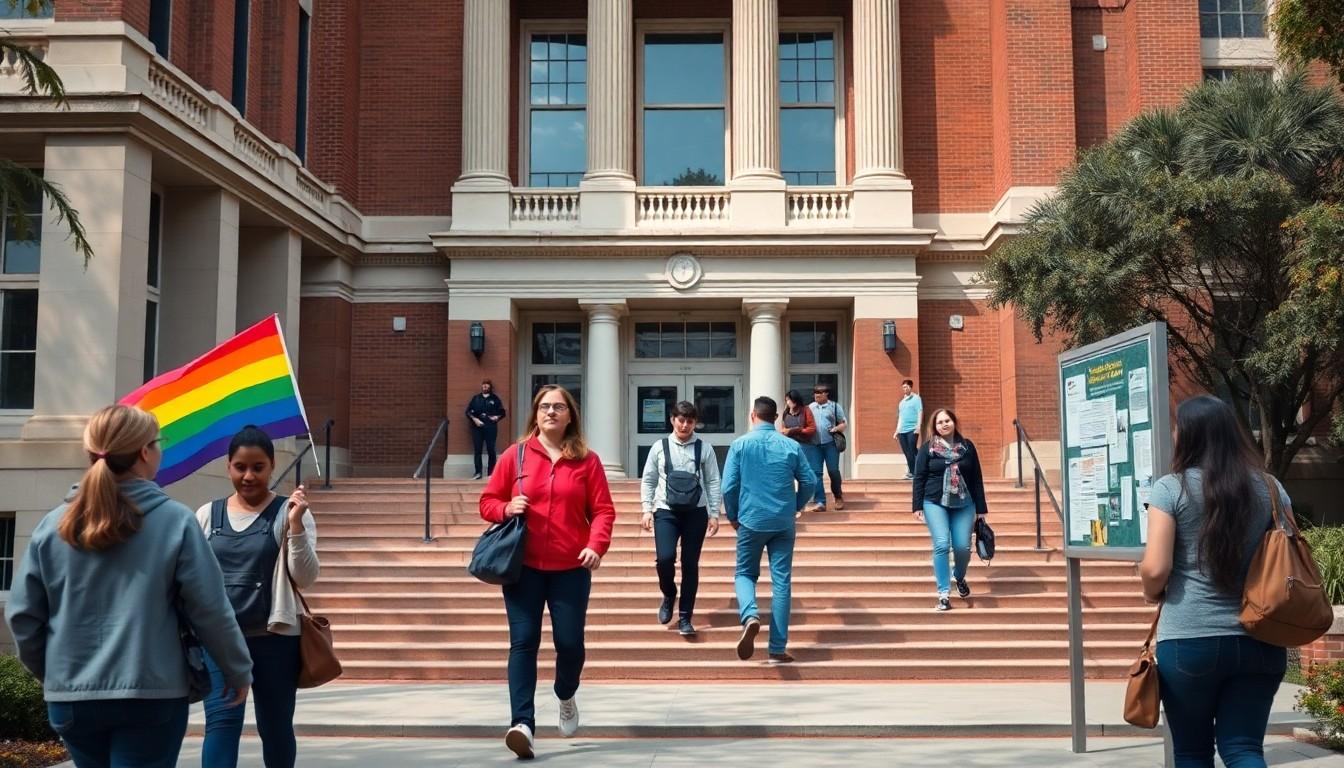
Voters are watching women’s rights, LGBTQ+ equality and political masculinity collide across the US midterms. A record 590 women are running for House seats, yet women still hold only 29% of Congress. For queer voters and allies, the contest matters because attacks on gender, sexuality and education are increasingly part of the same political fight.
Essential Takeaways
- Women remain underrepresented: Women make up nearly 51% of US adults but hold just 29% of congressional seats.
- Trans rights are a major battleground: Hundreds of bills affecting healthcare, schools, identity documents and employment have been introduced across the states.
- Symbolic representation has limits: Women in senior Republican roles can broaden the party’s appeal, but their influence may remain conditional.
- Online outrage travels quickly: Personal insults aimed at politicians can energise supporters while amplifying the original attack.
- The conflict reaches campuses: Pressure on women’s studies, gender studies and DEI affects teaching, research and academic freedom.
Misogyny is only one part of a larger system
The sharpest insight from sociologist Dr Meredith Worthen is that misogyny shouldn't be viewed in isolation. In her analysis, hostility towards women sits within patriarchy, a hierarchy that elevates men and masculinity while devaluing femininity more broadly.
That framing matters because it links attacks on women with the treatment of trans, non-binary and queer people. The Atlantic has also examined how Republican campaign strategy increasingly places transgender issues at the centre of midterm politics, making gender a powerful organising theme for voters and activists.
For LGBTQ+ voters, this isn't an abstract debate. Worthen pointed to hundreds of measures introduced across the US that affect trans healthcare, education, sport, identity documents, family life and employment. The sheer range is striking. What looks like a series of separate disputes can feel, from the receiving end, like a constant narrowing of everyday freedom.
Women can be visible without holding real power
Republican politics has long relied on women as public representatives of family values, religious conservatism and motherhood. Their presence can reassure voters that the party isn't simply speaking to men, particularly on issues framed around children and traditional households.
But visibility and power are not the same thing. Worthen argues that women can become useful figureheads while remaining replaceable inside a system that ultimately privileges male authority. The Atlantic's reporting on Republican electoral strategy similarly highlights the party's growing reliance on cultural conflict, where identity can matter more than who has genuine influence behind the scenes.
That creates an awkward contradiction. A party may point to women in prominent positions as evidence of progress, while its policies and internal structure still leave women with limited room to shape the agenda. Representation counts, but so does the ability to disagree, set priorities and stay in the room.
Why attacks on men matter, too
The political language aimed at progressive male candidates reveals another side of the same struggle. In Texas, state representative James Talarico has faced insults questioning his masculinity and sexuality, alongside attacks that invoke familiar anti-LGBTQ+ stereotypes.
The Atlantic has followed Talarico's rise and the backlash surrounding his political profile. Worthen says such attacks can strengthen his supporters, who see the rhetoric as evidence that his opponents have run out of substantive arguments. Yet social media creates an unpleasant feedback loop: the more outrageous the insult, the more widely it spreads.
That helps explain why political cruelty can be both damaging and strangely useful. A candidate may gain sympathy, media attention and a clearer contrast with opponents, while the original abuse is repeated thousands of times. It’s a publicity machine nobody should want, but campaigns increasingly know how to operate it.
Campuses are another frontline
The pressure isn't limited to rallies and campaign adverts. Worthen says women’s and gender studies, sociology, education and related fields have faced demands to alter teaching or remove material associated with diversity, equity and inclusion.
The Atlantic's wider coverage of the Democratic Party's electoral future has highlighted the continuing importance of education, identity and institutional trust in the political argument. Universities sit at the centre of all three. When courses are cut or softened, students lose more than a reading list. They lose structured opportunities to examine power, prejudice and social change.
Critics often present these subjects as ideological extras. In practice, they can provide useful tools for understanding workplace discrimination, harassment, family policy and civil rights. Removing that vocabulary doesn't remove inequality. It simply makes it harder to describe.
Social media turns identity into spectacle
Right-wing influencers have built large audiences by blending anger, masculinity and culture-war content into highly shareable videos. On the other side, progressive commentators often respond to breaking news and political developments, rather than relying on the same performance of permanent outrage.
The difference isn't absolute, and algorithms reward heat wherever it comes from. Still, Worthen's observation captures a real distinction in style. Content that offers a villain, a visual hook and a simple emotional payoff can pull viewers into increasingly extreme online communities.
There are counterexamples. Worthen identifies figures including Kamala Harris, Alexandria Ocasio-Cortez, Stacey Abrams and Jasmine Crockett as women who use public platforms to challenge injustice and promote more inclusive policies. Their approach offers a different model of political influence, one built less on submission to a traditional role and more on speaking plainly, taking up space and refusing to be easily dismissed.
The midterms won't settle every argument about gender and power. But they will show whether voters are willing to treat these issues as connected, rather than as isolated distractions from the supposedly serious business of politics.
It's a bigger story than misogyny alone, and the consequences will reach far beyond election night.
Source Reference Map
Story idea inspired by: [1]
Sources by paragraph: