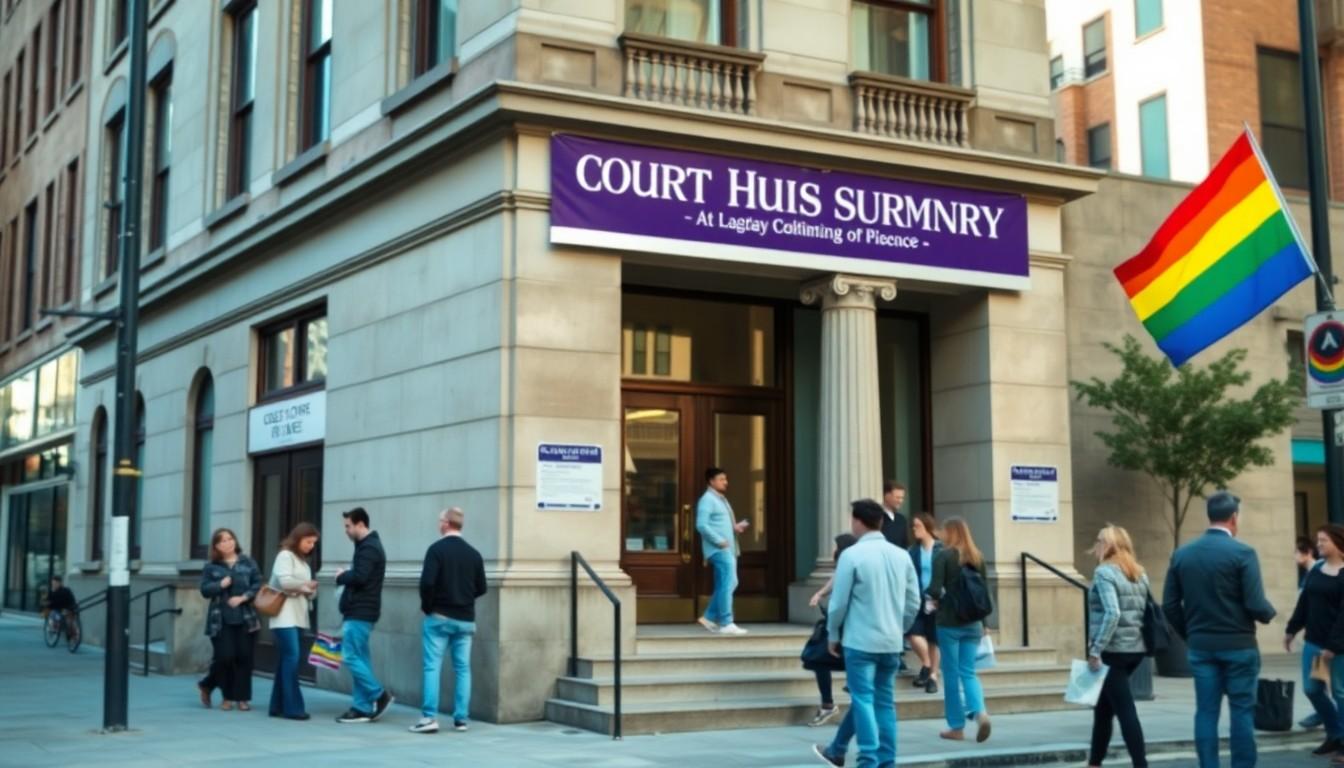
Readers are marking LGBTQ+ History Month this October with a reminder that progress rarely arrives quietly. From early student organising to Lambda Legal's latest push for stronger protections, the movement's story is one of protest, court victories and determined community action, even as new political attacks keep raising the stakes.
The month began with a lesson in visibility
LGBTQ+ History Month is more than a calendar observance. It's a chance to revisit the people, campaigns and legal battles that made today's freedoms possible, while recognising how quickly hard-won rights can come under pressure.
The Advocate's account of the month's origins shows how education and visibility became central to the celebration. That history matters because public memory can be surprisingly fragile. Without it, yesterday's breakthroughs can look inevitable rather than brave, organised and often fiercely contested.
Student activism helped change the legal landscape
One revealing chapter comes from Virginia Commonwealth University's Gay Alliance. A historical marker commemorates the students' role in a 1976 court case, highlighting how campus organising helped challenge discrimination and establish a wider principle of LGBTQ+ equality.
It makes for a useful corrective to the idea that change is driven only by famous national figures. Sometimes it starts with a small group of students, a meeting room and the refusal to accept an unfair rule. Those local campaigns can become the foundations of lasting legal change.
Lambda Legal wants to stop playing defence
Lambda Legal is putting a more assertive political and legal strategy behind its work, pairing courtroom challenges with a broader campaign for state-level protections. The organisation has also reported strong public backing, exceeding a fundraising target of $10.5 million in an earlier campaign.
That combination is significant. Litigation can overturn harmful policies, but legislation and public education are what help make protections durable. As Lambda Legal's chief executive Kevin Jennings told The Advocate, the organisation intends to move beyond simply responding to attacks and push its own agenda.
For readers looking for the best ways to support LGBTQ+ rights during History Month, donating to trusted legal groups, volunteering locally and learning which protections exist in your state are practical starting points. A small monthly contribution can be less dramatic than a protest march, but it can keep essential work moving.
The present still feels uncomfortably familiar
The newsletter also underlines the hostility facing LGBTQ+ people in public life, including attempts to use transgender people's online posts to justify forced outing and allegations of homophobic abuse in a state legislature. Meanwhile, national politicians continue to make drag performers and transgender people convenient targets.
That contrast is hard to miss. History Month celebrates progress, but it isn't permission to treat discrimination as a finished chapter. For many LGBTQ+ people, the arguments being revisited today affect employment, privacy, healthcare and personal safety in very immediate ways.
Remembering the past can sharpen today's action
The strongest thread running through these stories is that progress depends on participation. Court cases, student groups, advocacy organisations and ordinary supporters all play different roles, and none can assume somebody else will carry the work.
There is also something quietly reassuring in that lesson. The movement's history isn't only a record of setbacks or famous victories; it's evidence that organised communities can shift institutions, change laws and widen the boundaries of public life. October is a good time to learn that history, then decide what part of the next chapter you can help write.
It's a small act of remembrance, but it can become a very practical form of solidarity.
Source Reference Map
Story idea inspired by: [1]
Sources by paragraph: