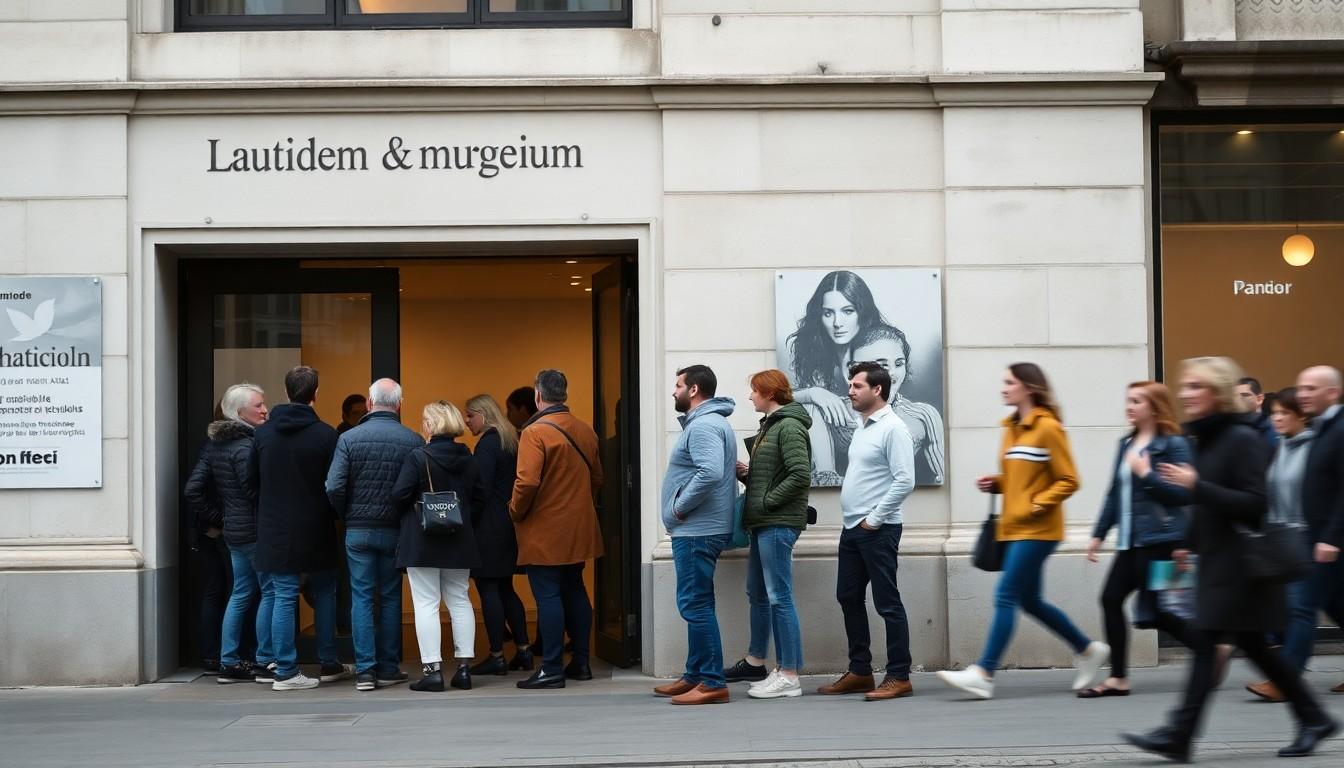
Visitors to Vienna's Queer Museum can explore alternative approaches to death, grief and remembrance in a new free exhibition at the Otto Wagner Areal. Running from 2 October to 24 January 2027, the show asks how queer communities can create farewell rituals that reflect chosen families, complex identities and lives lived beyond convention.
Essential Takeaways
- A different view of mourning: The exhibition examines how queer communities remember loved ones and challenge inherited funeral traditions.
- Art meets mortality: Multimedia works explore grief, memorials, burial spaces and the uneasy boundary between life and death.
- Drag enters the funeral home: A web series imagines drag queens working in death care, with a deliberately provocative twist.
- Free entry in Vienna: The exhibition runs from Thursday to Sunday, 2pm to 6pm, at the Otto Wagner Areal.
- A striking setting: The former hospital complex adds an atmospheric, slightly uncanny backdrop to the show.
Why queer mourning needs its own conversation
Death can pull people back into family structures that may not have recognised their lives in the first place. That tension sits at the centre of Queer Immortality, which considers what happens when a queer person’s chosen community is separated from them at the very moment rituals and decisions matter most.
The exhibition argues that conventional ceremonies don't always fit queer realities. According to the Queer Museum Vienna, its focus is on collective remembrance, mortality and the possibility of farewells shaped by the people who formed a person’s real social world. It’s a thoughtful premise, and one that feels increasingly relevant as ideas of family continue to broaden.
Artworks that make grief collective
Rather than treating mourning as a private, solemn exercise, the exhibition presents it as something shared and socially shaped. Artists including Peter Kozek, Heti Prack and Siggi Sekira explore grief as a collective experience, while other works consider memorial spaces and the uneasy status of bodies, objects and memories.
Julia Fuchs looks at the art depot as an in-between place, suspended between preservation and disappearance. Danielle Pamp also turns towards the question of immortality, giving the exhibition room to move beyond straightforward sadness. The result sounds less like a conventional memorial show and more like a conversation about who gets remembered, and on whose terms.
Drag queens, horror extras and a sharper sense of humour
The exhibition isn't afraid of a little theatricality. Berivan Sayici and Luis Javier Murillo's web series, Just Gorgeous - Beauty for Dead People, imagines drag queens working in funeral care, bringing glamour, performance and an intentionally cheeky energy to a subject usually treated with hushed seriousness.
The collective Heathers takes another playful route, focusing on the background characters in horror films - the people who tend to be dispatched first. It’s a witty device, but it also points towards a bigger question: whose lives are treated as central, and whose deaths are barely noticed?
A Vienna exhibition in an unusually atmospheric setting
Queer Immortality is being staged at the Otto Wagner Areal, a historic complex whose grand architecture and institutional past give the subject extra weight. The location is far from a neutral white gallery, so visitors can expect the surroundings to become part of the experience, even before they encounter the artworks.
The show is presented by the Queer Museum Vienna, founded in 2020, and continues the institution’s interest in queer histories, identities and alternative futures. Here, the future is imagined through remembrance: not simply living differently, but leaving room for different ways to say goodbye.
Plan your visit to Queer Immortality
The exhibition runs from 2 October 2026 to 24 January 2027 at the Queer Museum Vienna, Otto-Wagner-Areal, C-Gebäude, Baumgartner Höhe 1. It’s open Thursday to Sunday from 2pm to 6pm, and admission is free, making it an easy addition to a Vienna culture weekend.
Allow time to take in both the exhibition and the surrounding site. This is the kind of show that may stay with you after you leave, particularly if you’ve ever wondered whether familiar rituals truly make space for everyone.
A more inclusive goodbye can begin with asking who gets to define remembrance.
Source Reference Map
Story idea inspired by: [1]
Sources by paragraph:
- Paragraph 1: [2], [7]
- Paragraph 2: [3], [4]
- Paragraph 3: [5], [6]
- Paragraph 4: [2], [7]
- Paragraph 5: [3], [5]
- Paragraph 6: [2], [4]
- Paragraph 7: [6], [7]
- Paragraph 8: [3], [4]
- Paragraph 9: [2], [5]
- Paragraph 10: [3], [7]
- Paragraph 11: [4], [6]
- Paragraph 12: [2], [3]
- Paragraph 13: [5], [7]
- Paragraph 14: [2], [4]