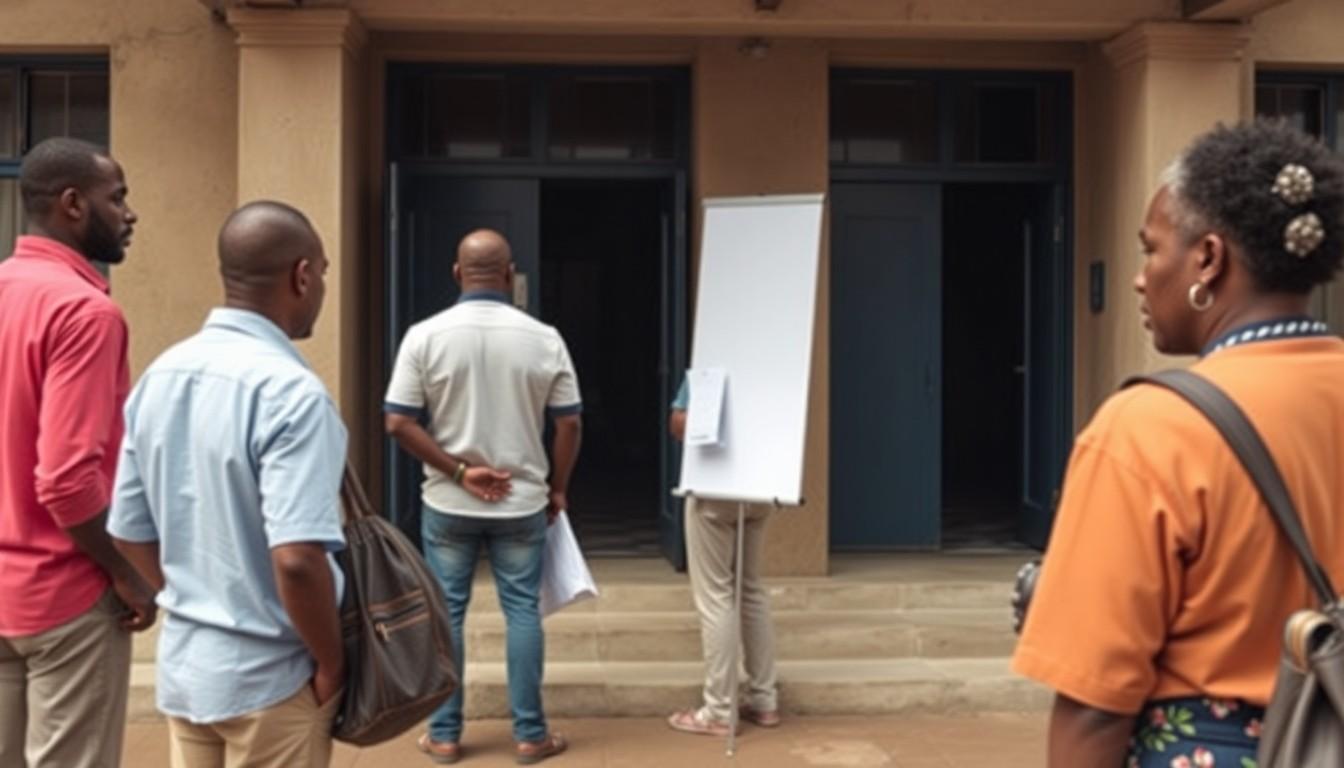
Faith leaders, scholars and constitutional thinkers from Africa and the diaspora are calling for a pause on new laws targeting sexual minorities, arguing that the debate reaches far beyond sexuality. Their African Democratic Covenant seeks wider discussion about democracy, human dignity, religious influence and sovereignty, while urging governments to protect constitutional freedoms.
Essential Takeaways
- A continental call: Twenty-five African and African-diasporan figures backed the African Democratic Covenant.
- A proposed pause: Organisers want governments to halt new legislation that increases criminal penalties for sexual minorities.
- A broader argument: The campaign links minority rights with democracy, women’s rights, economic sovereignty and political accountability.
- An African-led debate: Supporters reject the idea that protecting dignity is simply a Western import.
- A future gathering: Organisers propose a Desmond Tutu Conference focused on freedom, governance, spirituality and justice.
A new coalition puts dignity at the centre
A coalition of 25 faith leaders, theologians, scholars and constitutional thinkers has launched the African Democratic Covenant, calling for governments across the continent to pause legislation that further criminalises sexual minorities.
The initiative was unveiled during a virtual media briefing organised by Interconnected Justice, a network connecting religious figures, academics, civic voices and emerging leaders. According to coverage by Ascendant Africa, the campaign is intended to create room for education and constitutional discussion rather than rushed lawmaking. [2]
That framing matters. The organisers aren't presenting the issue as a narrow argument about private behaviour, but as a test of how governments treat people with limited political power. Their position is that once one minority's rights can be reduced through fear-driven politics, wider democratic freedoms may become more vulnerable too.
Why the campaign reaches beyond sexuality
The Covenant's supporters say laws targeting sexual minorities should be considered alongside questions about women's rights, religious authority, corruption, economic inequality and control over natural resources.
Bishop Joseph William Tolton, the founder and president of Interconnected Justice, argued that sovereignty can't mean simply controlling minerals or national territory. It must also include the freedom to think critically about inherited religious and political ideas, while protecting the dignity of citizens.
Reporting from The Guardian Nigeria and KBC has highlighted the coalition's wider concern that anti-gay bills can narrow democratic space, encourage surveillance and divert public attention from pressing social and economic challenges. [4], [5] That's a notably broader lens than the usual culture-war headlines, and it explains why the Covenant is seeking allies beyond LGBTQ+ rights organisations.
The organisers also say they aren't trying to impose a Western sexual ethic on African societies. Instead, they want African governments, churches, scholars and communities to lead a serious debate about constitutional rights, culture and human dignity.
Ghana becomes a key battleground
Ghana sits near the centre of this conversation, where proposed human sexual rights and family-values legislation has prompted intense debate over religion, national identity and constitutional protections.
Ghanaian feminist scholar Akosua Adomako Ampofo warned that restricting one minority can establish a dangerous precedent. In her view, the consequences could include greater police surveillance, censorship and pressure on other groups whose rights are politically inconvenient.
The coalition has also pointed to interventions by Ghanaian Cardinal Peter Turkson and Anglican Archbishop Cyril Kobina Ben-Smith, who have spoken about education and deeper understanding rather than criminalisation. The Covenant makes clear that neither cleric is affiliated with or endorses the initiative, an important distinction in a highly charged debate.
As Times Nigeria reported, the campaign's immediate request is a moratorium on further criminalisation, giving lawmakers and the public time to examine the constitutional and social consequences of proposed measures. [3] For ordinary citizens, that means the argument isn't only about what a bill says, but about how quickly it is introduced and whose voices are heard before it becomes law.
Faith, colonial history and African agency
Religious language is central to the Covenant, but so is a challenge to the way Christianity has sometimes been used to justify political control. Rev Canon Mpho Tutu van Furth described sexual minorities as children of Africa and urged churches and diaspora organisations to stop supporting fear-based campaigns.
He also called for closer examination of Christianity's links with colonialism, slavery and apartheid. That is an uncomfortable historical conversation, but the coalition believes it is necessary if African societies are to distinguish genuine spiritual conviction from political mobilisation.
Former Kenyan Chief Justice Willy Mutunga brought a constitutional perspective, pointing to Kenya's experience with freedom of association, non-discrimination and reproductive rights. The argument is straightforward: invoking "African values" shouldn't automatically end discussion about whether a law respects constitutional protections.
Coverage from KBC and The Guardian Nigeria reflects this tension between cultural sovereignty and individual rights. [4], [5] The Covenant's supporters say African traditions of solidarity, mutual responsibility and dialogue can provide their own foundation for protecting dignity, without borrowing a ready-made political script from elsewhere.
The diaspora is part of the plan
The campaign also aims to strengthen ties between Africans on the continent and the global African diaspora. Its organisers argue that slavery, colonial rule and the partition of Africa created divisions that still shape political, economic and cultural relationships.
Bishop Tolton stressed that this isn't a case of the diaspora arriving to solve Africa's problems. The stated ambition is collaboration, drawing on the African Union's recognition of the diaspora as the "Sixth Region" and on shared links through migration, investment and return.
Interconnected Justice describes the Covenant as the first coordinated public campaign to emerge from its wider network of faith leaders, scholars, civic activists and young people. [6] It also wants journalists to investigate the funding and political networks behind anti-gender campaigns, while giving greater space to African voices arguing for democratic inclusion.
The proposed Desmond Tutu Conference, or Black Global Freedom Gathering, would extend that work. Organisers envisage conversations about governance, economic justice, spirituality, inequality and political participation, with a distinctly Pan-African outlook.
What happens next?
The Covenant's immediate demand is a pause on tougher laws targeting sexual minorities. Its longer-term ambition is much larger: to connect debates about LGBTQ+ rights with women's rights, constitutionalism, economic sovereignty, religious power and the future of democracy.
That could make the movement harder to summarise, but perhaps more relevant to the realities governments face. The coalition is betting that a conversation framed around dignity and accountable power will travel further than a single-issue campaign.
For now, its success will depend on whether governments, churches, civil-society groups and media organisations are willing to engage with the argument rather than reduce it to another cultural flashpoint. [2], [3]
A pause won't settle every disagreement, but it could create the breathing space needed for a fairer conversation.
Source Reference Map
Story idea inspired by: [1]
Sources by paragraph: