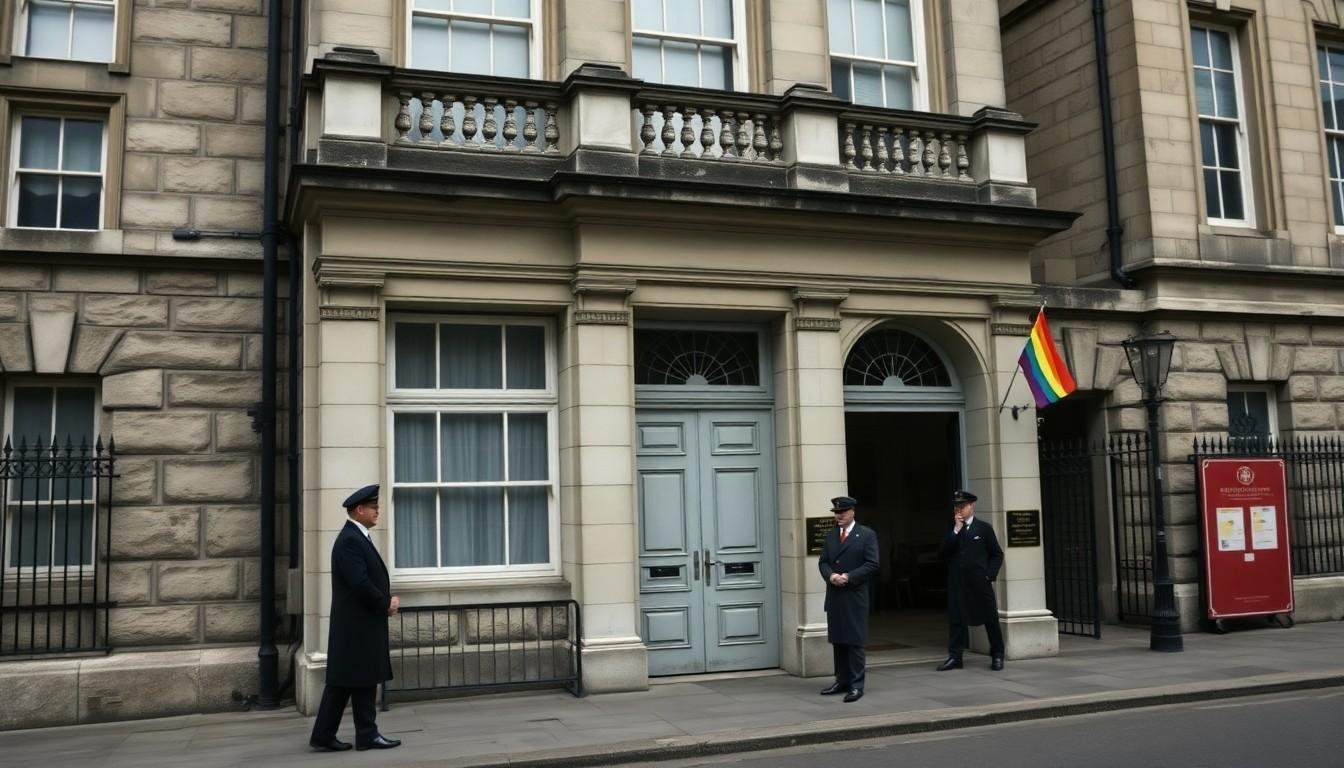
Audiences are hungry for queer stories with both spectacle and substance, and one ambitious historical drama could deliver exactly that. At an Outfest fundraiser panel, filmmaker Wash Westmoreland highlighted The Glamour Boys, a true account of LGBTQ+ British MPs who challenged fascism in the 1930s, making it feel strikingly relevant today.
Essential Takeaways
- A real historical story: The Glamour Boys explores queer British parliamentarians and allies who opposed Hitler's rise before the Second World War.
- A dream adaptation: Director Wash Westmoreland wants to bring author Chris Bryant's nonfiction book to the screen.
- A wider creative conversation: The panel also featured ambitious ideas involving lesbian pirates, musical theatre and a D.E.B.S. television series.
- High personal stakes: In 1930s Britain, being openly queer could damage a career or lead to imprisonment.
- A timely message: The proposed film could connect a largely overlooked chapter of queer history with modern political anxieties.
A forgotten political story with cinematic weight
The most compelling idea from Outfest's fundraiser panel wasn't necessarily the biggest or flashiest. It was the one rooted in a tense, little-known chapter of British history: queer MPs and their allies standing against fascism while their own lives were threatened by discrimination.
Westmoreland's proposed adaptation of The Glamour Boys has all the ingredients of a gripping historical drama. There are secret identities, parliamentary rebellion, personal risk and a looming authoritarian threat. More importantly, the story doesn't treat queer history as a footnote. It places LGBTQ+ people inside the political centre of events that shaped modern Europe.
That combination gives the project unusual emotional force. It's not simply a period piece with handsome costumes and smoky rooms; it's a story about what courage looks like when speaking out could cost you your job, freedom or future.
Why the project feels urgently modern
The 1930s setting may seem distant, but the question at its heart is familiar: when should people challenge a dangerous political movement, and what happens when institutions fail to act quickly enough?
That makes The Glamour Boys particularly suited to the current appetite for historical stories that illuminate the present. A well-made adaptation could show how prejudice, ambition and political compromise operate together, without turning the past into a comfortable museum display.
It could also broaden the usual picture of queer resistance. Audiences often encounter LGBTQ+ history through protest movements, artists or community organisers. This story would add parliamentary figures to that tradition, showing that resistance can happen in corridors of power as well as on the streets.
Outfest's panel offered plenty of big-screen possibilities
The conversation, moderated by Variety's Marc Malkin for an Outfest fundraising event, showcased the imaginative range of contemporary queer filmmaking. Hayley Kiyoko suggested a lesbian spin on Pirates of the Caribbean, while Adam Shankman pointed towards a film adaptation of Spring Awakening.
Angela Robinson, meanwhile, raised the prospect of expanding D.E.B.S. into a television series. The 2004 film's playful mix of espionage, romance and camp has long made it a natural candidate for a modern series, particularly as streaming has created more room for niche worlds and ensemble casts.
Those ideas are wonderfully different, but they share an important quality: they imagine queer characters at the centre of genres that have traditionally sidelined them. A pirate adventure, a musical tragedy, a spy comedy and a political historical drama can all become queer stories without losing their entertainment value.
What a screen adaptation would need to get right
The greatest challenge would be balancing historical detail with a story audiences can follow emotionally. The political backdrop matters, but viewers will also need clear relationships, conflicting loyalties and a sense of what each character risks by taking a stand.
The filmmakers would have to avoid making the past look tidier than it was. Queer people in 1930s Britain faced serious legal and social danger, and even sympathetic allies operated within institutions that could be deeply hostile. That tension should remain visible rather than being softened for easy inspiration.
For viewers searching for queer historical films with political themes, this is precisely where the project could stand apart. The strongest version wouldn't offer a simple lesson about heroes and villains; it would show how brave decisions are often made imperfectly, late and under pressure.
The next chapter for queer cinema could look backwards
The Glamour Boys is still a dream project, not a confirmed production. Even so, its mention lands with the force of a trailer for a film that doesn't yet exist. The premise is rich, the historical stakes are enormous and the central question feels uncomfortably close to home.
And there's something encouraging about that ambition. Queer cinema doesn't have to choose between joyful fantasy and serious history; it can embrace both. If this project reaches the screen, it could remind audiences that queer stories have always been woven into the biggest political and cultural battles, even when history failed to give them proper credit.
Queer cinema's future may be brighter when it remembers who was already there.
Source Reference Map
Story idea inspired by: [1]
Sources by paragraph: