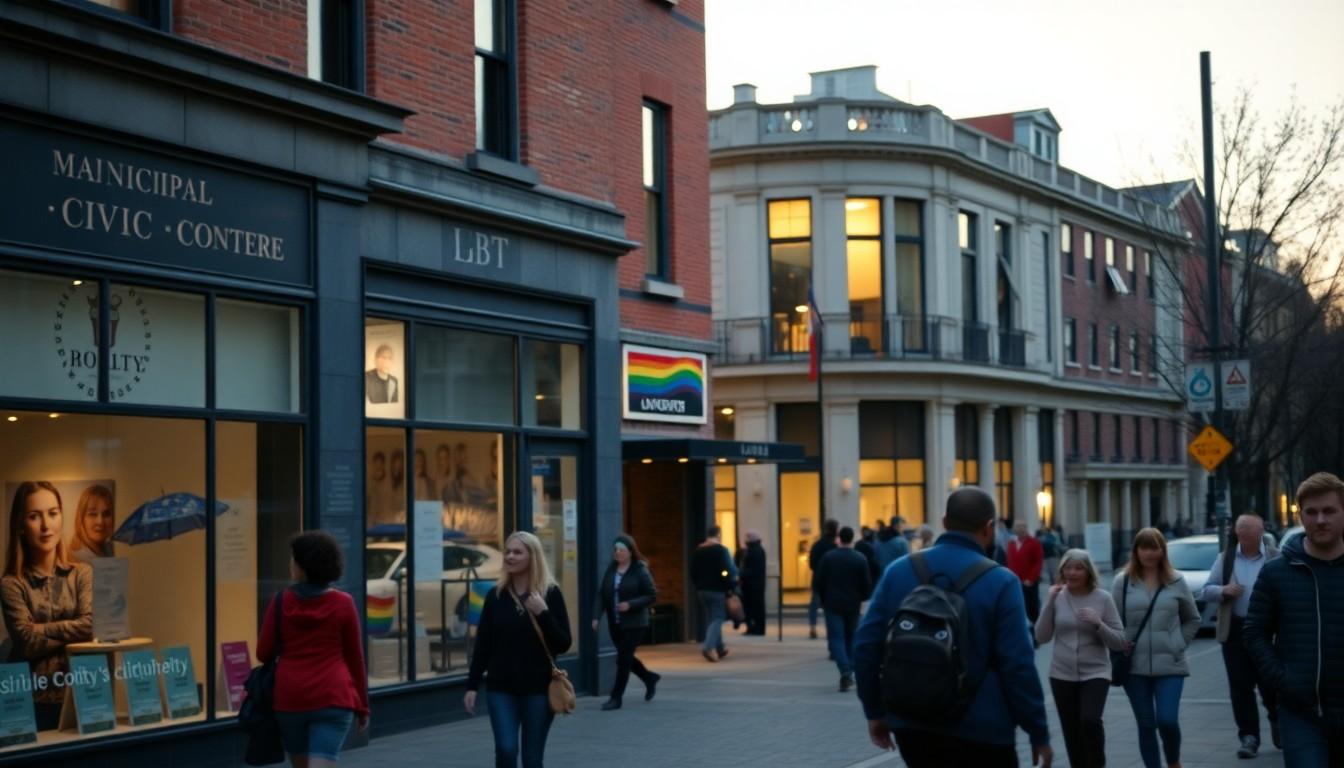
Public debate about LGBTQ+ acceptance is becoming sharper, but the evidence suggests a less tidy story than culture-war headlines imply. Across the Netherlands and beyond, attitudes vary by age, faith, politics and personal experience, making the future of gay rights a question of social trust as much as tolerance.
Essential Takeaways
- Acceptance remains uneven: Views differ sharply between countries, generations and religious communities.
- Progress isn't guaranteed: Gallup reports that support for LGBTQ+ issues has eased from its recent peak in the United States.
- Faith is not one single position: Islamic and Christian communities contain a range of interpretations and attitudes.
- Integration matters: Research suggests social inclusion can shape attitudes more effectively than isolation or suspicion.
- The debate is wider than one group: Intolerance appears across political and religious lines, despite competing claims.
Acceptance has grown, but the mood is shifting
The broad arc is still one of greater acceptance. Pew Research Centre's international research found that homosexuality is viewed more positively in many wealthier, more secular societies, particularly in Western Europe and North America. Yet that progress has never been evenly shared, and public opinion can move backwards as well as forwards.
That tension sits at the heart of the current argument. Gallup reported that American support for LGBTQ+ issues remains well above historical levels, but has slipped from its peak. The change may look modest on paper, but it matters because cultural confidence is often built from small, repeated signals.
For LGBTQ+ people, those signals are rarely abstract. They can mean whether a relationship is treated as ordinary, whether a workplace feels safe or whether a family gathering turns awkward the moment someone mentions a partner.
Why religion doesn't tell the whole story
Islam is frequently presented in European political arguments as a single, unchanging source of opposition to homosexuality. The reality is more complicated. A Radboud University explainer notes that attitudes among Muslims are influenced not only by religious teachings, but also by migration history, education, social position and contact with wider society.
The Human Rights Campaign's overview of Islamic perspectives also points to significant diversity in interpretation and practice. Some Muslim organisations and scholars reject LGBTQ+ equality, while others argue for dignity, safety and greater inclusion. That doesn't erase real hostility, but it does make sweeping claims look increasingly blunt.
The same caution applies to Christianity. Religious traditions can be used to oppose same-sex relationships, but Christian communities are far from uniform. In other words, a faith label may offer clues, but it isn't a complete biography.
Integration can change attitudes over time
The Dutch debate often swings between two explanations: blame minorities for intolerance, or blame the wider majority for failing to include them. The evidence suggests both the social environment and religious belief can matter, which is precisely why easy answers are so tempting and so inadequate.
The Radboud analysis highlights the importance of integration and everyday contact. When people study, work and live alongside others, stereotypes can lose some of their grip. By contrast, segregation, economic marginalisation and language barriers can leave communities relying more heavily on internal networks and inherited assumptions.
That doesn't mean a friendly coffee will solve every disagreement. But it does suggest that exclusion is a poor route to liberalisation. If a society wants shared democratic values, it has to make participation feel real rather than treating entire communities as permanent outsiders.
The global divide remains striking
Pew's international research found a substantial global divide on homosexuality. Acceptance tends to be higher in secular, affluent countries, while many societies in Africa, the Middle East and parts of Asia show much lower levels of approval. Age, education and religious commitment are recurring factors.
Those differences aren't simply a contest between "modern" and "backward" countries. Public opinion is shaped by law, colonial history, local politics, family structures and the visibility of LGBTQ+ people. A survey can show what people say, but it can't always capture the private compromises people make to stay safe.
That distinction matters in Europe, where official equality may coexist with everyday hostility. Legal rights are essential, but they don't automatically remove the quiet pressure to hide, soften or explain who you are.
What happens next?
The next phase of the argument is unlikely to be settled by louder accusations. Gallup's recent findings suggest that support for LGBTQ+ issues can soften when political identity becomes closely tied to questions of gender, sexuality and family life. Meanwhile, Pew's research shows that younger and more secular populations are often more accepting, though generational change is not a guarantee of permanent progress.
A healthier conversation would recognise two facts at once. Anti-LGBTQ+ prejudice exists in some Muslim and Christian settings, and it also exists among secular nationalists, political movements and people who claim to defend liberalism while narrowing it. Pretending otherwise turns a serious human issue into another prop for the culture war.
The future may not be as neat or as comic as any columnist imagines. But it will be shaped by whether societies choose genuine inclusion over convenient enemies.
Small changes in contact, language and solidarity can make public acceptance feel real in private life.
Source Reference Map
Story idea inspired by: [1]
Sources by paragraph:
- Paragraph 1: [2], [6]
- Paragraph 2: [5], [7]
- Paragraph 3: [6]
- Paragraph 4: [3], [4]
- Paragraph 5: [4], [5]
- Paragraph 6: [3], [5]
- Paragraph 7: [2], [3]
- Paragraph 8: [5], [7]
- Paragraph 9: [5]
- Paragraph 10: [2], [5]
- Paragraph 11: [6], [7]
- Paragraph 12: [2], [3]
- Paragraph 13: [4], [5]
- Paragraph 14: [6], [7]