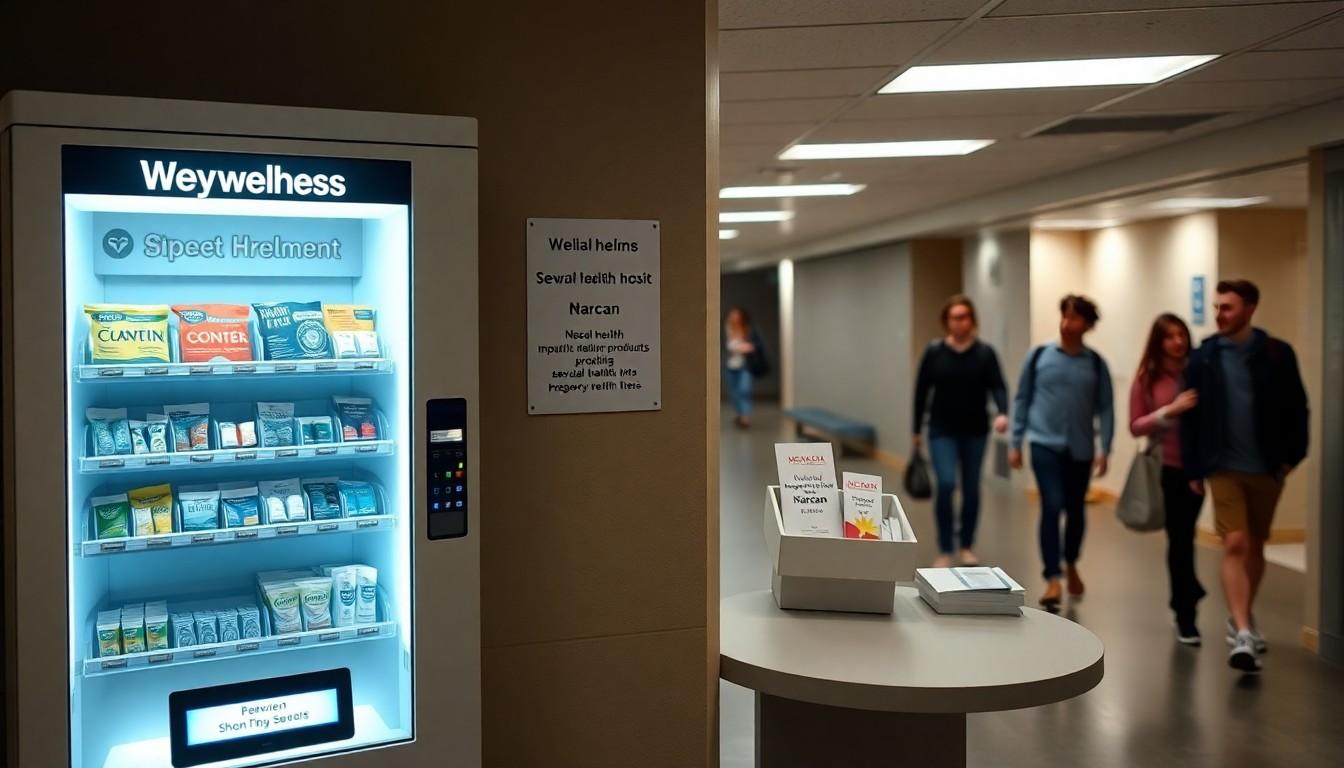
Students at Northwestern University can now collect free Plan B, Narcan, condoms, pregnancy tests and period products from a new Wellness Kiosk in Norris University Center, giving students discreet, round-the-clock-style access to practical health essentials when shops and offices may be closed.
Essential Takeaways
- Free essentials: The kiosk stocks emergency contraception, naloxone, condoms, lubricant, pregnancy tests and menstrual products.
- Wildcard access: Students scan the barcode on their university card before choosing an item.
- Useful limits: Plan B and Narcan are limited to one collection per person daily; most other products can be taken up to five times.
- Lower-pressure support: The self-service format aims to make sexual and personal healthcare feel less awkward.
- Weekend access: Its location in Norris University Center extends availability beyond normal office hours.
A discreet health stop in the heart of campus
The new wellness kiosk is designed to remove one of the biggest barriers to basic healthcare: having to ask someone face to face. Tucked into the lower level of Norris University Center, it offers a quiet, practical way for students to pick up supplies without a shop queue or a potentially uncomfortable conversation.
The range is notably broad. Alongside condoms and lubricant, students can find Plan B, pregnancy tests, Narcan and menstrual products, creating a compact safety net for everyday campus life. Northwestern's Center for Student Advocacy & Wellness lists sexual health support and prevention information among its student resources.
Why free access matters after hours
Timing can make a simple health need feel much more urgent. A student who needs emergency contraception late at night, or someone looking for naloxone at the weekend, may not have an open clinic or pharmacy nearby. The kiosk's position in a building open on weekends helps bridge that gap.
That doesn't replace medical advice when it's needed, but it does make first steps easier. Northwestern's sexual health guidance covers safer sex, contraception and pregnancy prevention, giving students a useful place to find further information alongside the products themselves.
What students can collect
The kiosk includes several varieties of condoms, condom sizing kits, lubricant and pregnancy tests, as well as emergency contraception and overdose-reversal medication. Menstrual products round out the selection, making the machine relevant to more than one type of urgent need.
Access is controlled through a Wildcard scan, and the university says transaction information is used to confirm community membership and manage daily limits. Students can claim Plan B and boxes of Narcan once per day, while other products have higher collection limits.
How to use the Wellness Kiosk
Using the machine is straightforward. Scan the barcode on the back of a Wildcard, select the product number on the touchscreen and choose the checkout option. Students may need to hold the card lower than expected for the reader to recognise it.
Older or worn cards might not scan reliably at first, although direct ID-number entry is expected to become available. If the machine refuses a card, it may be worth trying again carefully rather than assuming the product is unavailable.
For anyone unsure which option is appropriate, Northwestern's contraception and pregnancy-prevention resources offer background information, while its wider sexual health pages point students towards additional support.
A small machine with a bigger purpose
The kiosk is part of a broader effort to make sexual wellness less hidden and more ordinary. University resources from the Center for Student Advocacy & Wellness and the Women's Center cover safer sex, gender-responsive healthcare and related support, but a physical, self-service option adds something important: immediacy.
That low-pressure design could be especially useful for first-year students adjusting to campus life. Sometimes the most helpful health service isn't the one with the longest explanation. It's the one that's visible, available and simple enough to use when you're already feeling stressed.
It's a small campus fixture, but it could make essential care feel far more within reach.
Source Reference Map
Story idea inspired by: [1]
Sources by paragraph: