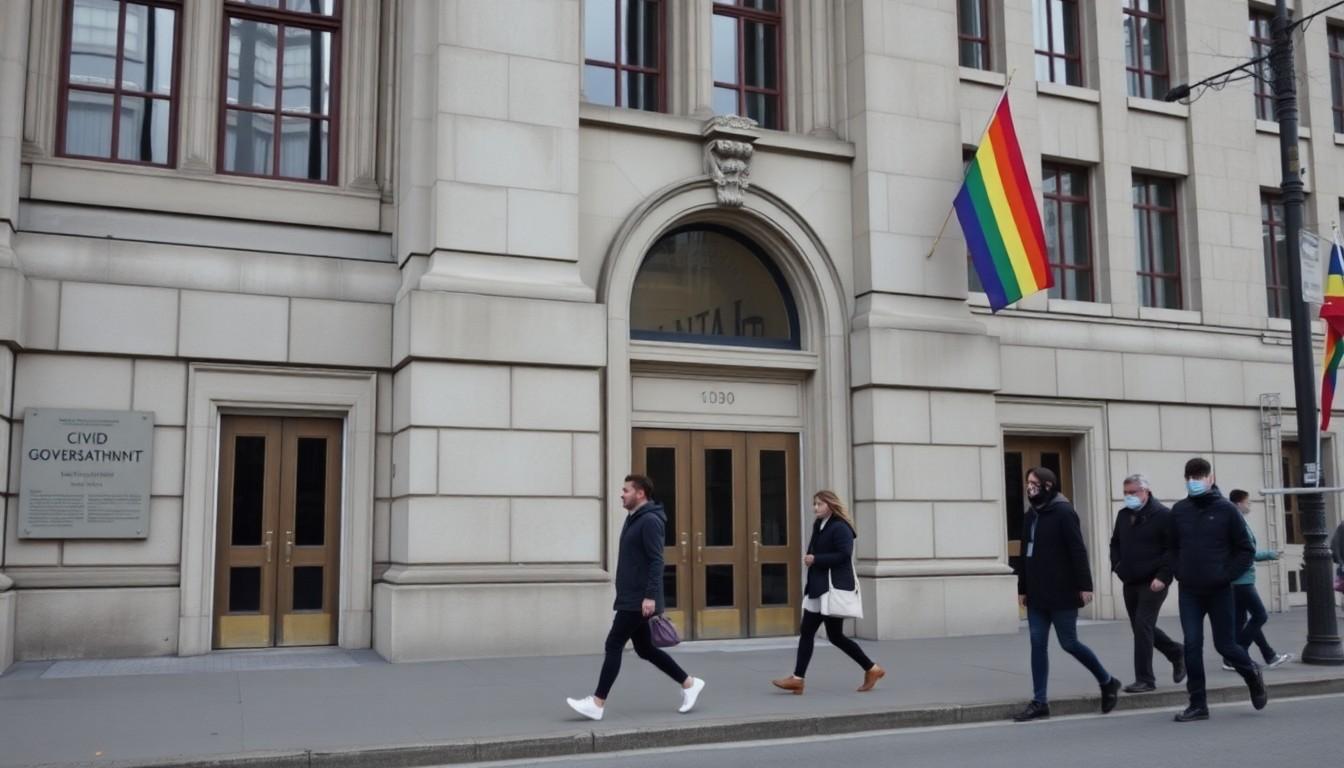
Advocates are urging Ottawa to examine Alberta and Saskatchewan policies affecting trans young people, arguing that rules around school identities, sport and healthcare have intensified fear and pressure. The debate reaches far beyond provincial legislatures, raising difficult questions about parental rights, youth wellbeing, equality and the consequences of using the notwithstanding clause.
Essential Takeaways
- School identities: Alberta and Saskatchewan require parental consent for some pupils under 16 who want to change their names or pronouns at school.
- Sport restrictions: Alberta bars trans athletes aged 12 and over from some amateur competitive female sports.
- Healthcare limits: Alberta has also introduced restrictions affecting gender-affirming care for young people.
- Legal protection: Both provinces have used the notwithstanding clause to shield the measures from certain court challenges.
- The central dispute: Advocates focus on safety, dignity and mental health, while governments stress parental authority and protection in sport and healthcare.
Advocates want Ottawa to investigate
The immediate push in Ottawa is for a federal inquiry into provincial laws that advocates say have contributed to harassment, bullying and worsening mental health among transgender people. The request comes as campaigners seek a public forum where young people and families can describe what the rules feel like in daily life. According to the Canadian Public Health Association, transgender and gender-diverse people’s rights are closely tied to access to safe, respectful healthcare and social inclusion.
That makes the political argument unusually personal. A name or pronoun policy may look procedural on paper, but in a classroom it can become a very public moment of exposure, embarrassment or conflict. Rights groups including Action Canada for Sexual Health and Rights have warned that policies affecting young people can have serious consequences for privacy, equality and access to care.
What the Alberta and Saskatchewan rules do
In both provinces, school rules require parental consent when pupils under 16 seek to change their names or pronouns at school. Supporters describe that as a question of family involvement and parental rights. Critics argue it can leave young people who aren't safe or supported at home with few practical options.
Alberta's wider package goes further. It restricts transgender girls and women from taking part in certain amateur competitive female sports, while separate measures limit access to some gender-affirming medical treatments for youth. Analysis from the University of Saskatchewan's School of Public Policy has highlighted the complexity of Bill 137 and the competing legal and policy claims surrounding Saskatchewan's approach.
The distinction between the provinces matters, but so does the shared direction: decisions about identity, participation and healthcare are being moved into legislation. For families, that can make an already sensitive period feel more rigid and public.
The legal fight is still unfolding
Both Alberta Premier Danielle Smith and Saskatchewan Premier Scott Moe have used the notwithstanding clause to protect the laws from some Charter challenges. That is a powerful constitutional tool, and its use has made these disputes about more than the policies themselves. It also raises questions about how governments should balance legislative authority with individual rights.
The legal landscape remains active. The Legal Education and Action Fund has intervened in litigation involving trans and non-binary youth in Saskatchewan, while its case summary on UR Pride v Saskatchewan sets out the broader constitutional dispute. Those proceedings are important because they test how far provincial governments can go when legislation affects vulnerable young people.
A court case can settle legal questions, but it can't capture every consequence of a policy. That's one reason advocates want an inquiry: they argue that testimony from pupils, parents, teachers and healthcare professionals should sit alongside constitutional arguments.
Why mental health is at the centre of the debate
Campaigners say the impact can show up as anxiety, isolation and fear of being singled out. They have also raised the deaths by suicide of some people since the policies were enacted, arguing that lawmakers need to confront the human cost rather than treating the issue as an abstract culture-war contest. The Canadian Public Health Association has repeatedly linked discrimination and exclusion with poorer health outcomes for transgender and gender-diverse communities.
Opponents of the policies frame the issue differently. Alberta's government says its healthcare rules are intended to stop young people making decisions it considers premature or difficult to reverse. Its position on sport is presented as a matter of fairness and safety, while both provincial governments describe school consent rules as a way to keep parents involved.
Those arguments deserve scrutiny, but they also need evidence. The debate is strongest when it distinguishes between different questions: what protects a child's privacy at school, what makes sport fair and safe, and what healthcare should be available to which patients and under what safeguards.
What happens next for families and schools?
For families, the practical advice is to check the latest provincial guidance, school-board procedures and available support services, since rules and court proceedings may change. Schools and youth organisations should also make sure pupils know where they can find confidential, non-judgemental help, particularly if home circumstances make disclosure risky.
The legal and political pressure is unlikely to disappear soon. LEAF's work on Saskatchewan youth cases, Action Canada policy analysis and public-health statements all point to a wider national conversation about how governments make decisions affecting minors. For many parents, teachers and young people, the hope is less about winning a headline than finding a way through a tense moment without leaving anyone feeling invisible.
The proposed inquiry would be a significant step, but so would a calmer, evidence-led conversation. Trans young people are not simply symbols in a constitutional argument; they're the people who live with its results.
A closer look could help replace political heat with practical protection.
Source Reference Map
Story idea inspired by: [1]
Sources by paragraph: