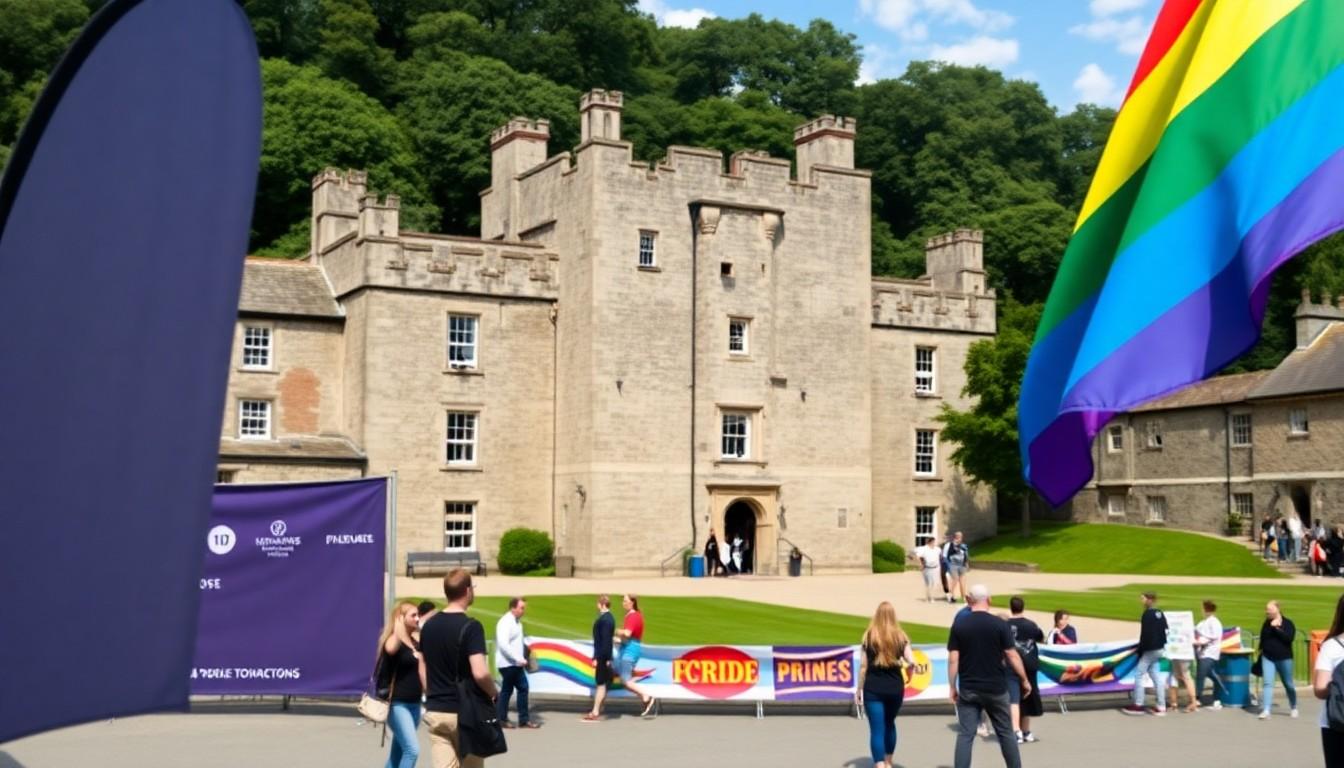
Festival organisers have turned a historic Devon landmark into a striking Pride statement, draping Totnes Castle in a vast rainbow flag during a four-day arts celebration. The colourful display has delighted supporters who see it as a message of inclusion, while critics have questioned its cost and the use of a centuries-old site.
Essential Takeaways
- A dramatic display: A rainbow flag measuring roughly 150 metres, or nearly 500 feet, was wrapped around Totnes Castle.
- Part of a wider festival: The stunt took place during a four-day Pride, music and arts programme in Totnes.
- Mixed local reaction: Supporters praised its visibility, while critics challenged the decision and asked who funded it.
- A historic backdrop: The Norman castle is around 1,000 years old, making the modern artwork especially eye-catching.
- Economic hopes: Local supporters say the festival could attract visitors and strengthen Totnes's cultural profile.
Totnes Castle gets a very colourful makeover
Totnes Castle has rarely looked so bright. During Saturday's festival activity, a huge rainbow flag was unfurled around the Devon landmark, creating a vivid sweep of colour across its historic stonework.
The display formed part of the event's "Capture the Castle" theme, with organisers using the site as both a backdrop and a statement. According to coverage of the festival programme, the wider celebration combined Pride events with music, performance and arts activities across Totnes.
It's an arresting image: old grey masonry, soft Devon light and a flag large enough to turn a familiar landmark into a temporary piece of public art. For supporters, that contrast was precisely the point. (Source: Totnes Pulse)
Why the flag has prompted such a strong response
The reaction has been sharply divided. Some online commenters described the installation as excessive and questioned whether public money had paid for it, while others objected to placing a Pride symbol on a historic castle.
Those criticisms sit alongside a very different response from local supporters, who have described the event as joyful, inclusive and good for the town. Reports on the display said the debate quickly moved beyond the flag itself, touching on public funding, heritage and the role of festivals in civic life. (Sources: Brimstone Report; Yahoo News)
Questions about cost are common whenever a large public installation appears, particularly when it uses an iconic site. But without clear evidence of taxpayer funding, speculation remains just that. The visual may be enormous, yet the financial details need to be judged on verified information rather than social media guesswork. (Sources: Press News Agency; News Minimalist)
Supporters see a boost for inclusion and tourism
Caroline Voaden, Totnes's Liberal Democrat MP, backed the festival and praised its scale, variety and artistic quality. She argued that the programme promoted equality while also helping to raise the town's profile and support its local economy.
That tourism angle matters. Festivals can fill cafes, pubs, shops and accommodation, especially when visitors travel for more than a single headline performance. A memorable image of a castle wrapped in rainbow colours is also the sort of scene that travels quickly online, giving Totnes an unusual piece of destination marketing. (Sources: Yahoo News; Totnes Pulse)
There is, of course, a difference between celebrating a place and using its heritage as a canvas. That tension is part of what makes the display so instantly discussable. Some viewers see a welcoming modern message against an ancient backdrop; others feel the setting should be treated more cautiously. (Sources: Press News Agency; Brimstone Report)
A striking example of heritage meeting modern events
Totnes Castle is associated with Norman history, so the Pride installation created a deliberate clash of eras. The ancient structure remained visible, but the bright fabric altered how people encountered it, at least for the duration of the festival.
Large-scale flags and temporary artworks are increasingly used to make cultural events feel unmissable. They offer an immediate visual hook for visitors and photographers, while giving organisers a recognisable symbol around which a programme can gather. In this case, the castle supplied the drama and the rainbow flag supplied the message. (Sources: News Minimalist; Press News Agency)
For event organisers planning a similar project, the practical lessons are fairly clear: explain the funding, protect the site and publish the safety arrangements. That transparency can prevent a colourful celebration from being overshadowed by avoidable arguments. (Sources: Brimstone Report; Totnes Pulse)
Will the display leave a lasting impression?
The flag was temporary, but the conversation may last longer. Totnes now has a highly shareable festival image, along with a public debate about who gets to shape civic spaces and how historic landmarks can be used in contemporary cultural life.
Supporters will likely remember the display as a bold sign of welcome. Critics will remember the unanswered questions around cost and setting. Either way, it has done what public art often hopes to do: make people stop, look twice and talk. (Sources: Yahoo News; Press News Agency)
For a small town with a strong arts identity, that visibility could prove valuable. The real test will be whether future events can pair the same creative confidence with equally clear communication about planning, funding and heritage protection. (Sources: Totnes Pulse; News Minimalist)
A temporary rainbow has made Totnes Castle impossible to miss.
Source Reference Map
Story idea inspired by: [1]
Sources by paragraph: