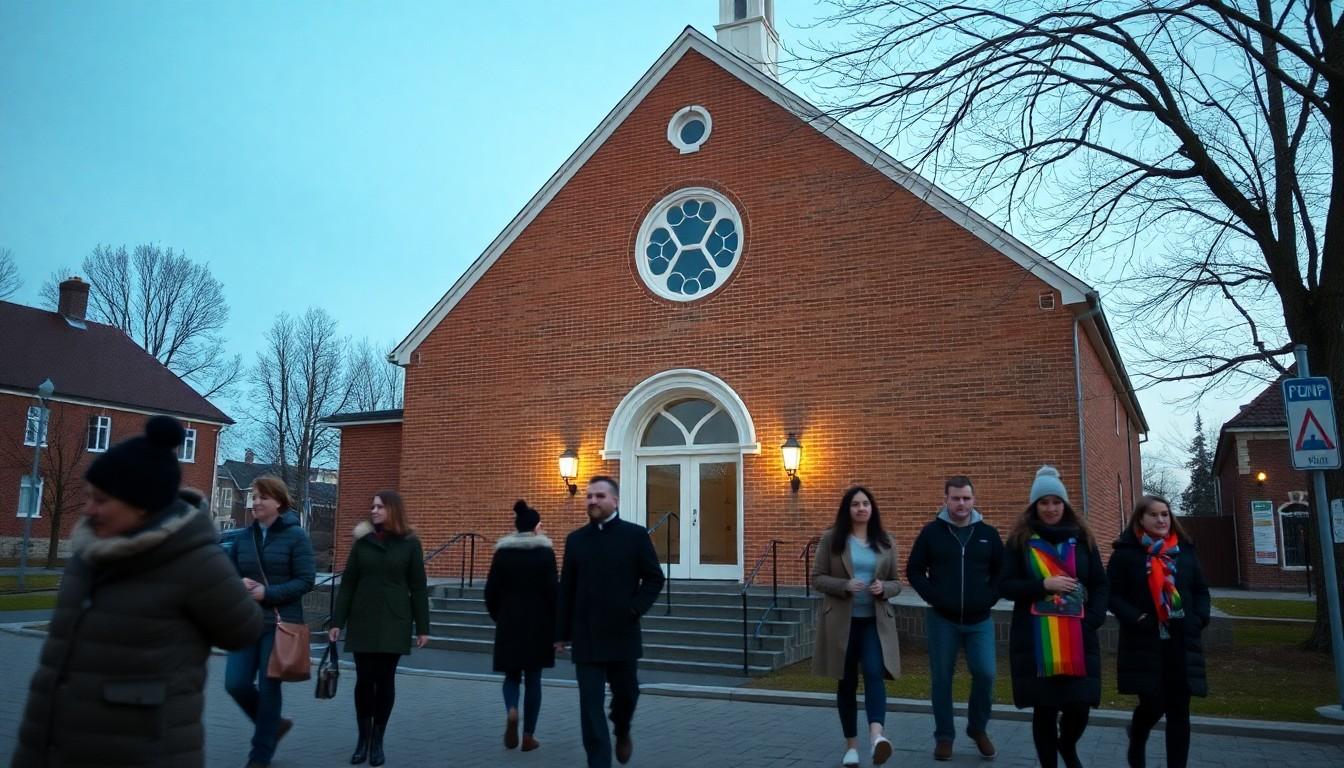
A Finnish pastor is challenging the claim that LGBTQ+ campaigners only began influencing church and family debates from outside the church, pointing instead to decades of internal advocacy and theological work.
The argument centres on historical accuracy
The dispute began with a claim published in Hämeen Sanomat that Seta and Pride had launched campaigns, roughly a decade ago, to reshape marriage, family structures and the idea of gender from beyond the church. Kirsi Ojansuu-Kaunisto, a parish pastor and parish election candidate in Akaa, says that account is misleading. [2]
Her response points to a quieter, longer-running story inside Finland's Evangelical Lutheran Church. Support for the rights and dignity of sexual and gender minorities was already developing in the late 1990s, well before today's debates became so prominent.
Church-based rainbow work began in the 1990s
One early example was Arcus, a rainbow group established within the church during the late 1990s. Its formation suggests that questions about sexuality, belonging and equality weren't simply imported into religious life by outside campaigners.
That history matters because public discussions often compress complicated social change into a neat before-and-after story. In reality, churches, civic organisations, theologians and activists have frequently influenced one another over many years.
Yhteys brought theology and equality together
In 2000, the Yhteys movement was founded to promote a respectful, Christian approach to sexual and gender minorities. Its stated work included opposing discrimination in wider society and within churches, placing human dignity at the centre of the conversation. [3]
The movement's founders included the Reverend Liisa Tuovinen and theologian Martti Nissinen. The late Archbishop Mikko Juva was among its early members, a detail that underlines how support for a more inclusive approach existed within senior church circles too. [4]
Martti Lindqvist helped shape the debate
Ojansuu-Kaunisto also highlights the late theologian and ethicist Martti Lindqvist, who advocated for the rights of sexual minorities both within the church and across Finnish society. His work forms part of a broader body of Finnish writing examining homosexuality, religion, ethics and public life. [5]
Books and library records on the subject show that the argument has never been purely political. It has also involved theology, ethics, pastoral care and the everyday question of whether people are treated as full members of their communities. That makes the history more human than a simple institutional disagreement.
Why this background still matters today
The exchange arrives as church elections and debates over inclusion continue to attract strong views. Understanding the timeline won't settle every theological question, but it can prevent modern arguments from resting on an incomplete account of the past. [6]
It also offers a useful reminder: social change rarely starts in one place. Campaigners outside the church may have pushed public debate forward, but people within the church were also organising, writing and speaking long before the issue became a regular headline.
The fuller history is less tidy, but it is far more revealing.
A more accurate timeline makes room for both outside activism and years of internal church advocacy.
Source Reference Map
Story idea inspired by: [1]
Sources by paragraph: