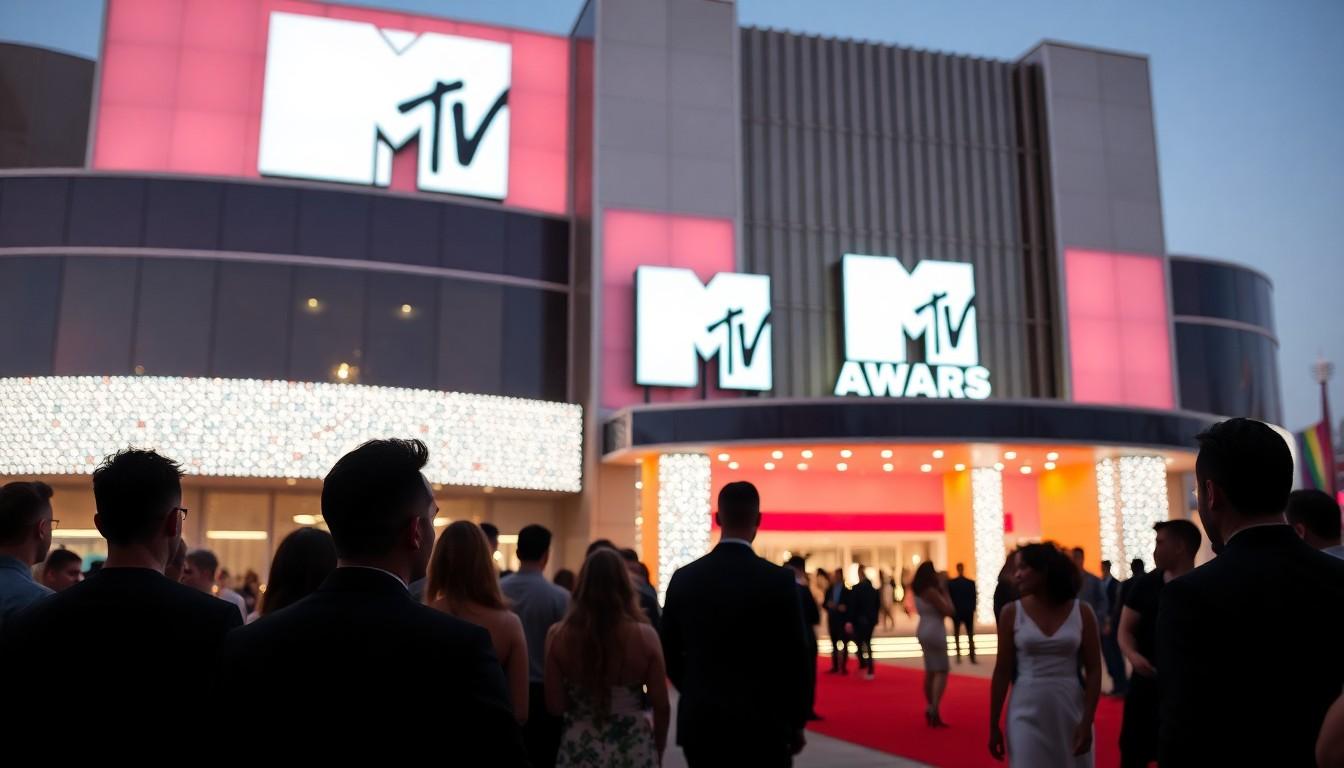
The 2026 MTV Video Music Awards in Los Angeles delivered major wins, dramatic fashion and a powerful celebration of LGBTQIA+ music history. Madonna led the night with seven trophies, while Kehlani, Adam Lambert, Orville Peck, Troye Sivan and drag royalty brought plenty of queer sparkle to the ceremony.
Essential Takeaways
- Madonna dominated: The pop icon collected seven awards, including Artist of the Year and Best Album.
- Kehlani won big: Her collaboration with Cardi B, Safe, took Best Hip-Hop.
- George Michael was honoured: Adam Lambert joined a major tribute to the late gay music legend.
- Queer stars filled the room: Troye Sivan, Orville Peck, Pabllo Vittar, Bob the Drag Queen and Monét X Change all featured.
- The red carpet was bold: Leather, sheer styling and theatrical silhouettes made the fashion feel unmistakably VMA.
Madonna owns the 2026 VMAs
Madonna didn't simply attend the 2026 MTV VMAs, she practically commandeered them. The 68-year-old arrived with the night's biggest nomination haul and left with seven awards, making her the ceremony's clear headline-maker.
Her wins included Artist of the Year, Best Album for Confessions II, Best Collaboration with Sabrina Carpenter and several prizes for Confessions II - The Film. The result was a reminder that Madonna's grip on pop culture remains remarkably firm, even after four decades of reinvention.
The singer also opened the ceremony with her first VMA performance in 23 years, a return that had been announced by MTV ahead of the event. Paramount's announcement positioned the appearance as a major television moment, and the awards haul made it even more significant. (According to Paramount Press Express and The Guardian.)
Madonna later looked back on her infamous 1984 wardrobe mishap, when a fallen stiletto turned an accidental stumble into one of the most replayed moments in awards-show history. Her story still carries a useful lesson: sometimes the disaster is the performance.
Kehlani and Cardi B take Best Hip-Hop
Kehlani was among the night's LGBTQIA+ winners, taking Best Hip-Hop alongside Cardi B for Safe. The collaboration beat a competitive field that included several of rap's biggest names, giving the openly queer singer a particularly visible win.
Kehlani also received a Best R&B nomination for Folded, although that award went to Bruno Mars. Two nominations and one trophy still made the night a strong showing, especially in a ceremony packed with established favourites and high-profile pop releases.
The win also reflects how fluid the modern awards landscape has become. Artists increasingly move between R&B, hip-hop, pop and dance without treating those labels as fixed boxes, and Kehlani's presence sits comfortably in that wider shift. The official winners coverage and nominations reporting both listed the Safe victory and Kehlani's additional nomination. (The Wrap and NBC Boston reported on the results and nominees.)
Adam Lambert gives George Michael tribute its missing piece
One of the evening's most affecting sequences was the tribute to George Michael, whose influence on openly gay pop performers remains impossible to miss. Orville Peck introduced the segment by describing Michael as a trailblazer, before SOMBR, RAYE and Teddy Swims performed a run of his best-known songs.
Then Adam Lambert appeared without being announced in advance, performing Freedom! '90 with MNEK, Saint Harison and MEEK. The surprise entrance gave the tribute an extra jolt of emotional weight, particularly because Michael's music and public life have long carried deep meaning for LGBTQIA+ audiences.
There had been criticism before the show that the initial performer line-up appeared to lack openly LGBTQIA+ representation. Lambert's arrival, alongside Peck's introduction, helped address that concern in the most effective way possible: on stage, in the music, and without overexplaining the point.
The tribute also connected the current ceremony to Michael's own VMA history. He won four awards during his career and received the Video Vanguard Award in 1989, underlining just how much the event owed to his legacy. (The Star Observer covered the performance details, while The Guardian's awards report provided wider ceremony context.)
Orville Peck and Troye Sivan fly the queer flag
Orville Peck supplied one of the night's most memorable red-carpet lines while wearing a full leather look in Los Angeles heat. Asked about the outfit, he said he was happy to be “representing the gays”, a wonderfully direct summary of the event's wider mood.
The outfit was theatrical, impractical and completely at home at the VMAs. That's the charm of a good awards-show look: it doesn't need to be sensible, it needs to be remembered.
Australian pop star Troye Sivan also appeared as a presenter, joining a line-up that included Charli xcx, Tyla, Teyana Taylor, Paris Hilton and Emma Bunton. His presence added an international and distinctly queer thread to the ceremony, while keeping Australia firmly in the conversation.
The red carpet offered plenty of variety beyond the headline names, with the wider fashion coverage capturing the ceremony's mix of sharp tailoring, sheer fabrics, denim and stage-ready styling. (The Guardian's red-carpet gallery documented the night's standout looks.)
Drag royalty brings spectacle to the red carpet
Bob the Drag Queen and Monét X Change arrived together, giving the red carpet a generous dose of drag glamour. Bob's denim and polka-dot ensemble was deliberately playful, while Monét chose a sheer black look with a more polished, dramatic edge.
Pabllo Vittar also appeared, adding Brazilian pop and drag-star power to an already international gathering. Several RuPaul's Drag Race alumni were spotted throughout the event, making the red carpet feel less like a side show and more like a genuine meeting point for queer entertainment.
That matters because visibility at events such as the VMAs isn't only about who wins. It is also about whose artistry is treated as part of the main cultural conversation, whether they're collecting a trophy, presenting an award or simply making an entrance people will talk about the next morning.
With Madonna leading the winners and queer artists appearing across the stage, the 2026 ceremony offered a reassuringly familiar VMA formula: huge performances, bigger outfits and just enough chaos to keep everyone watching. (The Star Observer and The Guardian's fashion coverage both highlighted the LGBTQIA+ presence and red-carpet moments.)
The 2026 VMAs proved that queer pop culture isn't sitting at the edge of the room, it's helping run the show.
Source Reference Map
Story idea inspired by: [1]
Sources by paragraph: