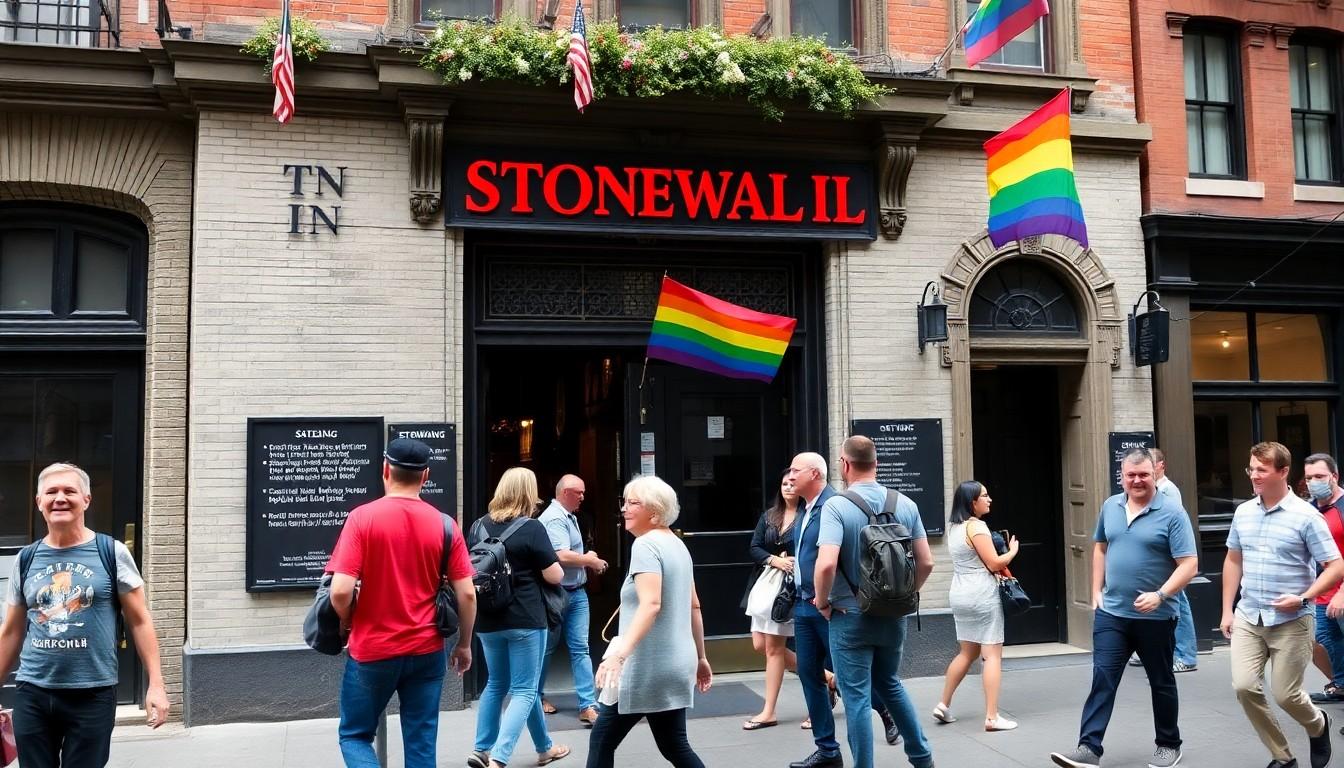
Visitors at New York’s Stonewall Inn welcomed Rob Jetten, the Netherlands’ first openly gay prime minister, during his United Nations General Assembly trip. His visit connected a landmark in LGBTQ history with a milestone in modern politics, while highlighting why representation, remembrance and continued vigilance still matter.
Essential Takeaways
- Historic setting: Jetten visited the Stonewall Inn in Manhattan’s Greenwich Village, widely associated with the modern LGBTQ rights movement.
- Political milestone: He became the Netherlands’ first openly gay prime minister and its youngest premier, according to several reports.
- Representation matters: LGBTQ Victory Institute leaders pointed to his election as a visible example for aspiring candidates.
- Progress needs care: Jetten warned that legal and social advances can't be treated as permanent.
- A notable anniversary: The Netherlands recently marked 25 years since becoming the first country to legalise same-sex marriage.
A landmark welcome for a landmark leader
The Stonewall Inn has a particular kind of atmosphere: part neighbourhood bar, part living history. When Rob Jetten stopped by during his New York visit, the setting made his political achievement feel even more resonant. According to LGBTQ Nation, he had recently been sworn in as the Netherlands' first openly gay prime minister. [2], [3]
Jetten toured the Greenwich Village venue and spoke about the activists whose courage helped launch a global movement for LGBTQ equality. The visit wasn't simply a photo opportunity. It placed a modern political breakthrough in a space that still carries the emotional weight of protest, resistance and community. [1], [4]
From Dutch milestone to global symbol
Jetten's appointment is significant for more than its headline value. Reports from Mint and NDTV describe him as the Netherlands' youngest prime minister as well as its first openly gay leader, giving the milestone both generational and representational importance. [4], [6]
The Netherlands has long been associated with progressive LGBTQ legislation. It became the first country to legalise same-sex marriage in 2001, a moment whose 25th anniversary has renewed attention on how quickly a once-radical idea can become part of everyday civic life. [5], [7]
That progress can be easy to take for granted. But seeing an openly gay leader at the head of government offers a reminder that representation is not abstract. It changes what younger people can imagine for themselves, whether that's a career in politics, public service or simply a life lived openly. [2], [6]
Why Stonewall still carries such weight
The Stonewall Inn's importance reaches far beyond its walls. The uprising associated with the venue in 1969 helped galvanise the modern LGBTQ rights movement, and the site remains a touchstone for Pride events and equality campaigns around the world. [1], [3]
During Jetten's visit, Stonewall co-owner Kurt Kelly discussed the connection between that history and the worldwide Pride movement. His comments underlined a simple truth: rights movements are built by people who take risks before the outcome is certain. [1], [4]
That history also explains why preservation matters. Places such as Stonewall offer something a textbook can't quite provide. They give visitors a physical sense of where change began, with all the rough edges, fear and determination that shaped it. [1], [3]
Representation is powerful, but never finished
Jetten later attended a reception hosted by the LGBTQ Victory Institute, which supports and trains LGBTQ people considering public office. Its chief executive, Evan Low, said prospective candidates often question whether the personal cost of political life is worth bearing. [1], [6]
That hesitation is understandable. LGBTQ candidates can still face hostility, disinformation and pressure to defend their identity before they get the chance to discuss their policies. Jetten's election therefore functions as both encouragement and evidence that public institutions can become more representative. [2], [7]
Yet the new prime minister also struck a cautious note. According to the account of his Stonewall visit, he argued that emancipation doesn't end with a historic election or a landmark law. For LGBTQ communities, the next challenge may be protecting gains that previous generations fought hard to secure. [1], [5]
What his visit says about the road ahead
Jetten's appearance in New York brought together several strands of LGBTQ history: the birthplace of a movement, the country behind marriage equality's first national breakthrough, and a new generation of political leadership. It's a neat reminder that progress rarely moves in a straight line, even when a milestone looks wonderfully clear. [1], [7]
For visitors, the practical lesson is equally straightforward. Learn the history behind places such as Stonewall, support organisations developing new LGBTQ leaders, and treat representation as something to build rather than simply celebrate. A single leader can inspire people, but lasting change needs institutions, memory and everyday participation. [2], [3]
Jetten's Stonewall visit was warmly received, but its deeper message was serious. Pride is rooted in celebration, yet it also asks people to stay alert, especially when rights and visibility can become political targets. [1], [4]
It's a powerful reminder that representation opens doors, but communities still have to keep them open.
Source Reference Map
Story idea inspired by: [1]
Sources by paragraph: