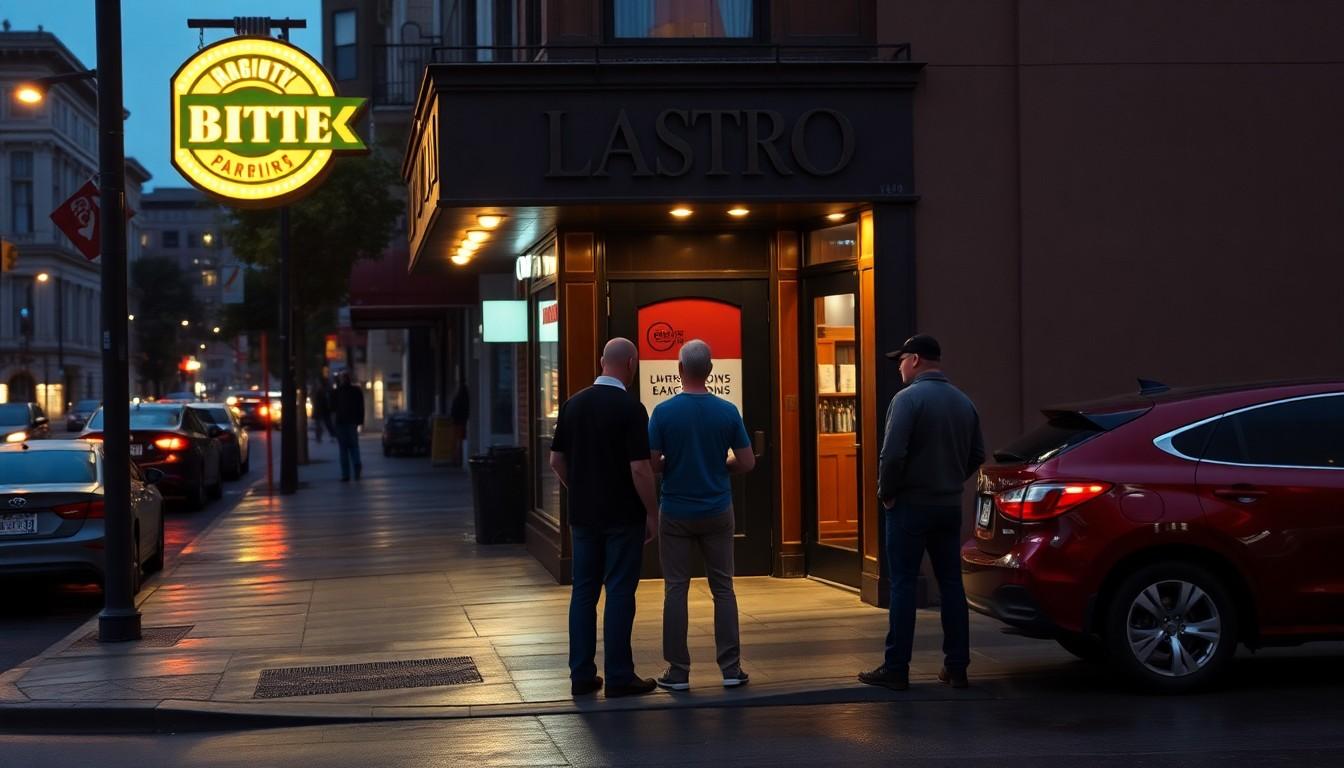
Gay adult performer Alfonso Osnaya says he was knocked unconscious outside Beaux in San Francisco’s Castro District after a confrontation over his work, drawing fresh attention to stigma faced by sex workers in LGBTQ+ spaces.
Essential Takeaways
- What happened: Osnaya says a confrontation began inside Beaux before continuing outside.
- Reported injury: He shared a photograph showing a cut above his right eyebrow.
- His account: He says the group mocked his adult-industry career and was looking for a fight.
- Police status: The current state of any investigation hasn't been publicly confirmed.
- Wider issue: The incident has renewed discussion about sex-worker stigma within queer communities.
A night out turned frightening
The strongest detail in Alfonso Osnaya’s account is also the simplest: he says he was suddenly unconscious outside a familiar LGBTQ+ venue. The adult performer told Out that a dispute began inside Beaux, a bar in San Francisco’s Castro District, before the men confronted him after he left.
Osnaya said staff and bystanders helped him while paramedics and police attended. He later posted an image showing a cut above his right eyebrow, a stark reminder that arguments which begin as verbal need only seconds to become dangerous. Reports from SFist and The Pink Times also described the alleged assault as taking place after he left the bar.
Osnaya says his career was used against him
According to Out, Osnaya said the men referred to his work in gay adult entertainment and appeared to know who he was. He began working in the industry in 2021 and has since appeared for several studios, including Falcon, Trailer Trash Boys, SayUncle, Carnal and Lucas Entertainment.
He also acknowledged that he should have disengaged, saying the group was provoking him and appeared intent on starting a fight. That reflection doesn't shift responsibility for an alleged attack, but it does underline how quickly a hostile exchange can spiral, particularly when someone is isolated outside a venue.
Gay Express and Attitude reported similar details about Osnaya’s account, including his description of being attacked after leaving the Castro bar. As with any allegation, the full circumstances remain subject to investigation and verification.
The uncomfortable stigma inside queer spaces
The incident has prompted a broader conversation about the uneasy place adult performers can occupy even within LGBTQ+ nightlife. Queer venues may offer safety and belonging, yet performers and sex workers can still encounter assumptions that they're immoral, promiscuous or somehow less deserving of respect.
That contradiction matters. A person can be celebrated as part of a community in one setting and judged for their work in another, sometimes within the same night. Mundo Mais and The Pink Times both framed the story around that tension, highlighting the persistent prejudice adult performers can face.
It’s also a useful reminder that LGBTQ+ spaces aren't automatically free from every form of discrimination. Community solidarity has to include people whose jobs, public profiles or relationships to sexuality make others uncomfortable.
What remains unclear about the alleged attack?
The reported assault took place on September 17, but public information about a police investigation remains limited. No confirmed account has established whether arrests were made, whether charges followed or whether authorities formally classified the incident as a hate crime.
That uncertainty is important. Online discussion can move faster than verified evidence, especially when a well-known performer shares an account on social media. Readers should distinguish between Osnaya’s reported experience, media coverage of his comments and facts confirmed by law enforcement.
For anyone caught in a similar confrontation, the practical advice is unglamorous but useful: leave the scene, stay near staff or other people, call emergency services if violence occurs and preserve photographs or messages that may help investigators. Pride, anger and the urge to answer back can all wait until you're safe.
Why the story has struck a nerve
Osnaya’s account has travelled because it combines a familiar nightlife scenario with a particularly pointed form of shaming. He wasn't describing a random disagreement alone; he said his profession was used to target him, which has resonated with performers and supporters who recognise the pattern.
The Castro has long carried powerful symbolism as a centre of LGBTQ+ life, so an alleged attack there feels especially jarring. But symbolic neighbourhoods are still ordinary places, with ordinary risks and ordinary human failings. A safer nightlife culture depends not only on venues offering refuge, but also on patrons refusing to turn someone’s identity or work into ammunition.
For Osnaya, speaking publicly appears to have been a way to name that harm. For everyone else, it’s a prompt to make queer spaces genuinely welcoming, including for the people whose labour is tied most visibly to sexuality.
It's a small act of solidarity, but refusing sex-worker stigma can help make nightlife safer for everyone.
Source Reference Map
Story idea inspired by: [1]
Sources by paragraph:
- Paragraph 1: [2], [4]
- Paragraph 2: [3], [6]
- Paragraph 3: [5], [7]
- Paragraph 4: [2], [3]
- Paragraph 5: [4], [6]
- Paragraph 6: [5], [7]
- Paragraph 7: [2], [4]
- Paragraph 8: [3], [6]
- Paragraph 9: [5], [7]
- Paragraph 10: [2], [3]
- Paragraph 11: [4], [6]
- Paragraph 12: [5], [7]
- Paragraph 13: [2], [4]
- Paragraph 14: [3], [6]
- Paragraph 15: [5], [7]
- Paragraph 16: [2], [3]