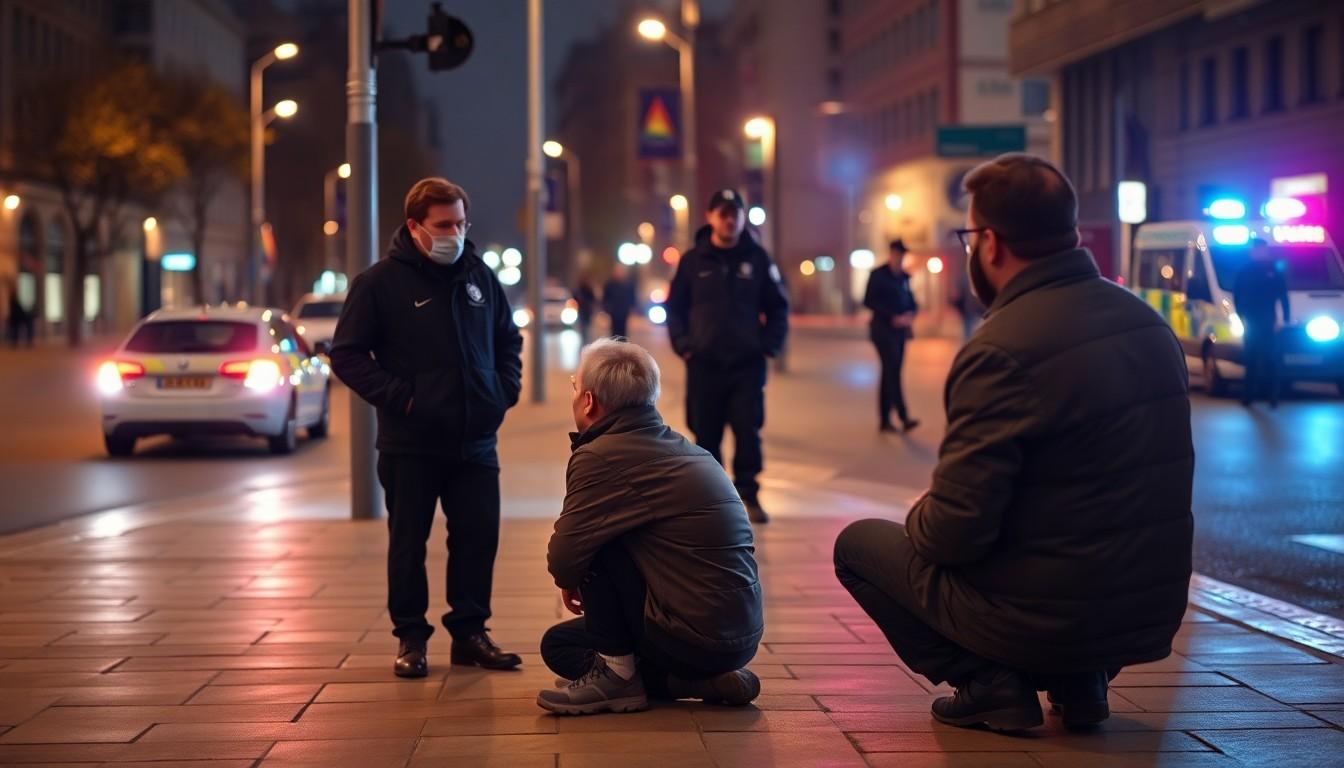
A gay couple were reportedly attacked at night near Berlin’s Viktoria-Luise-Platz, prompting police to investigate a suspected homophobic assault. The incident has renewed attention on safety for LGBTQ+ people in public spaces, particularly when a seemingly ordinary evening takes a sudden, frightening turn.
Essential Takeaways
- Two men targeted: A 31-year-old man and his 24-year-old partner were approached by two unknown men.
- The assault began with filming: One suspect allegedly took out a mobile phone and recorded the couple before striking one of them.
- Injuries were reported: The victim suffered jaw pain and reportedly had several loosened teeth.
- Police suspect homophobia: Investigators are treating the incident as potentially motivated by anti-gay hostility.
- The suspects fled: The two men left the scene and remained unidentified in the initial report.
A quiet Berlin evening turned threatening
The couple were walking near Viktoria-Luise-Platz during the night when two men approached them, according to police information reported by German media. What began as an encounter in a familiar public setting quickly became an act of violence.
One of the men allegedly pulled out a phone and filmed the couple before punching the 31-year-old in the face. The suddenness of the incident is especially unsettling: there was reportedly no extended confrontation before the blow. Tagesspiegel has also reported on attacks against gay men in Berlin, reflecting a wider concern about hostility in public places. [2], [4]
The victim complained of pain around his lower jaw, and several teeth were said to have become loose. An ambulance took him to hospital for treatment, turning a brief street encounter into a painful medical emergency. n-tv has previously reported on a separate Berlin case in which a gay couple were attacked after kissing, underlining how quickly public affection can become a flashpoint for abuse. [5]
Why police are treating it as a homophobic attack
Police are investigating the possible motive rather than treating the incident as an unexplained assault. The reported circumstances, including the couple being targeted while together and the suspected filming beforehand, have led investigators to consider an anti-gay motive.
That classification matters because it recognises the wider context around the violence. A punch can injure one person, but an attack motivated by sexual orientation is also intended to intimidate a community. Earlier Berlin cases have similarly involved police examining whether hostility towards gay men played a central role. [3], [7]
The two suspects fled after the assault. At the time of the report, investigators had not publicly identified them, and the case remained open. As with any ongoing investigation, the alleged events are subject to police inquiries and further evidence.
Public spaces remain a safety concern
Berlin is often seen as one of Europe’s more LGBTQ+-friendly cities, but that reputation doesn't make every street or square feel safe. Reported attacks, whether verbal or physical, can leave people weighing up ordinary choices such as walking home, holding hands or stopping for a kiss.
Previous reports have described gay couples being attacked with objects or assaulted in connection with visible affection. Those incidents show why campaigners and community groups continue to stress the importance of recording details, seeking medical help and reporting suspected hate crime. [5], [6]
There’s also a troubling psychological detail in the alleged use of a phone. Being filmed before an assault can feel deliberately humiliating, as if the victim is being turned into a spectacle as well as a target. That added layer can make an already frightening encounter feel even more invasive.
What witnesses and victims can do after an attack
Anyone who witnesses a suspected hate crime should prioritise immediate safety rather than confronting the attackers. Moving towards a busy, well-lit area, calling emergency services and noting the direction of escape can provide useful support without creating another risk.
Victims should seek medical attention, even when injuries initially appear minor. Dental damage, bruising and jaw problems can become more serious later, while medical records may also help document what happened. Berlin police guidance in earlier cases has encouraged witnesses and victims to share relevant information with investigators. [2], [3]
If it is safe to do so, useful details can include clothing, approximate age, distinguishing features, the time and location, and whether anyone was filming or recording nearby. A phone video or witness account may become important, but personal safety comes first.
The investigation now turns to identifying the suspects
Police are continuing to investigate the reported attack and the suspected homophobic motive. Further witness statements, nearby CCTV and information from people who were in the area could help establish what happened and identify the men involved.
For LGBTQ+ residents and visitors, the case is a sobering reminder that visibility and safety are still not guaranteed, even in a city with a strong queer community. A normal night out shouldn't require a risk assessment, but knowing how to get help can make a real difference when something goes wrong. [4], [7]
It's a small comfort, but prompt reporting and careful evidence-gathering give investigators the best chance of holding attackers accountable.
Source Reference Map
Story idea inspired by: [1]
Sources by paragraph: