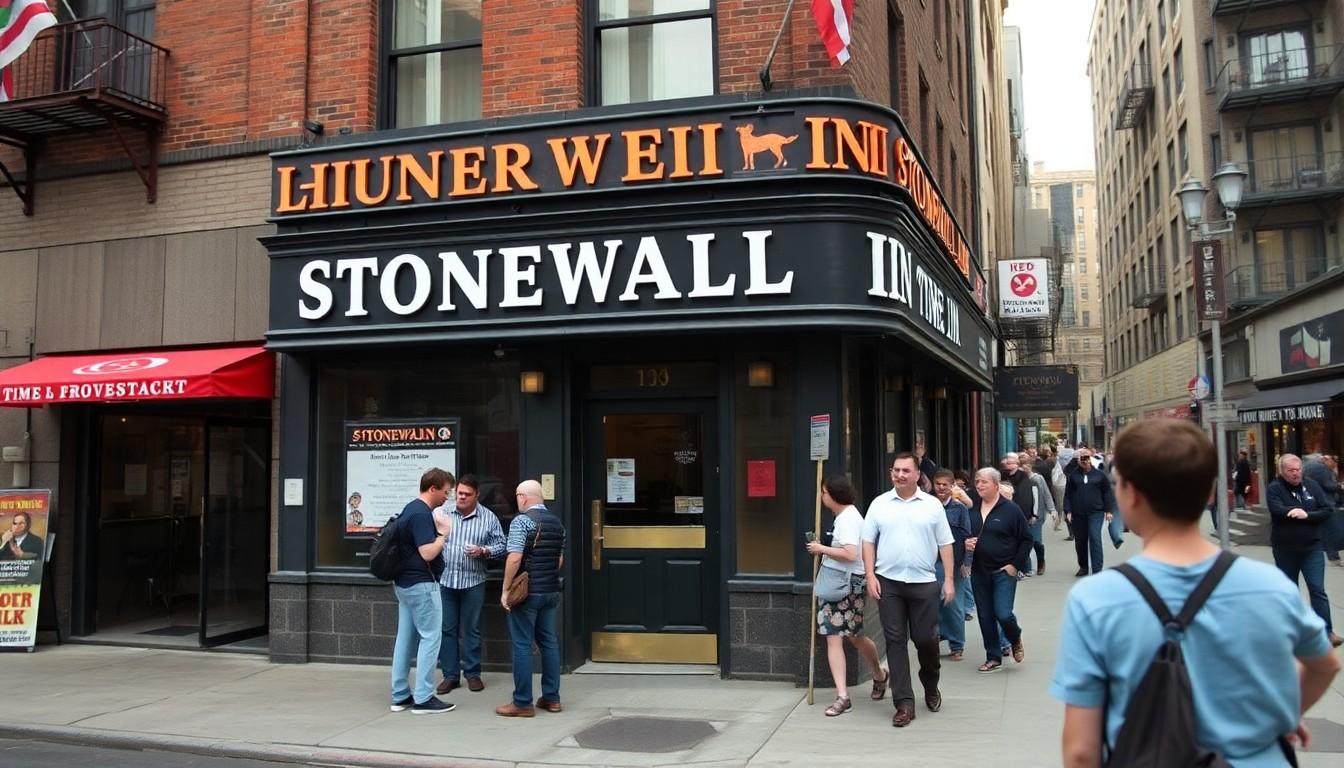
Visitors at New York’s Stonewall Inn welcomed Rob Jetten, the Netherlands’ first openly gay prime minister, during his United Nations General Assembly trip. His visit connected today’s political representation with the bar’s powerful history, while underlining why LGBTQ rights, visibility and historic places still matter.
Essential Takeaways
- Historic setting: Jetten visited the Greenwich Village bar linked to the 1969 uprising.
- Representation matters: His position offers a visible example for LGBTQ people considering public life.
- Rights need protecting: Jetten warned that equality is an ongoing effort, not a finished chapter.
- A memorable reception: The prime minister reportedly enjoyed a beer as attendees applauded.
Stonewall gets a very fitting visitor
There are ordinary political photo opportunities, and then there’s a gay prime minister having a beer at the Stonewall Inn. Rob Jetten’s New York visit landed firmly in the second category, with the famous Greenwich Village bar providing a setting that was both symbolic and deeply personal.
Jetten, who became the Netherlands’ first openly gay prime minister in 2026, toured the landmark during his visit for the United Nations General Assembly. His arrival connected the country’s latest political milestone with the people whose resistance helped reshape LGBTQ life worldwide, according to ABC.
The moment had a quiet emotional charge. Stonewall isn’t simply a bar with a famous name. It’s a place where the past still feels close enough to touch, from the worn interior to the stories attached to its walls.
Why the 1969 uprising still resonates
The Stonewall uprising remains one of the defining moments in modern LGBTQ history. The events of 1969 helped turn a local act of resistance into an international symbol of pride, protest and community organising.
Stonewall Inn co-owner Kurt Kelly reflected on that legacy during Jetten’s visit, linking the uprising to the pride marches now held around the world. It’s a reminder that the modern celebration calendar grew out of anger and courage, rather than appearing fully formed.
Jetten also stressed the importance of preserving LGBTQ historic sites. According to ABC, he said future generations should understand that rights they may inherit comfortably were secured through years of difficult activism.
A prime minister people can actually see themselves in
Jetten’s arrival in office carries significance beyond the Netherlands. Reports from LGBTQ Nation, Drishti IAS and NDTV describe him as the country’s youngest prime minister as well as its first openly gay leader, giving his appointment an unusually strong representation story.
That visibility can matter enormously to people weighing a career in politics. Evan Low of the LGBTQ Victory Institute said aspiring candidates often question whether the personal and professional cost of public life is worth paying.
Seeing someone openly gay occupy one of Europe’s most senior political roles offers a direct answer. It doesn’t remove the risks, but it can make the path look real rather than theoretical. Sometimes representation works less like a grand speech and more like a door left visibly open.
Equality isn’t a finished story
The Netherlands has a long association with LGBTQ rights and was the first country to legalise same-sex marriage, a milestone whose anniversary has recently been marked. Yet Jetten used his Stonewall appearance to push back against the idea that progress can simply be archived.
His message was straightforward: emancipation continues, and new threats require attention. Coverage from RTÉ, the Associated Press and Qmeet.nl placed his appointment within a wider discussion about the Netherlands’ political direction and the significance of his historic role.
That distinction matters. Pride landmarks can feel celebratory, especially when a national leader arrives to applause, but they’re also warnings against complacency. The most useful memorials don’t just tell us what happened. They ask what we’re prepared to defend next.
A small visit with a large message
Jetten’s Stonewall stop combined diplomacy, history and a little everyday warmth. After the speeches and symbolism, the reported beer helped make the scene feel less like a staged political moment and more like a genuine visit to a community landmark.
It also offered a striking contrast across generations. People who once had to fight for basic recognition could scarcely have taken for granted that an openly gay Dutch prime minister would one day stand inside Stonewall as an official guest.
That’s why the visit resonated. It celebrated progress without pretending the work is over, and it placed representation exactly where its history began: among people who refused to disappear.
A landmark feels most alive when it connects yesterday’s struggle with tomorrow’s responsibility.
Source Reference Map
Story idea inspired by: [1]
Sources by paragraph: