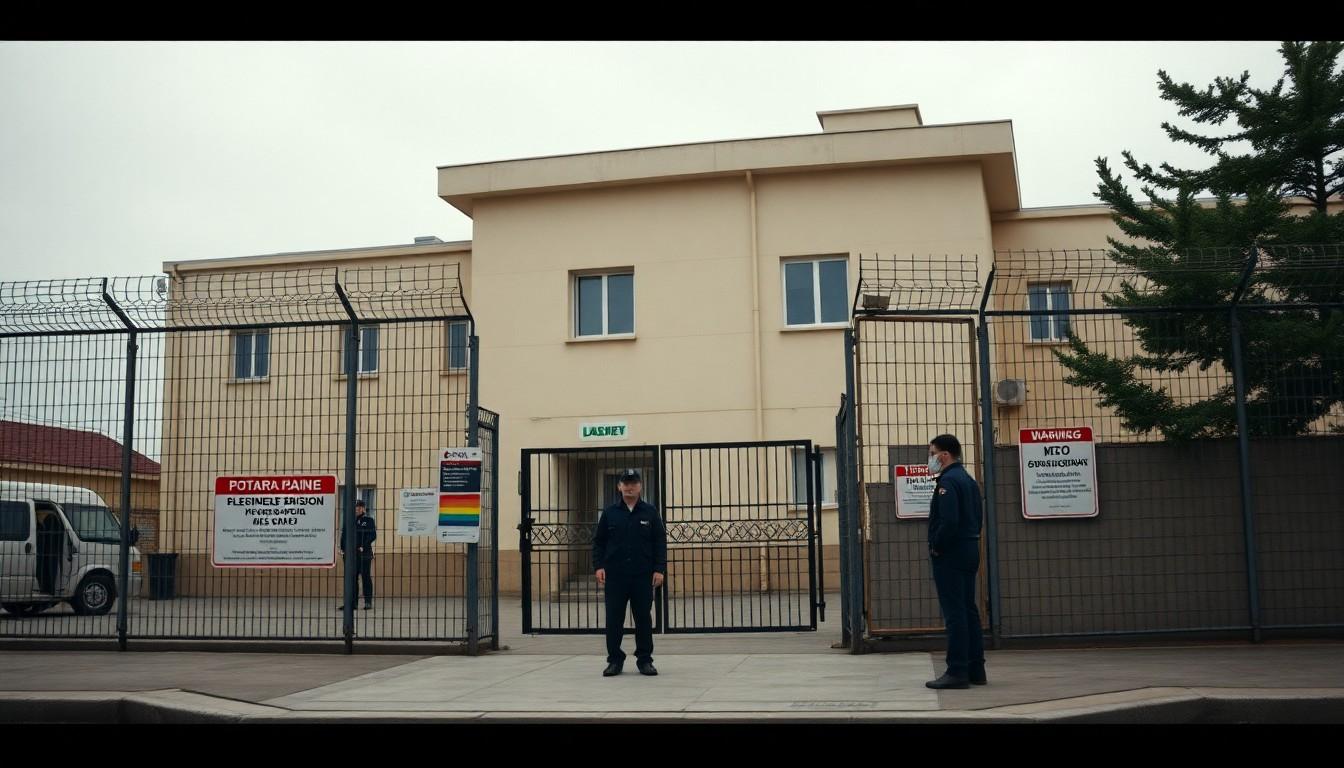
A Turkish MP says LGBTI+ activists and journalists detained after nationwide raids are facing poor hygiene, delayed healthcare and degrading accommodation in Ankara’s Sincan Prison, intensifying concern over a wider crackdown on queer rights and visibility.
Essential Takeaways
- 82 people detained: Authorities arrested activists and journalists in raids linked to the “My Family Is Safe” investigation.
- Poor conditions reported: Detainees described sleeping on concrete floors and lacking lockers and suitable beds.
- Healthcare concerns: Access to medical treatment has reportedly been delayed, with particular alarm over medication and isolation.
- Obscenity charges: LGBTI+ organisations are being investigated under a broadly worded criminal provision.
- Rights groups are alarmed: Amnesty International and other organisations have called for the detainees’ immediate release.
Concrete floors and urgent demands inside Sincan
The most striking detail from the prison visit is also the simplest: several detainees are reportedly sleeping directly on a concrete floor. It’s a stark image, and one that turns an abstract debate about prison standards into a very physical question of warmth, rest and dignity.
Özgül Saki, a Peoples’ Equality and Democracy Party MP, said detainees at Sincan Women’s Prison had identified three immediate needs: bunk beds, lockers and a room free from cigarette smoke. According to bianet, only one person in the ward had access to a proper bed at the time of the visit.
These are basic requests, not special treatment. A bed, somewhere to store personal belongings and breathable accommodation are the minimum ingredients of a safe detention environment.
Why were so many people detained?
The arrests followed coordinated raids on LGBTI+ groups’ offices, homes and venues across Turkey. Authorities have linked the operation, known as “My Family Is Safe”, to an investigation involving alleged obscenity offences.
The use of obscenity laws against LGBTI+ expression has drawn growing criticism because the wording can be interpreted broadly. Amnesty International has described the operation as part of an escalating assault on LGBTI+ organisations and activists, warning that criminal proceedings are being used to suppress peaceful advocacy.
The arrests have also affected journalists. Bianet previously reported the detention of journalist Tugba Tekerek over an interview with a Georgian LGBTI+ activist, adding to fears that reporting and public discussion are being treated as forms of political disobedience.
Healthcare and alleged mistreatment add to the concern
Saki said people held in the L4 ward had reported discrimination, torture and ill-treatment during their first 48 hours in custody. She called for those responsible to face prosecution, describing the alleged treatment as amounting to hate crimes.
Healthcare is another major concern. The MP said detainees had raised problems with hygiene, medical access and delays in receiving treatment. A separate report by Velvele alleged that imprisoned LGBTI+ people living with HIV had been held in solitary confinement and denied medication, calls, correspondence and visits.
Those allegations are especially serious because interruptions to essential medication can create immediate health risks. In any detention setting, medical treatment shouldn’t depend on delays, disciplinary decisions or a person’s identity.
The crackdown extends beyond prison walls
The prison reports sit within a broader pattern of pressure on Turkey’s LGBTI+ community. Bianet has documented police raids and online censorship, while international coverage has highlighted restrictions affecting associations, events and public expression.
For activists, the impact isn’t limited to those behind bars. Raids can disrupt support networks, online censorship can cut off information, and the threat of arrest can make community groups think twice before organising. That quieting effect is often the point: visibility becomes risky, and solidarity becomes harder to sustain.
The phrase “My Family Is Safe” has therefore become deeply contested. Critics argue that presenting LGBTI+ groups as a threat to families recasts equality work as a public danger, rather than recognising it as lawful civic activity.
What happens next?
Saki has called for all detainees to be released without waiting for further detention reviews. Amnesty International has likewise urged the Turkish authorities to end the crackdown and free those detained for defending LGBTI+ rights.
The coming legal process will matter, but so will the conditions in which people are held while it unfolds. Access to lawyers, healthcare, family contact and independent monitoring will be crucial for determining whether the allegations are investigated properly.
For now, the reported demands remain painfully modest. A bed, a locker, medicine and a phone call shouldn’t be controversial anywhere, least of all in a system claiming to uphold justice.
It's a small list of basic rights, but meeting it would be an essential first step.
Source Reference Map
Story idea inspired by: [1]
Sources by paragraph:
- Paragraph 1: [2], [3]
- Paragraph 2: [4], [6]
- Paragraph 3: [5], [7]
- Paragraph 4: [2], [3]
- Paragraph 5: [4], [6]
- Paragraph 6: [2], [3]
- Paragraph 7: [5], [7]
- Paragraph 8: [6], [7]
- Paragraph 9: [2], [3]
- Paragraph 10: [4], [6]
- Paragraph 11: [2], [3]
- Paragraph 12: [5], [7]
- Paragraph 13: [2], [3]
- Paragraph 14: [4], [6]
- Paragraph 15: [2], [3]
- Paragraph 16: [5], [7]
- Paragraph 17: [2], [3]
- Paragraph 18: [4], [6]