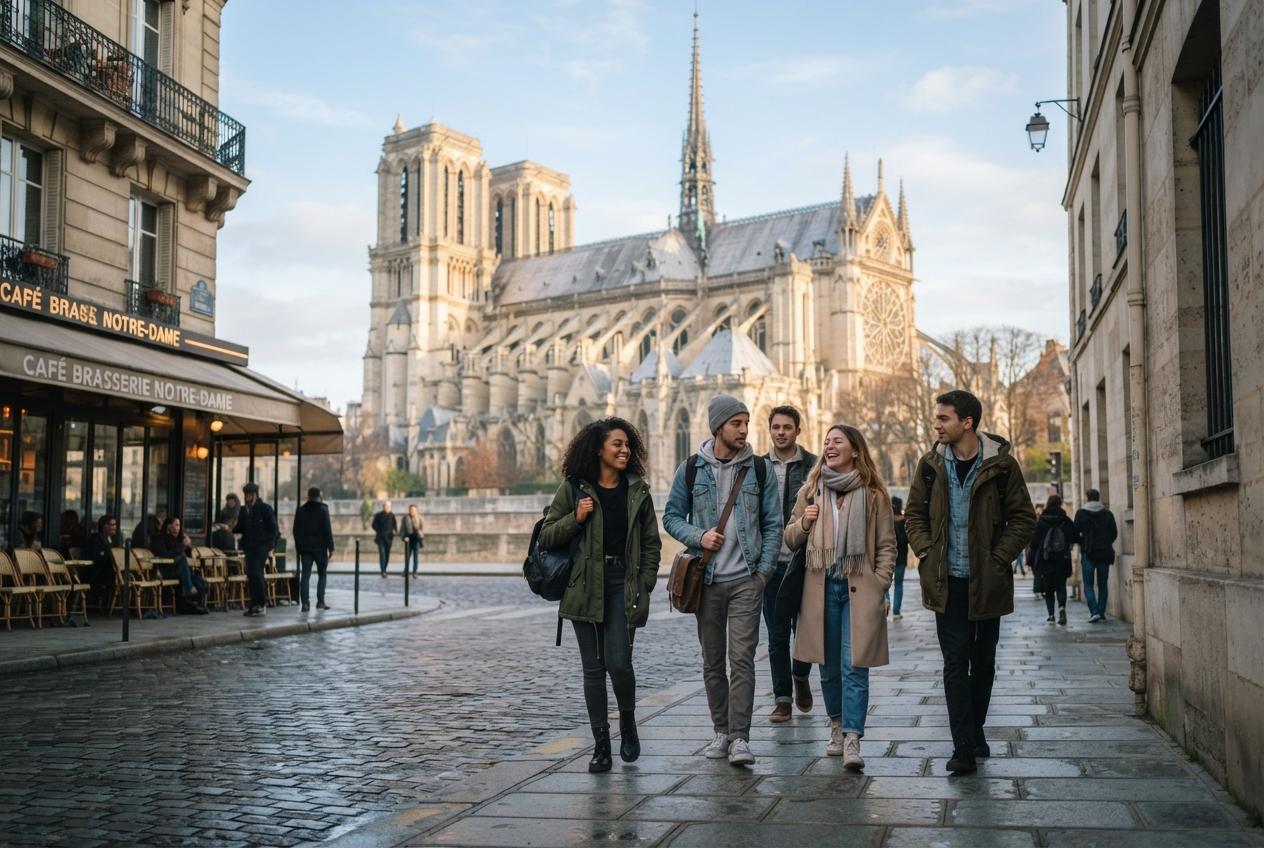
Paris is preparing for a historic papal visit as Emmanuel Macron welcomes Pope Leo to the restored Notre-Dame cathedral. The weekend programme offers a striking mix of faith, politics and symbolism, while the church hopes the reopened landmark can help rebuild confidence after years of scandal and public scrutiny.
Essential Takeaways
- A symbolic return: The pope’s service marks the first papal visit to Notre-Dame since the 2019 fire.
- Macron’s welcome: France’s president is receiving the pontiff in Paris before a weekend of public events.
- A rebuilt landmark: Notre-Dame has undergone an intensive five-year restoration after suffering devastating damage.
- Beyond religion: The visit is also expected to touch on artificial intelligence and Europe’s future.
- A moment of repair: The Catholic Church is seeking renewed public trust after abuse scandals.
Notre-Dame prepares for its first papal visit since the fire
The restored Notre-Dame is about to take centre stage again, this time beneath the quiet ceremony of a papal prayer service. For Parisians and visitors, the setting carries an unmistakable emotional charge: the cathedral’s stonework, timber and stained glass have returned after the 2019 blaze brought the Gothic masterpiece close to collapse.
According to the official Notre-Dame reopening programme, the cathedral’s return was planned as a sequence of religious and civic ceremonies rather than a single opening day. That careful staging has made the building feel less like a tourist attraction and more like a living part of Paris once again.
The pope’s arrival adds another layer of history. His service will be the first by a pontiff inside the cathedral since the fire, turning a restoration milestone into a highly visible moment for the Catholic Church.
Macron’s welcome links faith with national identity
Emmanuel Macron’s reception of the pope reflects the unusual role Notre-Dame plays in French public life. It’s a place of worship, certainly, but it’s also a national symbol, a cultural landmark and a powerful image of Paris itself.
Macron previously visited the cathedral during the restoration, as the interior was gradually revealed. Euronews reported that the president’s visit offered an early glimpse of the work’s progress, including the brightened stonework and carefully renewed details that had been hidden by centuries of soot and dust.
That combination of state ceremony and religious ritual is likely to draw attention beyond France. The reopening has already been presented as a shared cultural achievement, even as debates continue over the place of religion in a strongly secular republic.
The Church wants the visit to mean more than pageantry
The Vatican is hoping the trip can help restore some of the Catholic Church’s standing after years of abuse scandals and criticism over institutional failures. A grand cathedral, however, can’t solve those problems on its own. Trust is rebuilt more slowly, through openness, accountability and a willingness to listen.
Messages connected with the reopening have emphasised Notre-Dame as a place of welcome and prayer. Vatican News described the cathedral’s return as an opportunity for reflection, rather than simply a triumph of architecture or engineering.
That distinction matters. The candles, organ music and polished stone may create a memorable scene, but many observers will be watching for what the pope says about the church’s responsibilities. The most powerful moment may be a candid one, rather than the most theatrical.
AI and Europe add a political edge
The weekend visit is expected to stretch beyond Catholic worship. The pope is also likely to renew calls for international rules governing artificial intelligence, a subject that has become increasingly important as governments and technology companies race to shape the sector.
His interest in AI reflects the Vatican’s broader effort to engage with questions about human dignity, work and responsibility in a rapidly changing world. Technology may seem far removed from a medieval cathedral, but the underlying question is familiar: how should power be used, and who should be protected when systems become difficult to control?
The pope is also expected to set out his thinking on Europe’s future. That could give the visit a wider political resonance, particularly at a time when the continent is wrestling with war, migration, economic pressure and questions about its shared identity.
A restored cathedral looks towards its next chapter
The reopening schedule published by Notre-Dame’s authorities shows how much planning has gone into bringing the cathedral back into public life. Services, ceremonies and visitor access have been arranged carefully, reflecting both the building’s spiritual purpose and its extraordinary popularity.
The restoration has also sharpened interest in how historic buildings can survive disaster without losing their character. Vatican and French church communications have repeatedly framed the cathedral’s return as a sign of hope, while the official programme has focused on continuity, tradition and renewal.
For Paris, the pope’s visit offers a rare pause between the past and the future. Notre-Dame has survived fire, reconstruction and years of uncertainty. Now it must become a working cathedral again, not just a beautiful reminder of what was lost.
A famous building can reopen in a day, but its meaning is rebuilt over time.
Source Reference Map
Story idea inspired by: [1]
Sources by paragraph:
- Paragraph 1: [2], [3]
- Paragraph 2: [3], [5]
- Paragraph 3: [2], [4]
- Paragraph 4: [6], [5]
- Paragraph 5: [2], [7]
- Paragraph 6: [4], [7]
- Paragraph 7: [2], [7]
- Paragraph 8: [4], [6]
- Paragraph 9: [7], [5]
- Paragraph 10: [3], [5]
- Paragraph 11: [2], [4]
- Paragraph 12: [3], [5]
- Paragraph 13: [4], [7]
- Paragraph 14: [3], [6]
- Paragraph 15: [2], [4]