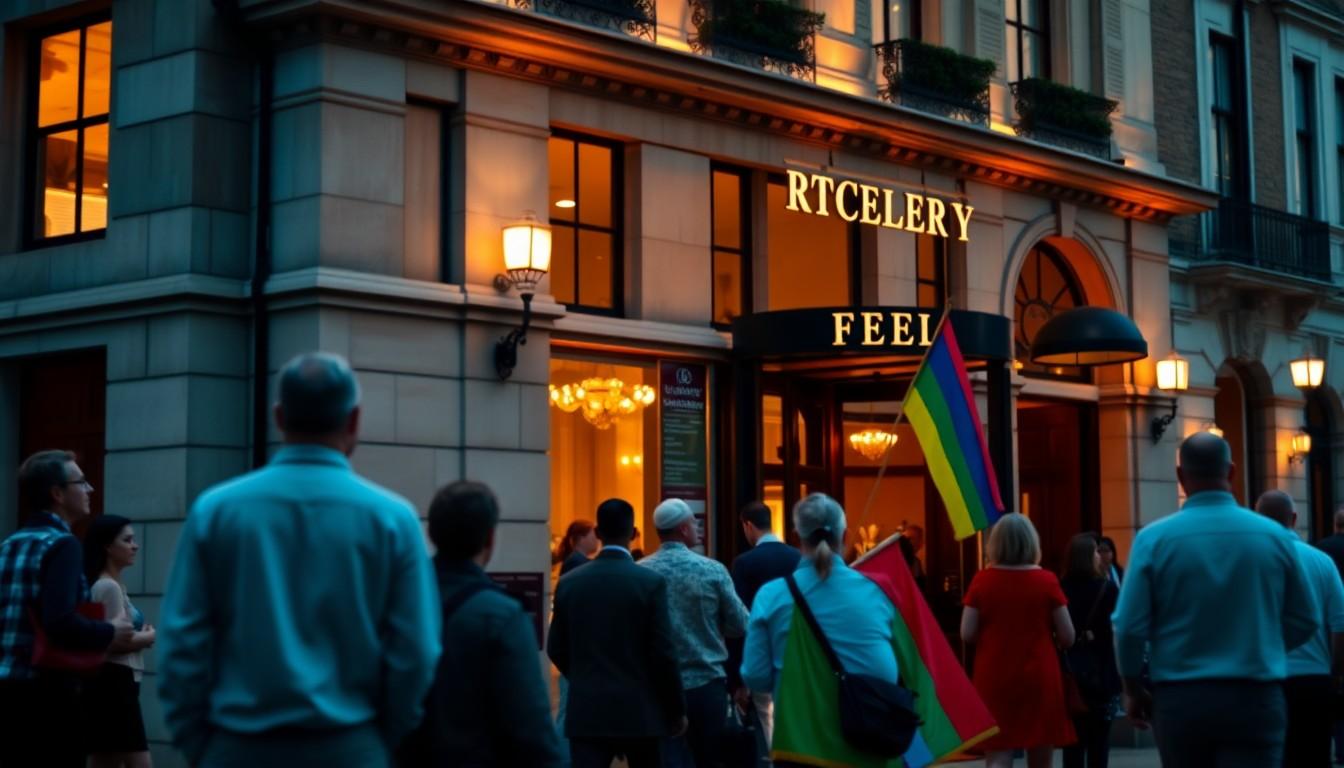
Visitors are discovering The Chancery Rosewood in London, where a former US Embassy has been reimagined as a colourful luxury hotel, dining destination and cultural meeting place. Led by openly gay managing director Michael Bonsor, the Mayfair landmark aims to replace old barriers with thoughtful service, striking design and a warmer sense of welcome.
Essential Takeaways
- A landmark reborn: The former US Embassy on Grosvenor Square has been transformed into a Rosewood hotel.
- Designed for discovery: Guests can explore restaurants, bars, art-filled interiors and event spaces across the building.
- Service feels personal: The hotel focuses on flexible arrivals, tailored recommendations and discreet support.
- A cultural address: Its ambition extends beyond overnight stays, with the property positioned as a social hub for London.
- Architecture meets atmosphere: Modernist bones remain, but warmer interiors and carefully chosen artwork soften the imposing structure.
A former embassy gets a very different welcome
The most striking thing about The Chancery Rosewood may be what it no longer asks guests to do. There are no security queues, appointment letters or stern-looking checkpoints waiting outside. Instead, the Grosvenor Square building now invites visitors into a world of polished stone, soft lighting, art and the gentle hum of a busy hotel.
Rosewood describes the property as a significant new London address, with accommodation, dining, wellness and event spaces brought together under one roof. The result is less a conventional hotel than a small urban ecosystem, one where a drink, dinner, business meeting or major celebration can all happen in the same extraordinary setting. [2], [5]
That change of mood matters. The building was designed by Eero Saarinen and opened in 1960 as the US Embassy, so its history is bound up with controlled access and official business. Now, its renewed identity depends on doing almost the opposite: making the building feel open, lived-in and connected to the city. [4], [6]
The Chancery Rosewood keeps its Modernist soul
The renovation hasn't tried to disguise the building's imposing character. Its Modernist structure remains the visual anchor, while the interiors introduce richer textures, contemporary furnishings and an extensive collection of art. It's a smart approach, because flattening the building into a generic five-star hotel would have robbed it of much of its appeal.
Rosewood says the property includes more than 800 works of art, selected to create different moods throughout the hotel. That means the experience changes as you move around: a grand arrival gives way to quieter corners, intimate lounges and more theatrical dining rooms. [2], [4]
Wallpaper's review also highlighted the tension between the building's monumental exterior and its more layered interior. That contrast is part of the fun. Guests aren't simply checking into a room; they're moving through a piece of London's architectural story, with plenty of visual pauses along the way. [6]
Why service, not spectacle, is the real luxury
A dramatic building gets people through the door, but service determines whether they'll want to return. Michael Bonsor's approach is notably practical: luxury should save guests time, reduce uncertainty and make the unfamiliar feel comfortable.
That might mean arranging a more flexible arrival, recommending one genuinely suitable restaurant rather than sending over a list of dozens, or speaking to a guest before arrival so the hotel already feels familiar. The best version of luxury hospitality isn't necessarily louder or more lavish. Often, it's the quiet relief of not having to ask twice.
The Chancery Rosewood's website presents the hotel as a highly personalised experience, with suites, dining and guest services designed around individual needs. Hotel Flock similarly points to the property's broad mix of facilities and its position in Mayfair, where convenience is part of the appeal. [2], [7]
For visitors comparing luxury hotels in London, this is a useful distinction. A large suite and beautiful marble bathroom are lovely, but a thoughtful recommendation, a smooth transfer or a team member who notices hesitation can be what guests remember most.
Eight bars and restaurants give the hotel a social pulse
The property is designed to attract more than overnight guests. Its restaurants and bars are central to the ambition, creating reasons for Londoners to visit even when they aren't staying upstairs.
Eagle Bar is one of the clearest examples. Rosewood presents it as a destination for drinks and socialising, with a polished setting that suits both a planned evening and a spontaneous stop after work. It brings a little glamour without requiring guests to commit to a full hotel stay. [3]
That wider mix matters because hotels can easily become sealed-off worlds. The Chancery Rosewood is aiming for something more porous, with dining rooms, bars and events helping it join Mayfair's existing rhythm. A successful hotel in this setting shouldn't feel like a private club that happens to have bedrooms. It should feel like somewhere the neighbourhood can claim, too. [2], [4]
How to make the most of a stay
First-time visitors should allow time to explore rather than treating the hotel as a place to sleep between London plans. The art, architecture and public areas are part of the experience, and the hotel's scale rewards a slower wander.
It also makes sense to book dining ahead, particularly if you're visiting for a celebration or hoping to try a popular bar. Rosewood's individual dining pages are the best place to check current menus, opening times and availability before travelling. [3]
If you're choosing between room categories, think about how you'll use the space rather than simply selecting the largest option. A guest who values privacy, entertaining or a generous sitting room may appreciate a suite, while someone focused on exploring London could find a well-appointed room more than sufficient. The hotel's concierge team can help match the stay to the occasion. [2], [7]
An old gatekeeper becomes a new gathering place
The most compelling part of The Chancery Rosewood is its symbolism. A building once associated with permissions, paperwork and anxious appointments is now trying to become a place for celebration, conversation and everyday pleasure.
That doesn't erase its history, and nor should it. Instead, the contrast gives the hotel emotional depth. Its openness is not just a design decision; it's a statement about what a grand London building can do next.
For LGBTQ+ visitors in particular, welcome is more than a cheerful greeting at reception. It can mean feeling understood, unjudged and able to relax in a space that might initially seem intimidating. The Chancery Rosewood's challenge now is to make that promise feel consistent, whether someone arrives for an extravagant weekend, a drink at the bar or a first important visit to London. [4], [6]
A former embassy has become an ambitious hotel, but its lasting success will be measured by something simpler: whether people feel they belong there.
A grand address feels warmer when everyone can walk through the door.
Source Reference Map
Story idea inspired by: [1]
Sources by paragraph: