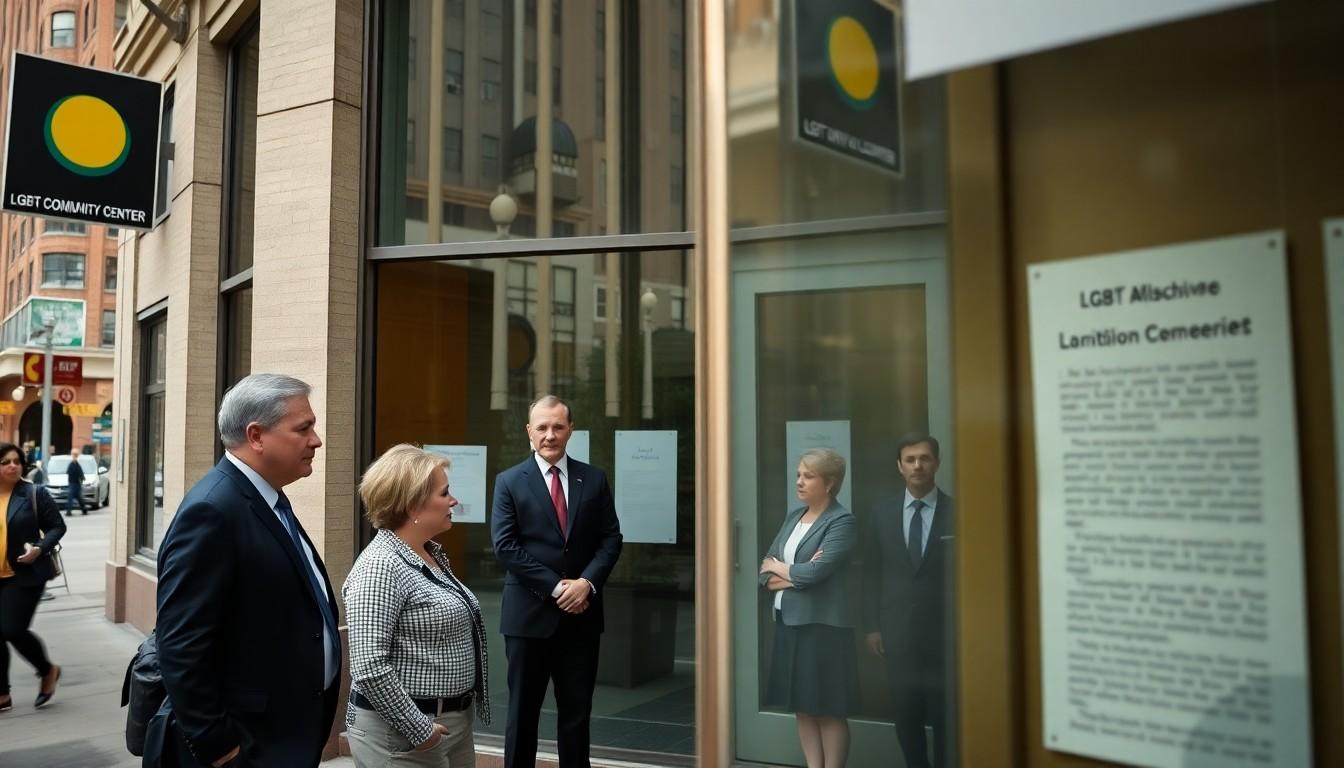
Visitors to New York's LGBTQ+ Community Center saw a striking meeting between Dutch prime minister Rob Jetten and Mayor Zohran Mamdani, as the pair explored historic archives and met young people using the centre's vital support programmes. The visit offered a warm reminder that preserving LGBTQ+ history and funding community spaces remain closely connected.
Essential Takeaways
- A high-profile visit: Jetten and Mamdani met at Manhattan's LGBTQ+ Community Center during the Dutch leader's New York trip.
- History in focus: The centre's archive preserves documents, artwork and other records of LGBTQ+ life and activism.
- Youth voices mattered: Young participants shared zines, photographs and artwork with the two politicians.
- Practical support: Programmes include job-readiness help, health guidance and activities for LGBTQ+ young people.
- A wider message: Both leaders used the visit to underline the continuing need for visibility, safety and community resources.
A meeting built around LGBTQ+ history
The most powerful part of the visit wasn't the official photo opportunity. It was the quiet, human business of sitting in a library, turning towards an archive and listening to young people explain why a community space matters.
According to The Advocate, Rob Jetten and Zohran Mamdani met at the Lesbian, Gay, Bisexual & Transgender Community Center in Manhattan during Jetten's visit to New York for the United Nations General Assembly. The Dutch prime minister had already visited the Stonewall Inn, another landmark closely associated with LGBTQ+ rights.
Jetten, who is the Netherlands' first openly gay prime minister, praised the centre's work documenting LGBTQ+ lives. He connected it with similar efforts in the Netherlands, where museums and cultural institutions are also helping preserve a history that can too easily be overlooked.
Young creators put the archive to work
The archive wasn't presented as a dusty collection kept behind glass. Young people involved in the centre's programmes showed the politicians their own work, including zines and photography, some of which will be preserved for future generations.
That detail gives the visit its real texture. A teenager's collage or handmade publication might seem modest beside official papers and historic photographs, but these personal records show what LGBTQ+ life feels like now. They capture the everyday experiences that formal histories often miss.
The Advocate reported that Jaylynn Gaston, a 19-year-old from the Bronx, shared a photographic collage with Jetten and Mamdani. Gaston described the moment as nerve-wracking but exciting, a reaction that's easy to recognise when a personal creative project suddenly receives an international audience.
Why community centres still matter
For many visitors, the centre is more than a cultural institution. It also provides practical help, from employment preparation to healthcare guidance and an annual summer camp for LGBTQ+ young people.
That mix of history and services is important. A community archive can explain where a movement came from, while a support programme can help someone get through the week. One preserves memory; the other makes the present more manageable. Together, they create a much fuller picture of what protection and belonging look like.
Mamdani told the young participants that hearing about the centre's importance was beautiful. The sentiment may sound simple, but it reflects a useful point: the value of these spaces is often clearest when people describe the help they receive in their own words.
New York and the Netherlands share a public message
Jetten's visit also placed LGBTQ+ culture within a broader international conversation. As Axios and the Associated Press have reported in wider coverage of Mamdani's early political work and public engagements, New York's mayor has faced intense national attention while building relationships at home and abroad.
That makes a visit to an LGBTQ+ archive more than a ceremonial stop. It signals that community history belongs in public life, not only within specialist organisations. It also gives local programmes a platform at a time when LGBTQ+ institutions remain politically and financially vulnerable.
The centre's leadership said showcasing its work felt especially important given events around the world. That may be the most lasting message from the afternoon: visibility is useful, but sustained resources are what allow visibility to become security.
A small visit with a lasting purpose
The meeting brought together two openly supportive political figures, but the centre's staff and young participants remained at its heart. Their work turned the visit from a photo opportunity into an exchange about memory, creativity and practical care.
For anyone visiting New York, places such as the Community Center and Stonewall Inn offer a more grounded way to understand LGBTQ+ history than a quick landmark photograph. They show how a movement is built not only through famous moments, but through archives, artwork, advice and the steady work of making people feel less alone.
It's a reminder that preserving LGBTQ+ history is also a way of protecting its future.
Source Reference Map
Story idea inspired by: [1]
Sources by paragraph:
- Paragraph 1: [2], [4]
- Paragraph 2: [2], [6]
- Paragraph 3: [2], [6]
- Paragraph 4: [2], [4]
- Paragraph 5: [2], [5]
- Paragraph 6: [2], [4]
- Paragraph 7: [2], [6]
- Paragraph 8: [2], [4]
- Paragraph 9: [2], [5]
- Paragraph 10: [3], [4]
- Paragraph 11: [3], [7]
- Paragraph 12: [2], [4]
- Paragraph 13: [2], [7]
- Paragraph 14: [2], [5]
- Paragraph 15: [2], [4]