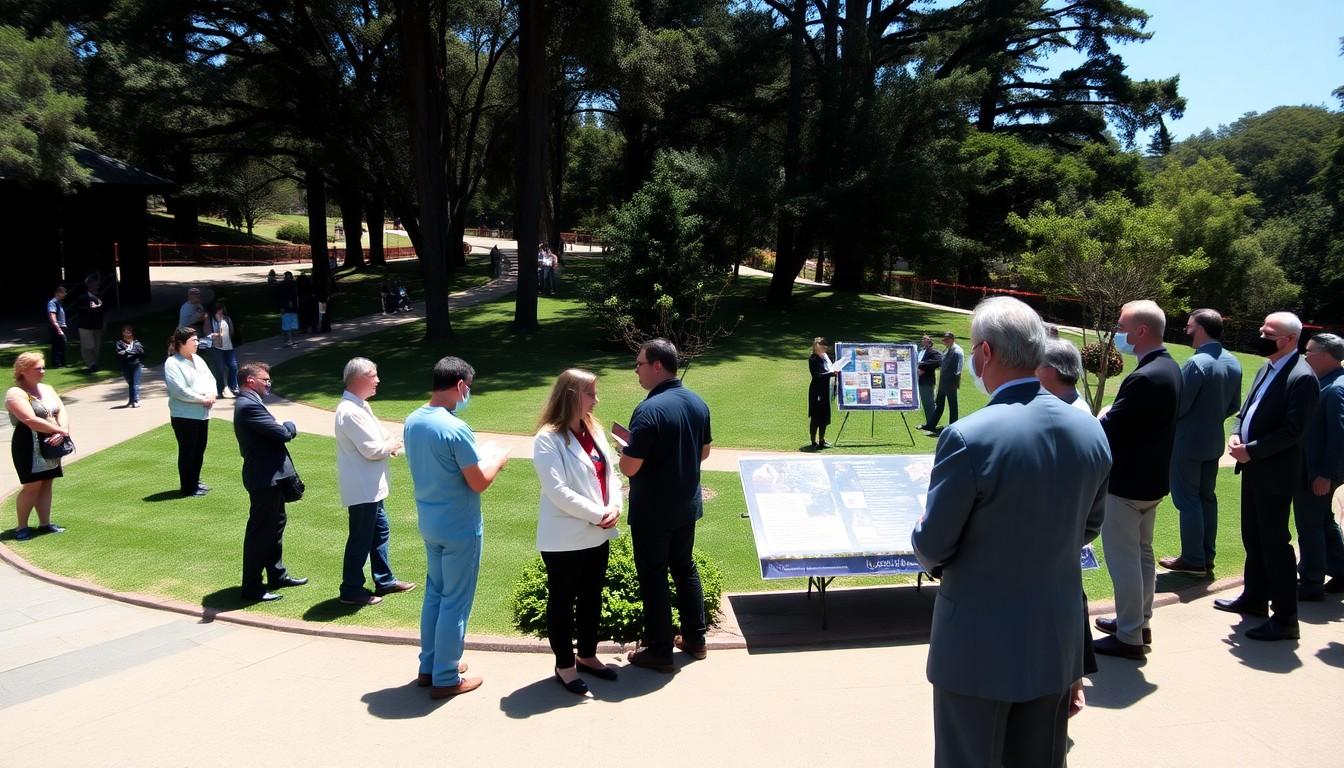
Visitors gathered in San Francisco’s Golden Gate Park to mark 35 years of the National AIDS Memorial Grove, remembering people lost to AIDS while celebrating the volunteers and supporters who keep its living memorial cared for. The September 2026 gathering combined ceremony, planting, art and quiet reflection in one of the city’s most meaningful spaces.
Essential Takeaways
- A major milestone: The National AIDS Memorial Grove marked its 35th anniversary with a public gathering in Golden Gate Park.
- A living tribute: The programme included a new trail overlook, tree planting and community hillside planting.
- Names and stories mattered: Guests took part in a calling of names, wreath laying and remembrance activities.
- The Quilt returned: An AIDS Memorial Quilt display and new anniversary panel brought a powerful visual presence.
- Volunteers remain central: The Grove’s continuing care depends on sustained community involvement and support.
A solemn anniversary with a hopeful centre
The National AIDS Memorial Grove’s 35th anniversary brought remembrance into the open air, among trees, paths and the soft hush of Golden Gate Park. According to the National AIDS Memorial, the Grove exists as a place to remember those lost to AIDS and to reflect on the continuing impact of the epidemic.
The gathering, held on 19 September 2026, was serious without being sombre in only one direction. Alongside moments of grief came planting, art and community rituals, offering a reminder that memorials can hold both absence and renewal. The Grove’s anniversary information presents the milestone as a moment to look back while carrying its purpose into the future.
New trail overlook adds another place to pause
One of the day’s significant additions was the dedication of the Upper Oaks Trail Overlook. The new viewpoint creates another quiet stopping place within the Grove, giving visitors space to take in the landscape as well as the memorial’s meaning.
The National AIDS Memorial describes the Grove as a natural setting shaped by paths, trees and designated areas for reflection. That landscape matters. A memorial walk can feel more personal than a formal hall, allowing people to move at their own pace, stop when they need to and let the surroundings do some of the speaking.
Tree planting turns remembrance into action
The anniversary programme also included a formal tree planting and a community planting session on the hillside. It’s a simple but resonant gesture: something living is placed in the ground, cared for and allowed to grow over time.
That practical work reflects the wider role of volunteers. The National AIDS Memorial’s volunteer information highlights regular opportunities to help maintain the Grove, making participation more than a one-day act of remembrance. For many visitors, getting involved may offer a tangible way to support a place that carries deeply personal memories.
Names, wreaths and the Quilt keep memory visible
The calling of names and Circle of Friends wreath laying formed part of the ceremony, giving the anniversary a clear human focus. Behind every name is a life, a relationship and a story, which is why these rituals remain so important decades after the worst years of the crisis.
The event also featured an AIDS Memorial Quilt display and the creation of a special 35th anniversary panel. The National AIDS Memorial’s Quilt material describes the project as a collective act of remembrance, with individual panels transforming personal grief into a shared public record. The effect is both intimate and striking: fabric, colour and handwritten detail making history impossible to reduce to statistics.
Why the Grove’s work still matters
The anniversary arrived as HIV and AIDS continue to shape public health, community memory and conversations about stigma. The National AIDS Memorial’s materials describe the Grove as a place where remembrance, education and hope meet, rather than as a monument locked in the past.
Speakers included National AIDS Memorial chief executive John B. Cunningham, longtime supporter John Montfort, former AIDS ward nurse Marcy Fraser, Gilead Foundation representative Jane Stafford and Lisa Bransten of San Francisco Recreation and Parks. Their presence reflected the broad network behind the Grove, from healthcare workers and families to volunteers, funders and public partners.
A place like this survives because people keep showing up, whether to attend a ceremony, tend a path or add a name to the wider story. That may be the most moving lesson of the anniversary: memory lasts when a community chooses to care for it.
The Grove’s 35th anniversary offered remembrance, renewal and a place to stand together.
Source Reference Map
Story idea inspired by: [1]
Sources by paragraph: