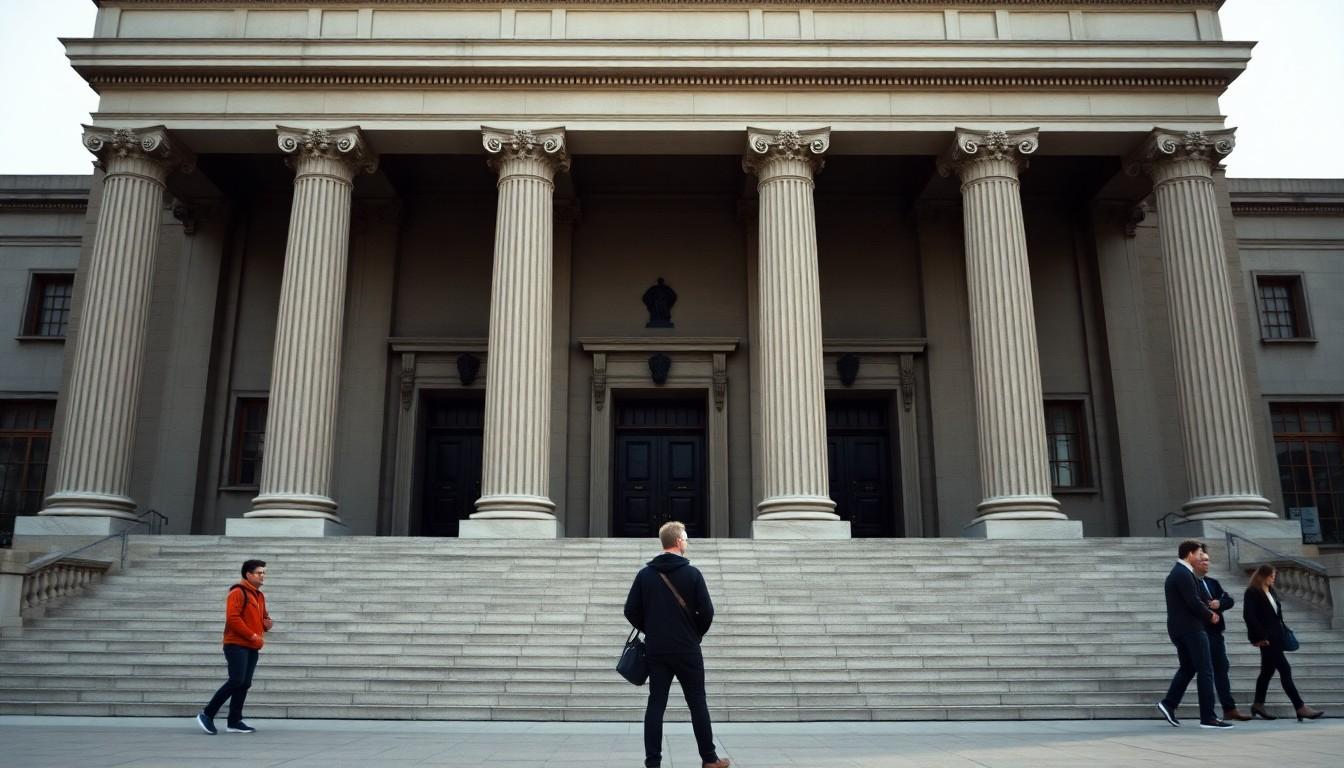
Young Americans are inheriting a country shaped by both inspiring ideals and deep exclusions. Understanding the civil rights movement, the limits of the Declaration of Independence and the long struggle for equality matters because progress has never been automatic. It has always depended on people learning the past, challenging injustice and refusing to let hard-won rights quietly disappear.
America’s founding promise was never shared equally
The language of liberty sounds sweeping, but its original audience was remarkably narrow. The Declaration of Independence presented equality as a universal principle while the new nation continued to exclude enslaved people, women and many others from political power and basic rights.
That contradiction isn't a footnote. It sits at the heart of the American story. The Smithsonian has described the Declaration's ideals as both revolutionary and deeply limited, a tension that later generations would repeatedly confront.
The result is a national history filled with progress and hypocrisy at the same time. It's uncomfortable, but understanding both sides gives the civil rights struggle its proper context.
The civil rights movement changed everyday life
The modern civil rights movement didn't emerge from one speech or one leader. It grew through decades of organising, legal challenges, boycotts, marches and community courage, particularly among Black Americans confronting segregation and disenfranchisement.
According to History, the movement helped secure landmark federal protections, including the Civil Rights Act of 1964 and the Voting Rights Act of 1965. Those laws reshaped public life by challenging racial segregation and protecting access to the ballot.
The victories were historic, but they weren't magic wands. Laws can prohibit discrimination, yet social attitudes, economic inequality and political resistance don't vanish overnight. That gap between legal progress and lived experience remains crucial.
Why younger generations need the full picture
Many people learn civil rights history as a tidy sequence: injustice, protest, legislation, success. Real history is much messier. Court victories could be followed by backlash, and major reforms often depended on ordinary people accepting personal risk.
The movement also belongs within a broader story about American democracy. The White House's own historical account presents the presidency and the country's institutions as evolving parts of a continuing national project, rather than finished achievements.
That perspective matters in classrooms and conversations alike. If rights are presented as gifts handed down by benevolent leaders, it's easy to miss the organising, sacrifice and persistence that made change possible.
Progress can move forwards, then sharply backwards
The United States has expanded its understanding of citizenship over time, but gains have often arrived in fits and starts. Black freedom movements, women's rights campaigns and LGBTQ rights activism each pushed the country to apply its stated principles more consistently.
The lesson is simple, if sobering: democratic rights require attention. History shows that formal protections can be weakened by political decisions, hostile rhetoric or public indifference, especially when people assume earlier victories are permanent.
That doesn't mean despair is the only sensible response. It means participation matters, from learning local history and voting to supporting organisations that defend civil liberties. A working democracy needs citizens who know what is at stake.
Remembering the struggle keeps the promise alive
The most useful way to study American civil rights history isn't to memorise a list of dates. It's to ask who was excluded, who challenged that exclusion and what changed because people refused to accept the status quo.
The Declaration's promise remains powerful precisely because the country has never fully lived up to it. That unfinished quality isn't a reason to discard the ideal; it's a demand to make it real for everyone.
And perhaps that's the point younger generations most need to hear. Rights aren't self-sustaining. They survive when people understand their history and decide, again and again, to defend them.
It's a small act of learning, but it can be a powerful form of citizenship.
Source Reference Map
Story idea inspired by: [1]
Sources by paragraph:
- Paragraph 1: [2], [4]
- Paragraph 2: [4], [3]
- Paragraph 3: [2], [5]
- Paragraph 4: [2], [7]
- Paragraph 5: [3], [6]
- Paragraph 6: [4], [2]
- Paragraph 7: [2], [5]
- Paragraph 8: [3], [6]
- Paragraph 9: [4], [7]
- Paragraph 10: [2], [5]
- Paragraph 11: [3], [6]
- Paragraph 12: [4], [7]
- Paragraph 13: [2], [5]
- Paragraph 14: [3], [6]
- Paragraph 15: [4], [7]
- Paragraph 16: [2], [3]
- Paragraph 17: [4], [5]
- Paragraph 18: [2], [6]