Readers are taking a closer look at Boston Globe reporting on trans violence claims and a western Massachusetts lesbian bar’s mask-policy backlash. Together, the stories show how calm reporting and basic scrutiny can expose tension between activist messaging, public evidence and the everyday realities facing LGBTQ communities.
Essential Takeaways
- The central issue: Critics argue that some warnings about a trans murder “epidemic” go beyond what available figures support.
- The reporting style: The Boston Globe pieces are presented as restrained accounts rather than overtly combative opinion columns.
- The bar dispute: A western Massachusetts venue reportedly faced furious backlash after easing an N95 mask requirement.
- The wider lesson: Serious claims still need proportionate evidence, especially when fear shapes public debate.
- The human cost: Anxiety, financial pressure and polarisation can leave small community organisations struggling to cope.
Why claims of a trans murder epidemic deserve careful scrutiny
The most striking feature of the debate isn't the existence of violence against transgender people. That danger is real and deserves serious attention. The sharper question is whether the language used to describe it accurately reflects the available evidence.
The commentary behind the Boston Globe coverage argues that some LGBTQ advocacy groups have framed individual killings as part of an ever-expanding national emergency. Earlier reporting from Axios and Time documented concerns about violence against transgender people, while later coverage tracked deaths and public reaction. Taken together, those reports show a difficult reality: targeted violence matters, but broad labels such as “epidemic” can obscure changes in the underlying numbers.
That distinction matters because alarm can become its own form of pressure. People who already feel vulnerable may be left expecting danger at every turn, even when the trend being described isn't moving in the direction suggested. Good reporting should make room for both truths: violence is unacceptable, and claims about its scale still need testing.
The Globe’s quieter approach makes the argument more powerful
Rather than relying on thunderous headlines or ideological name-calling, the coverage described in the lead commentary appears to let its subjects speak for themselves. That can be more revealing than a direct attack, particularly when the claims sound increasingly absolute once they're placed in an ordinary news narrative.
This is a familiar journalistic technique. Present the allegation, describe the response, check the figures and allow the reader to notice the mismatch. Axios and other outlets have previously reported on campaigns highlighting violence against transgender people, while the Boston Globe's approach, as characterised here, adds a cooler examination of how those campaigns affect their intended audience.
There’s a useful lesson for readers, too. When a story uses words such as “onslaught”, “genocide” or “epidemic”, pause and ask what is being measured, over what period and against what comparison. Strong emotion may draw attention, but definitions and data tell you whether the description holds up.
A mask mandate dispute turns a small bar into a national argument
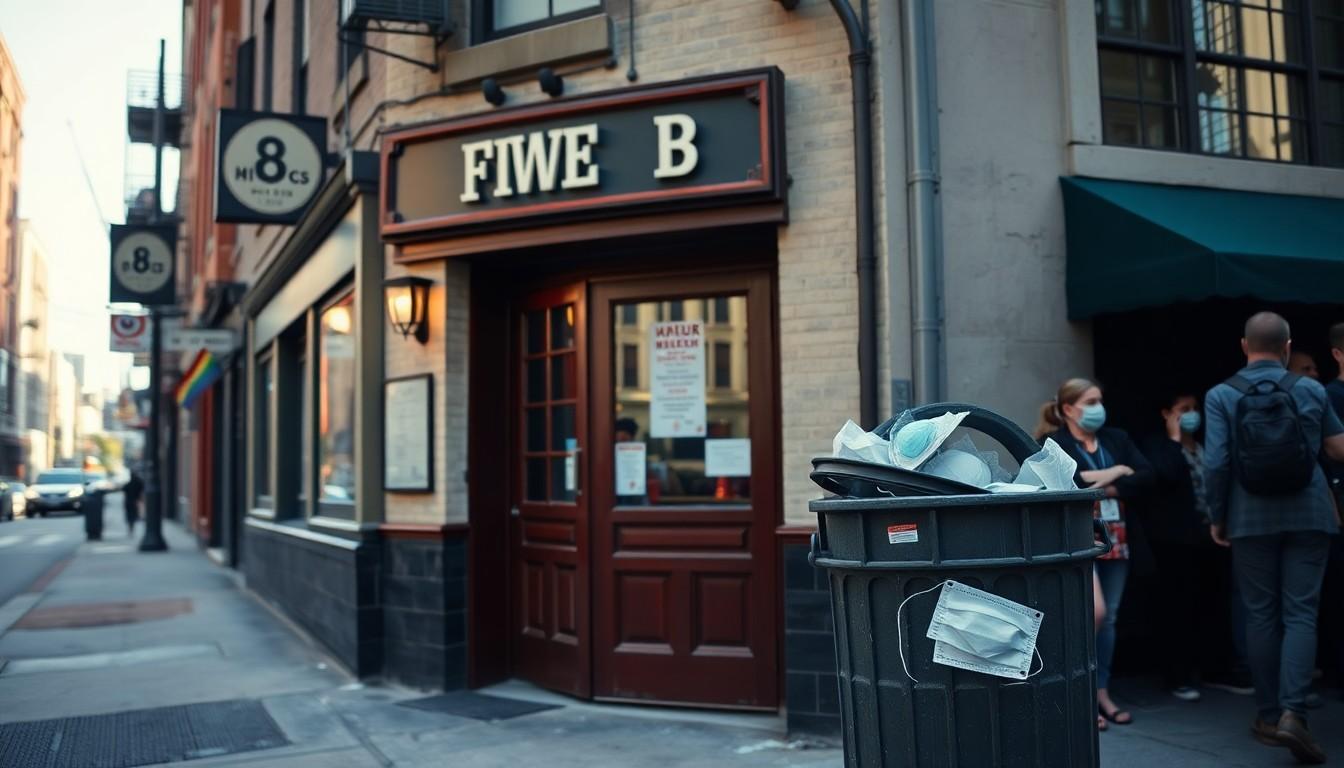
The second Globe story moves from national rhetoric to a much smaller stage: a lesbian bar in western Massachusetts. According to the supplied coverage, the venue faced intense criticism after relaxing an N95 mask requirement, with some patrons arguing that the decision endangered immunocompromised people.
The reported reactions were unusually severe, ranging from accusations of complicity in mass illness to calls for the business to be attacked. Howie Carr’s site also highlighted the story, presenting it as an example of the sharp divisions the policy created. For a small venue already under financial strain, that kind of backlash can quickly become more than an online argument.
The sensory details are easy to imagine: a quiet bar, empty seats, tense messages and owners trying to balance safety with survival. One founder’s reported decision to attend clown college adds an almost surreal note, but the underlying problem is painfully practical. Community spaces still have rent, staffing costs and customers who may disagree profoundly about acceptable risk.
Why public-health arguments become so polarised
The dispute reflects a broader post-pandemic shift. Masking has become not only a health decision but also a marker of identity, trust and belonging. In some circles, dropping a mandate represents a return to normality. In others, it signals abandonment of people who remain medically vulnerable.
That makes compromise difficult. A venue can care about disabled and immunocompromised customers while recognising that a permanent, highly restrictive policy may reduce attendance and threaten its future. Conversely, customers can reasonably ask whether relaxing precautions makes the space inaccessible to them. Neither concern disappears simply because the argument becomes heated.
The useful question is less “Which side is morally pure?” and more “What policy can this venue actually sustain?” Clear ventilation information, optional masking, improved air filtration, honest notices about outbreaks and flexible booking arrangements may be less dramatic than denunciations, but they’re more likely to help.
Calm reporting can reveal more than outrage
The two stories share a common thread: understatement. By taking the claims seriously enough to report them accurately, but not accepting every description uncritically, the coverage allows contradictions to surface naturally.
That approach is especially valuable in stories where readers are being asked to feel fear, guilt or anger. It doesn't dismiss the people involved. Instead, it tests whether the language matches the facts and whether the proposed response fits the practical circumstances.
For LGBTQ readers, disabled people and small community businesses, that balance matters. A movement can lose trust when its warnings become inflated, just as a venue can lose customers when it treats reasonable concerns as nuisances. The strongest journalism doesn't need to shout to make that point. Sometimes a measured account, a few uncomfortable details and a clear look at the evidence are enough.
A little restraint can make difficult stories much harder to ignore.
Source Reference Map
Story idea inspired by: [1]
Sources by paragraph:
- Paragraph 1: [2], [3]
- Paragraph 2: [4], [5]
- Paragraph 3: [6], [7]
- Paragraph 4: [2], [4]
- Paragraph 5: [3], [5]
- Paragraph 6: [6], [7]
- Paragraph 7: [6], [7]
- Paragraph 8: [4], [6]
- Paragraph 9: [2], [3]
- Paragraph 10: [5], [6]
- Paragraph 11: [6], [7]
- Paragraph 12: [2], [4]
- Paragraph 13: [3], [6]
- Paragraph 14: [5], [7]
- Paragraph 15: [2], [6]
- Paragraph 16: [3], [4]
- Paragraph 17: [5], [7]