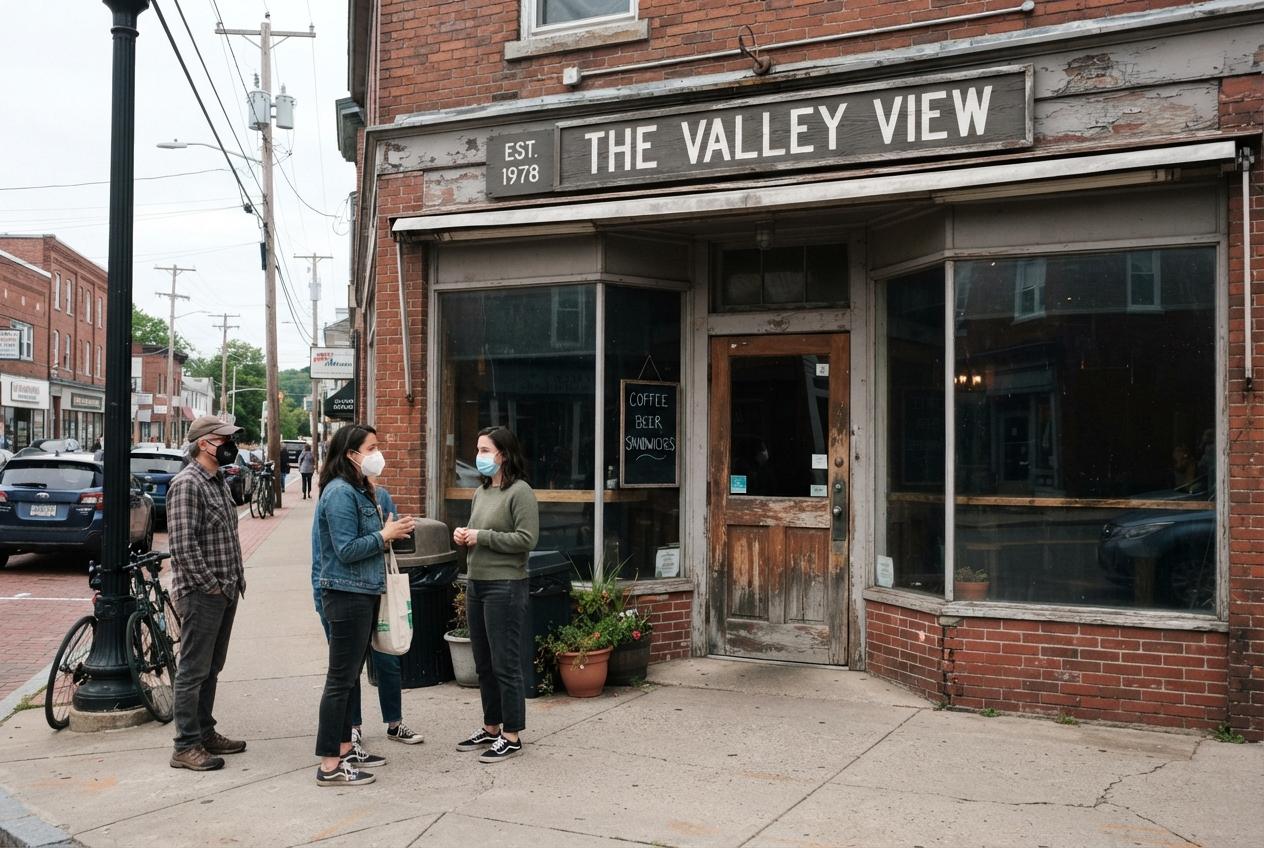
A Massachusetts lesbian bar’s decision to relax its masking requirement has triggered a fierce backlash, while a separate Philadelphia identity scandal has intensified arguments about activist culture. Together, the stories show how small community disputes can become enormous online battles, with real financial and emotional consequences for the people caught in the middle.
Essential Takeaways
- Masking rules changed: Last Ditch in Greenfield made some events mask-optional after facing serious financial pressure.
- Backlash escalated: Critics accused the bar of ableism and eugenics, with some online comments becoming threatening.
- A long meeting followed: Owners and community members held an extended discussion involving mediators and remote participants.
- Philadelphia case adds fuel: A teacher apologised after presenting herself as Palestinian despite having no Palestinian heritage, according to reports.
- The bigger issue: Both controversies highlight the tension between solidarity, identity, public health and accountability.
A small bar became a national culture-war symbol
The dispute began with a practical business decision. Last Ditch, a lesbian bar in Greenfield, Massachusetts, reportedly loosened its requirement for customers to wear N95 masks, at least on some nights. The change came as the venue struggled with heavy debt and dwindling trade, according to LGBTQ Nation and TMZ.
For a small hospitality business, that sounds like the sort of decision usually made over spreadsheets, supplier invoices and a very unglamorous conversation about keeping the lights on. Instead, it became a flashpoint over disability rights, Covid precautions and who gets to define safety in a shared space.
The reaction was swift and severe. According to reports from LGBTQ Nation and AllSides, critics accused the owners of abandoning immunocompromised customers, while some commentary went far beyond criticism and included hopes that the venue would be attacked. That is a grim leap from debating a door policy.
Why the masking argument became so personal
The bar's supporters and critics were arguing about more than face coverings. For disabled and immunocompromised people, a masking requirement can determine whether a night out feels possible at all. For venue operators, however, a permanent rule can shrink the audience at a time when independent bars are already dealing with rising costs and changing nightlife habits.
That collision explains why the language became so charged. The reporting described accusations of ableism and even eugenics, while an attempted apology was criticised because its accompanying graphic reportedly lacked alternative text for visually impaired people. The details may sound niche, but they point to a wider problem: online movements often turn good intentions into a checklist where one imperfect gesture can eclipse the original issue.
A community meeting followed, with mediators, people attending remotely and tightly managed speaking slots. As Breitbart and AllSides reported, the discussion lasted for hours. The format was designed to create order, yet the sheer intensity of the disagreement appears to have made the event feel less like reconciliation and more like a public tribunal.
The Philadelphia identity controversy widened the argument
Meanwhile, reports from The Guardian and the Jewish Telegraphic Agency focused on Hannah Gann, a Philadelphia teacher and activist who had presented herself as Palestinian American during pro-Palestinian organising. She later acknowledged that she had no Palestinian heritage, with reports stating that her family background is Jewish and that her grandfather was born in Baltimore.
The controversy has raised difficult questions about identity, political credibility and the boundaries of solidarity. Pretending to belong to a community is not the same as supporting it, and activists who rely on trust can cause genuine harm when that trust is built on a false personal story.
The Guardian and JTA reports also described allegations that Gann had solicited money while presenting herself as connected to Palestinians abroad. Those claims require careful handling, but the broader lesson is clear: movements that value lived experience need particularly strong standards when people claim identities that aren't theirs.
Online activism rewards certainty, not nuance
Both stories show how quickly complicated disputes can be flattened into opposing camps. One side sees a bar trying to survive; another sees a dangerous retreat from protection. One side sees political solidarity; another sees cultural appropriation and deception. Once those positions harden, even a sincere apology can be treated as further evidence of guilt.
That dynamic is amplified by social media, where the most dramatic accusation travels faster than a measured explanation. The result is a strange kind of moral competition, with people proving their commitment by demanding harsher punishment than anyone else.
It also creates a punishing environment for smaller organisations. A national political group may have lawyers, communications staff and donors. A young bar owner facing a large loan doesn't. As coverage from TMZ and LGBTQ Nation suggests, the people at the centre of the Last Ditch dispute were dealing with a real business crisis, not an abstract online debate.
What organisers and customers can learn
For venues, the practical answer is clearer communication. If masking rules change, owners should explain why, publish the new policy in accessible formats and offer specific alternatives, such as designated masked nights, improved ventilation or outdoor events where possible. That won't satisfy everyone, but it gives customers useful information rather than leaving them to interpret a terse announcement.
For customers and activists, proportionality matters. Raise concerns, ask questions and support people who may be at greater health risk, but don't confuse criticism with a licence for intimidation. Threats of violence, even when posted as supposedly rhetorical comments, can make a difficult situation genuinely dangerous.
And for anyone speaking publicly about identity, honesty is the minimum requirement. Solidarity doesn't require borrowing someone else's biography. It requires listening, contributing responsibly and accepting that support is still meaningful when the story isn't yours.
The culture-war cycle keeps finding fresh fuel
The Last Ditch dispute and the Philadelphia scandal are very different cases, but they've been drawn into the same larger argument about progressive politics. Critics see them as proof that activist culture has become detached from ordinary judgement. Supporters may see them as examples of communities trying, imperfectly, to protect vulnerable people and hold influential figures accountable.
Both interpretations miss something if they ignore the human cost. A bar can be financially fragile and still need to consider disabled customers. An activist can support Palestinians and still be condemned for falsely claiming Palestinian heritage. Nuance isn't a weakness here; it's the only way to understand what happened.
The most useful outcome would be less theatrical outrage and more durable standards. Communities need room for disagreement, apologies that are actually heard and consequences that fit the facts. That may be less entertaining than a three-hour online pile-on, but it stands a better chance of helping anyone.
Small organisations need practical policies, and public movements need proportionate judgement.
Source Reference Map
Story idea inspired by: [1]
Sources by paragraph:
- Paragraph 1: [2], [5]
- Paragraph 2: [2], [6]
- Paragraph 3: [5], [7]
- Paragraph 4: [2], [6]
- Paragraph 5: [3], [4]
- Paragraph 6: [3], [4]
- Paragraph 7: [2], [5]
- Paragraph 8: [2], [6]
- Paragraph 9: [5], [7]
- Paragraph 10: [2], [5]
- Paragraph 11: [3], [4]
- Paragraph 12: [2], [6]
- Paragraph 13: [3], [4]
- Paragraph 14: [2], [5]
- Paragraph 15: [6], [7]