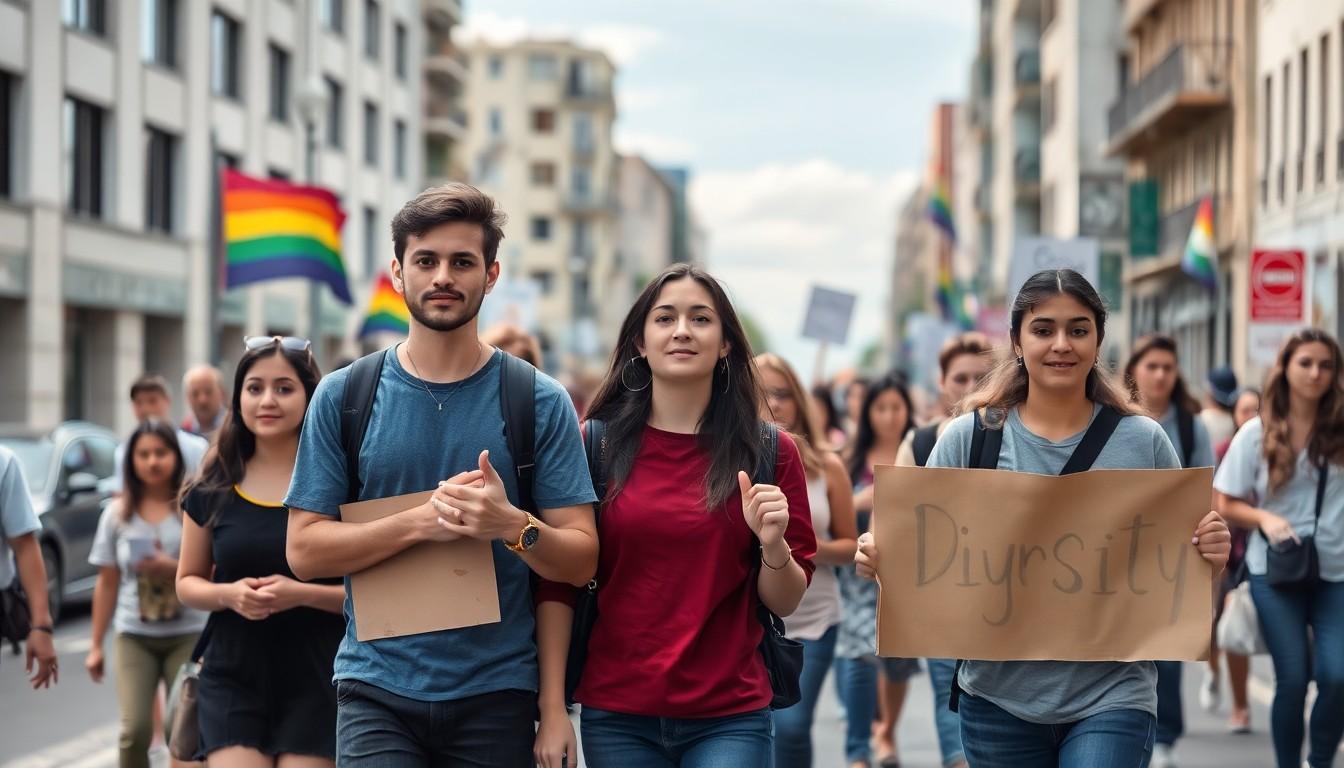
Young people filled central Paysandu with music, colour and energy during a diversity march organised by Manos Purpuras. The event combined celebration with a pointed demand for stronger public policies, safer public spaces and properly funded rights, showing why the annual march still matters well beyond its lively parade atmosphere.
Essential Takeaways
- A colourful route: The march began on 18 de Julio, passed around Artigas Square and finished at the Espacio de la Diversidad.
- Youth at the centre: Music, dancing and a strong turnout gave the event an upbeat, communal feel.
- A 15-year organiser: Manos Purpuras marked 15 years of continuous activity in August.
- Beyond symbolism: Speakers called for funded education, healthcare, employment and anti-discrimination measures.
- A continuing campaign: Organisers stressed that the work carries on after the banners come down.
A joyful march with a serious message
The strongest impression was visual: a moving stream of flags, colour and music winding through Paysandu's centre, with young people helping give the event its pulse. The procession set off along 18 de Julio, skirted Artigas Square and continued towards the Espacio de la Diversidad at Avenida Brasil and Gutierrez Ruiz.
That festive mood wasn't accidental. Across Uruguay, diversity marches have become both public celebrations and visible reminders that equality depends on more than a yearly appearance. Coverage of larger national events by Montevideo.com.uy and Telenoche has similarly shown how these marches combine community, protest and practical demands. [5], [7]
Why Manos Purpuras remains central
The event was called by Manos Purpuras, which has spent 15 years organising and advocating in Paysandu. Its presence gives the march continuity, while the younger crowd brings fresh energy and a clear sense that the campaign belongs in everyday public life, not just at special events.
Organisers said the people behind every slogan, colour and banner are real individuals facing discrimination, exclusion, violence or silence. That framing matters because it shifts the conversation away from abstract language and towards lives shaped by access to services, safety and acceptance. Earlier local reporting has also highlighted the need for stronger diversity structures and coordinated action in Paysandu. [3], [4]
The route also carried local tension
The timing of the march caused some frustration because it overlapped with a tribute to Anibal Sampayo at Artigas Square. The procession still passed around the plaza before continuing to its final venue, creating a visible meeting point between two strands of Paysandu's public cultural life.
That detail may sound logistical, but public space is part of the story. Where a march travels, who feels welcome there and whether people can gather without fear all feed into the wider debate. National reporting on diversity marches has regularly focused on routes, access and the practical arrangements needed to make large public demonstrations work. [5], [7]
From slogans to funded public policy
The proclamation delivered by Alejandra and Enara from Manos Purpuras was celebratory, but it was also direct. Speakers argued that diversity cannot be reduced to a colourful campaign, a stage backdrop or a single commemorative month. They called instead for budgets behind inclusive education, comprehensive healthcare, decent work and protections that function in real life.
They also warned that hostile messages can spread through social media, institutions, classrooms, workplaces and homes. That concern sits alongside earlier local reporting about homophobia in Paysandu, suggesting why campaigners continue to press for visible institutions and practical support rather than relying on goodwill alone. [2], [3]
What safer streets would look like
One of the clearest demands was for public spaces where LGBTQ+ people can walk, live openly and show affection without fear. That is a simple measure of inclusion, but it is also a powerful one: a city can appear welcoming on a poster while still feeling uncomfortable or unsafe to someone moving through it.
For families and allies, the message is equally practical. Support means challenging slurs, backing inclusive teaching, listening when discrimination is reported and expecting public bodies to respond. The national march has made similar demands around rights, accountability and the end of impunity, showing that Paysandu's concerns form part of a broader Uruguayan conversation. [6], [7]
The celebration continues after September
After the proclamation, the event moved into a musical performance, giving the crowd space to enjoy the moment. That balance of pride and protest is part of what keeps these gatherings compelling: there is room for dancing, remembrance, anger and hope in the same afternoon.
Manos Purpuras' closing message was that the movement would continue after September, when the lights and flags disappear. It's a useful reminder that the most important test comes afterwards, in classrooms, clinics, workplaces and council offices, where rights need to be defended quietly as well as loudly. [2], [4]
A vibrant parade can open the conversation, but lasting inclusion is built in everyday life.
Source Reference Map
Story idea inspired by: [1]
Sources by paragraph: