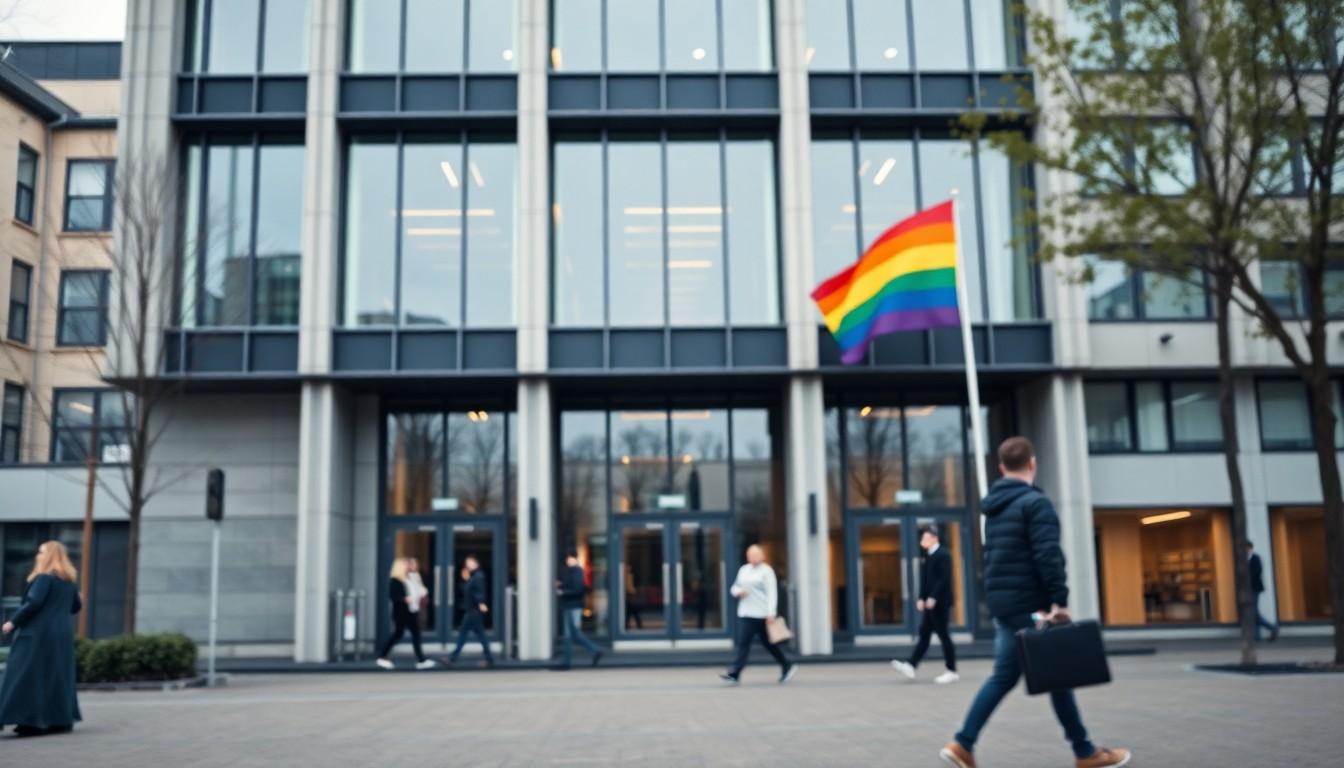
Prime Minister Rob Jetten has used a United Nations visit in New York to warn that LGBT rights are facing renewed pressure worldwide. His message lands as new Dutch research reveals a sharp fall in teenagers' positive attitudes towards homosexuality, raising urgent questions about education, online misinformation and how society protects the freedom to be yourself.
Essential Takeaways
- Acceptance is falling: Positive attitudes towards homosexuality among Dutch secondary-school boys reportedly dropped from 40% to 22% in four years.
- Girls have shifted too: The comparable figure among girls fell from 78% to 51%.
- Rights can be connected: Jetten warned that attacks on LGBT people can precede wider pressure on other minority groups.
- The response is under review: The Dutch government says it wants more research before choosing targeted measures.
- Online spaces matter: Related reporting points to misinformation and changing digital influences as part of the wider picture.
Jetten takes the LGBT rights debate to New York
The strongest message from Jetten's New York visit was that LGBT emancipation isn't a niche concern. Speaking to Dutch reporters during the United Nations General Assembly, the prime minister argued that the freedom to live openly affects the whole of society.
That framing matters because public debate often treats LGBT rights as a specialist issue, something discussed only by the people directly involved. Jetten offered a broader warning instead: when one minority's rights are weakened, others may become vulnerable too.
He also raised LGBT emancipation during a meeting with US President Donald Trump. According to Dutch reporting, the conversation came as American hospitals were reportedly reconsidering gender-transition treatment for young people, making the subject especially politically charged.
Dutch teenagers are becoming less accepting
The fresh figures are difficult to ignore. Research reported by the Trimbos Institute and Utrecht University found that the share of Dutch secondary-school boys with a positive view of homosexuality had almost halved, from 40% to 22% over four years. Among girls, support fell from 78% to 51%.
The figures don't mean every teenager has turned hostile. They do suggest, however, that the social progress many people assumed was secure may be more fragile than it looks. A quiet change in classroom attitudes can eventually become a very loud problem outside school.
The University of Amsterdam and HBSC reporting also underline that young people's views on LGBT issues are varied, rather than neatly divided into accepting and rejecting camps. That nuance matters, but it shouldn't soften the central concern: the direction of travel is troubling.
Why the online climate deserves attention
Social media has changed how teenagers encounter political arguments, identity debates and outright falsehoods. Reporting from News Minimalist and Brussels Signal has linked the decline in acceptance with online misinformation, although the causes are unlikely to be explained by one factor alone.
Algorithms can make extreme claims feel normal simply by repeating them. A teenager who sees hostile jokes, misleading videos or conspiratorial posts every day may start to treat them as ordinary conversation rather than a steady erosion of someone else's dignity.
That doesn't mean every difficult opinion should be banned. It does mean schools, parents and platforms need better ways to distinguish debate from targeted harassment, and facts from content designed mainly to provoke.
What could schools and ministers do next?
Education State Secretary Judith Tielen has said the government is considering additional measures and wants more research to support a focused response. That caution is understandable, but waiting for perfect certainty could leave schools trying to manage a worsening atmosphere with too few tools.
Practical steps could include stronger teacher training, clearer support for pupils facing homophobic bullying and lessons that explain LGBT lives without turning them into a political football. Schools also need space for honest questions, because silence rarely makes confusion disappear.
For parents, the most useful starting point may be surprisingly simple: ask what children are seeing online, listen without an instant lecture and challenge insulting language when it appears. A calm conversation at home can sometimes do more than a grand statement from a podium.
A local message with global stakes
Jetten is due to visit New York community centres with the city's mayor, where organisations work on living together across differences in colour, background and sexual orientation. That brings the debate down from international diplomacy to everyday life: the places where people meet, learn and decide who belongs.
Earlier reporting found that acceptance of homosexuality had risen in some areas while attitudes towards wider LGBTIQA groups became less positive. Together with the latest figures, it suggests that progress isn't a straight line, and broad labels can hide important differences.
The prime minister's personal emphasis on younger generations is therefore significant. If young people are to believe they can be themselves safely, that promise needs to be visible in classrooms, online feeds and ordinary neighbourhood life, not just at the United Nations.
It's a small phrase, but a powerful one: everyone should be free to be themselves.
Source Reference Map
Story idea inspired by: [1]
Sources by paragraph: