A public clash between conservative preacher Jim Garlow and Democratic candidates James Talarico and Adam Hamilton has spotlighted a wider religious divide in American politics. At stake is not simply who interprets the Bible, but whether Christian identity can sit comfortably alongside LGBTQ+ inclusion, transgender rights and changing ideas about public faith.
Essential Takeaways
- The dispute is theological as well as political: Garlow attacked Talarico and Hamilton for supporting LGBTQ+ rights while identifying as Christians.
- Talarico presents inclusion as Christian duty: He has argued that defending LGBTQ+ people reflects love of neighbour and opposition to bullying.
- Hamilton backs institutional change: His church has supported LGBTQ+ clergy, same-sex weddings and a Pride event.
- Garlow belongs to a powerful religious network: He is associated with the New Apostolic Reformation, which seeks greater Christian influence across public life.
- The argument reaches beyond one election: It reflects a growing contest between conservative and progressive Christian visions in the United States.
A familiar accusation, aimed at two very different candidates
The latest confrontation began with a social media post from Jim Garlow, who described Democratic Senate candidates Adam Hamilton and James Talarico as religious frauds because of their support for LGBTQ+ rights. LGBTQ Nation reported that Garlow invoked the destruction of Sodom and the biblical creation of humanity as male and female.
That language will sound familiar to anyone following America’s culture wars. Biblical references are often used as political shorthand, turning complicated religious texts into blunt arguments about identity, family and social order. Here, the sharper point is that both targets openly connect their politics with Christian teaching rather than treating faith as separate from public life.
Talarico is a Presbyterian seminarian, while Hamilton is a United Methodist pastor. Their presence in Democratic politics complicates the old assumption that conservative Christians speak for Christianity as a whole. It also gives voters a more direct choice between competing religious interpretations, rather than a simple religious versus secular contest. According to LGBTQ Nation, Garlow's post specifically targeted their pro-LGBTQ+ positions. [2]
Talarico's message: faith should protect vulnerable people
Talarico has repeatedly framed LGBTQ+ support through the language of compassion. In 2021, while opposing a Texas proposal affecting transgender pupils and school sports, he said trans children are made in God's image and described bullying them as sinful, according to LGBTQ Nation.
That position doesn't mean his record is identical to every LGBTQ+ advocacy group's preferred platform. A later Fox News interview reported that Talarico opposed trans athletes playing in girls' sports, showing how politicians can support transgender people while still drawing boundaries around competitive sport. The distinction may frustrate activists and opponents alike, but it reflects the messy reality of election-year politics. [5]
His broader argument is that Christian ethics should begin with how people are treated. For supporters, that's a meaningful alternative to sermons that place LGBTQ+ identity at the centre of moral condemnation. For critics on the religious right, however, it represents a selective reading of scripture.
The result is a debate over emphasis as much as belief. Talarico highlights love, dignity and protection from harm, while Garlow foregrounds traditional readings of sex and sexuality. Both claim religious authority, but they are speaking from sharply different moral starting points. The Atlantic has examined how Talarico's progressive Christianity is shaping his political appeal in Texas. [7]
Hamilton has turned inclusion into church policy
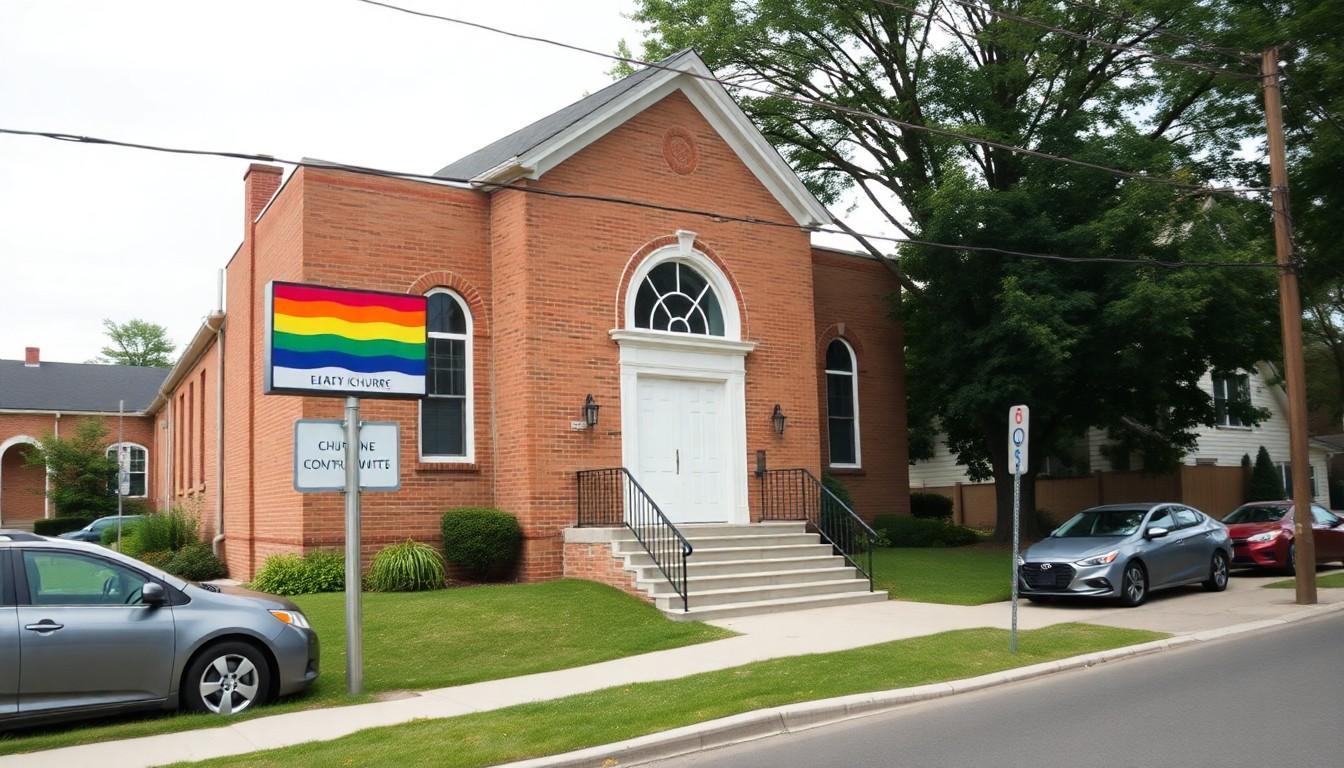
Hamilton's approach is more institutional. As a United Methodist leader, he has supported the ordination of openly LGBTQ+ clergy and same-sex marriage ceremonies, and his Kansas church has publicly backed Pride activities.
That matters because it moves the argument away from personal statements and into the everyday machinery of religious life. Who can lead a congregation? Which couples can marry in church? Will a church appear at a Pride festival? These decisions make theology visible in ways that a Sunday sermon often doesn't.
The United Methodist Church's 2024 General Conference vote to remove long-standing restrictions on LGBTQ+ clergy and same-sex weddings marked a major shift for the denomination. Hamilton welcomed that change, according to LGBTQ Nation, presenting inclusion not as a compromise but as an overdue expression of Christian community. [2]
For LGBTQ+ worshippers, that distinction can be deeply practical. A church's welcome isn't only about warm words at the door; it's also about whether families can celebrate milestones, whether queer people can serve openly and whether the institution treats them as full members.
Why Garlow's network gives the row wider significance
Garlow is linked to the New Apostolic Reformation, a loose movement that seeks strong Christian influence over major areas of American life, including government, education, media and business. Reference material on the movement describes this ambition as the effort to shape the so-called Seven Mountains of society. [4]
That context helps explain why a dispute over two Senate candidates can feel larger than a disagreement between a preacher and politicians. Religious identity, electoral power and cultural influence are increasingly braided together. The question isn't merely whether a candidate attends church; it's what kind of authority that faith is expected to exercise in public life.
People for the American Way's Right Wing Watch has also documented the importance of proximity and political relationships inside the modern religious right. Those networks can help explain how ideas move from churches and prayer gatherings into campaigns, legislation and national media. [3]
Garlow's connections have attracted particular attention because House Speaker Mike Johnson has described him as a major influence on his Christian life. That relationship gives Garlow's rhetoric a larger political echo, even when the original comments appear on social media rather than from an official campaign platform. Background information on Garlow and his movement is also documented in public reference sources. [6]
The bigger political question is still unresolved
This clash shows why progressive Christianity has become politically important. Candidates such as Talarico and Hamilton aren't abandoning religious language to win liberal voters; they're using it to argue that LGBTQ+ equality belongs within Christian ethics.
That strategy could broaden the conversation, particularly among voters who are religious but uncomfortable with anti-LGBTQ+ politics. It may also create fresh tensions, because progressive candidates still have to answer difficult questions about transgender policy, sport and the limits of religious freedom. Talarico's reported position on trans athletes is a reminder that inclusion debates rarely divide neatly into two camps. [5]
Meanwhile, conservative preachers are likely to keep challenging politicians who claim Christian identity while rejecting traditional doctrines. The political effect may be less about persuading the other side and more about defining which version of Christianity feels legitimate to undecided voters.
For LGBTQ+ Americans, the stakes are personal as well as electoral. When politicians and pastors argue over scripture, the consequences can reach schools, families, workplaces and places of worship. The most revealing question may be whether faith is used to police belonging, or to widen it.
Source Reference Map
Story idea inspired by: [1]
Sources by paragraph: