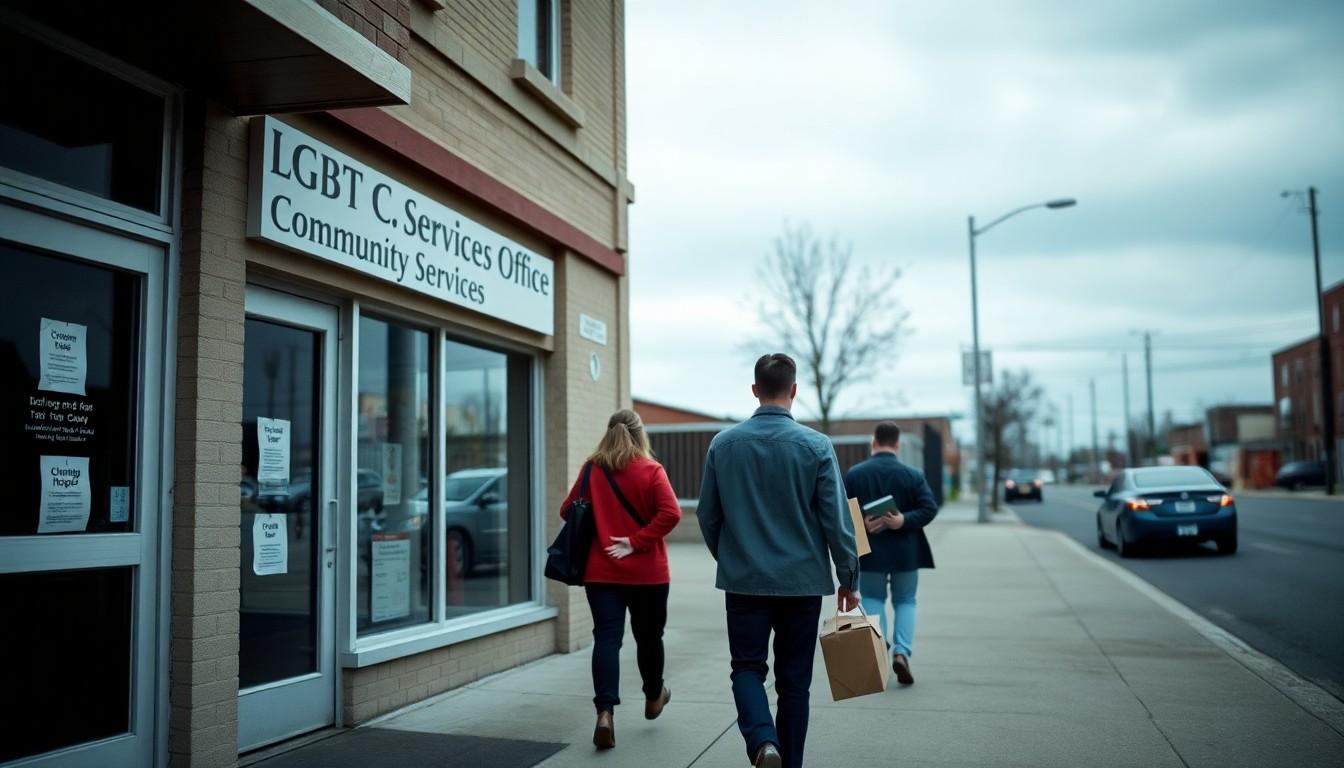
LGBTQ organisations worldwide are facing an urgent funding squeeze, with a new survey warning that many could close within a year. The pressure is being felt from international advocacy groups to local support centres, threatening vital services such as legal aid, health support, emergency relocation and HIV prevention.
Essential takeaways
- Funding losses are widespread: Outright International surveyed 229 organisations across 94 countries, with most reporting lost support.
- Closures are a real possibility: More than a third of surveyed groups said they could shut within 12 months.
- Budgets have been badly hit: Nearly half of affected organisations reportedly lost more than half their income.
- High-risk regions face the sharpest pain: Groups in countries with criminalisation or weak protections have fewer ways to replace international grants.
- Services are already shrinking: Staff cuts, closed offices and reduced emergency support are becoming increasingly common.
A funding shock is becoming a survival test
The warning is stark: LGBTQ organisations aren't simply trimming a few projects or postponing expansion. Many are trying to keep the lights on while protecting services that people may depend on in moments of real danger.
Outright International's Breaking Point report surveyed organisations across dozens of countries and found that funding losses were widespread. The figures point to a sector with little financial cushioning, where a lost grant can quickly mean fewer staff, shorter opening hours or a closed community centre.
That makes the crisis feel especially immediate. A spreadsheet may show a budget gap, but on the ground it can look like a locked office door or a helpline that no longer answers.
Why international support has fallen away
The latest squeeze follows a sharp retreat in US-linked foreign assistance after the change in administration in 2025. Outright said many affected groups identified US government-linked sources among funders that had reduced, paused or withdrawn support.
Still, the report doesn't frame the problem as a single-government story. International LGBTQ funding had already been under strain, while corporate, philanthropic and institutional donors were also changing priorities. In other words, the sector was vulnerable before the latest shock arrived.
Outright has separately launched a 10 million dollar Funding Our Freedom campaign, reflecting the scale of the replacement challenge. Raising new money at that level won't be simple, particularly when many organisations are competing for a smaller pool of donors.
The organisations at greatest risk are often in the hardest places
Funding cuts don't land evenly. Groups working where LGBTQ people face criminalisation, violence or weak legal protection are particularly exposed, according to analysis discussed by Outright and reported by LGBTQ media outlets.
These organisations often have fewer domestic funding options. Government support may be unavailable or unsafe to pursue, while local philanthropy can be limited and public fundraising may expose staff and supporters to risk.
That creates a grim financial loop. The places that need specialist legal help, safety planning, healthcare and emergency accommodation most urgently may be the least able to replace a missing international grant.
Closed offices mean fewer practical lifelines
The consequences are already visible in the services organisations provide. Reports highlighted by Outright and other publications describe groups cutting staff, ending programmes and reducing support for people facing immediate threats.
The losses affect more than advocacy work. Legal assistance, mental-health support, HIV prevention, harm reduction and emergency relocation can all depend on a relatively small team with a tightly managed budget. When that budget contracts, there may be no easy substitute.
For donors and supporters, this is a useful reminder that flexible funding matters. A grant that allows an organisation to pay staff, maintain secure communications or keep a centre open may be less glamorous than a high-profile campaign, but it can be the difference between continuity and collapse.
What could happen next?
The survey is not a census of every LGBTQ organisation, and its findings should be read within the limits of the participating sample. Even so, the scale of reported losses gives the warning considerable weight.
The longer-term question is whether the sector can move from concentrated institutional funding towards a broader mix of regional philanthropy, individual donors and flexible emergency support. That transition would take time, trust and serious investment, none of which arrives as quickly as a funding freeze.
For supporters, checking whether a group offers recurring donations, emergency funds or unrestricted giving can be a practical starting point. Small contributions won't solve a global funding gap alone, but they can help keep essential work moving while larger funding models are rebuilt.
The quiet work of community organisations rarely makes headlines until it disappears, and by then the damage may already be difficult to reverse.
Support the organisations keeping vital LGBTQ services within reach.
Source Reference Map
Story idea inspired by: [1]
Sources by paragraph:
- Paragraph 1: [2], [4]
- Paragraph 2: [2], [7]
- Paragraph 3: [6], [7]
- Paragraph 4: [3], [6]
- Paragraph 5: [2], [4]
- Paragraph 6: [2], [7]
- Paragraph 7: [2], [4]
- Paragraph 8: [2], [7]
- Paragraph 9: [4], [6]
- Paragraph 10: [2], [5]
- Paragraph 11: [2], [3]
- Paragraph 12: [2], [6]
- Paragraph 13: [2], [3]
- Paragraph 14: [2], [5]