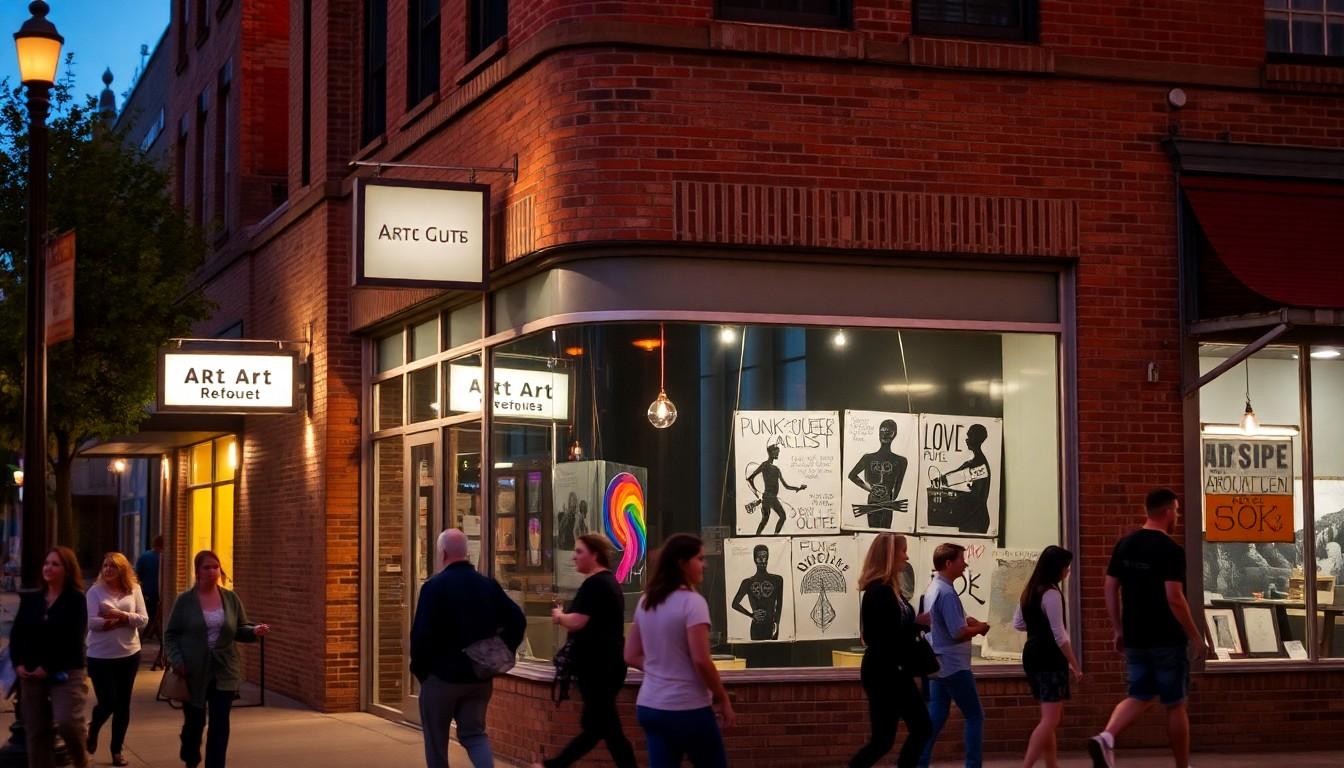
Visitors can explore three decades of queer, punk and activist art in downtown Lawrence this Friday, as Ailecia Ruscin and fellow artists turn The Livingroom Collective into a vivid, community-led exhibition space. The free-running evening combines photography, printmaking, painting and social history, offering a timely look at countercultures that still shape Kansas life.
Essential Takeaways
- When: Friday, 25 September, from 5pm until midnight.
- Where: The Livingroom Collective, 938 Massachusetts Street, downtown Lawrence.
- What to expect: Multimedia work spanning queer life, punk music, feminism, anti-racist organising and environmental activism.
- Who’s involved: Ailecia Ruscin is joined by local artists, organisers, journalists, printmakers and makers.
- Why it matters: The exhibition connects historic counterculture with current debates around identity, public space and community.
Lawrence’s punk and queer art scene gets a vivid showcase
The strongest reason to visit is the sense of lived history. Ruscin’s exhibition brings together more than 30 years of work documenting communities that are often recorded informally, through flyers, portraits, posters, music photography and handmade publications.
That gives the show an appealingly human texture. Rather than presenting counterculture as a museum piece, it places real people, arguments and friendships at the centre. Lawrence’s wider arts calendar also shows a steady appetite for accessible, community-focused events, from guild exhibitions to outdoor art gatherings, according to the Lawrence Art Guild.
A retrospective with plenty of local memory
Ruscin plans to draw from roughly 15 previous exhibitions, covering subjects including independent hip hop, punk shows, anarchist organising and gender politics. The result sounds less like a tidy retrospective and more like an overflowing archive, which is probably exactly right for the communities it represents.
One featured body of work, “The Water Closet: Portraits of Queers in Public Bathrooms”, looks at bathrooms as contested, intimate and political spaces. Its themes feel especially resonant now, as arguments about transgender access and public facilities remain part of political life in Kansas.
Meet the artists behind the exhibition
The line-up includes Dave Loewenstein, known locally as an organiser, printmaker and muralist, alongside Leslie Kuluva of LFK Press. Independent journalist and punk figure Bob Cutler also contributes, as does queer acrylic painter Brandt Minden, whose rainbow-led style should bring a brighter visual note to the evening.
Other participants include Colby Earlywine, Nicholas Maher, Devón Gibson, Aunt Deckia, Inclusive Abundance Jewelry and Juliet Kellar of the Prairie Band Potawatomi community, with Kmonquah Creations. That mix of disciplines matters: visitors can expect more than framed artworks, with craft, design, documentation and activist publishing all part of the conversation.
Why this kind of show still feels necessary
The exhibition arrives during a broader period of renewed interest in zines, artist-led spaces and participatory cultural events. Nearby festivals such as Great Plains Fest and Paper Plains Zine Fest reflect the region’s enthusiasm for independent voices and printed matter, while contemporary exhibition listings elsewhere continue to show how galleries are using art to address identity and public debate.
For visitors, the appeal is simple. You can spend ten minutes looking at a photograph, stay for a conversation, then discover a print or piece of jewellery that sends you down an entirely different rabbit hole. Wear comfortable shoes, leave room for browsing and don’t expect a hushed white-cube experience.
Make the most of Final Friday in Lawrence
The event runs from 5pm to midnight, making it easy to fold into a wider evening downtown. Arriving earlier should give you more time with the work, while later visitors may find a livelier atmosphere as Final Friday gathers pace.
If you’re bringing someone who doesn’t usually visit galleries, this could be an especially good introduction. The subjects are direct, the formats are varied and the social history is close to home. Sometimes the most powerful exhibition is the one that makes a city recognise itself.
It's a small downtown event with a remarkably large cultural footprint.
Source Reference Map
Story idea inspired by: [1]
Sources by paragraph: