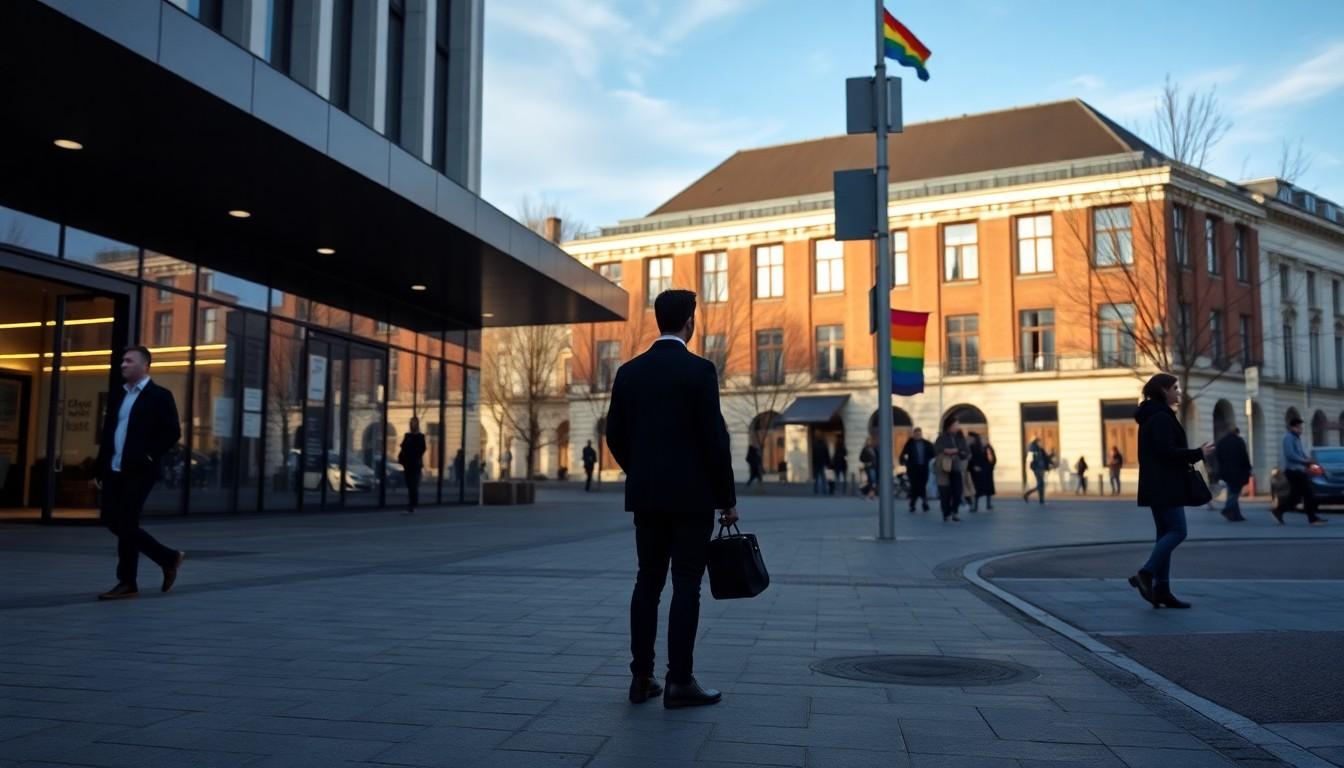
Researchers and campaigners are looking more closely at why LGBTQ+ acceptance can weaken even where legal protections remain strong. Across the Netherlands and beyond, religion, age, education, community ties and political attitudes all appear to shape public views, making the picture more complicated than a simple march towards greater tolerance.
Essential Takeaways
- Acceptance isn't guaranteed: Legal recognition can coexist with social unease or open hostility.
- Religion can matter: Research often finds links between religious commitment and less supportive views, although communities differ widely.
- Age divides remain visible: Younger adults tend to be more accepting, while older generations are often less comfortable with homosexuality.
- Attitudes vary globally: Western Europe is generally more supportive than many other regions, but differences within countries remain significant.
- Local context counts: Education, ethnicity, political identity and personal contact can all influence opinion.
The legal gains are real, but they're not the whole story
The Netherlands has long been associated with LGBTQ+ rights, yet public acceptance isn't a fixed national trait. A country can offer marriage equality and legal protection while some people still face coldness at work, hostility in public or silence at home.
That distinction matters because laws shape behaviour and institutions, but they don't instantly rewrite private beliefs. Research published in the Netherlands has also examined how support and opposition shifted after same-sex marriage was introduced, showing that legal change can clarify existing divisions rather than make them disappear.
The result is a more uncomfortable, but more useful, picture. Progress can be genuine while attitudes remain vulnerable.
Why religion enters the conversation
Religion is often mentioned in discussions about homosexuality, but broad labels can hide as much as they reveal. Studies comparing countries have found that religious commitment is associated with attitudes towards homosexuality, particularly where traditional moral teachings carry strong social influence.
That doesn't mean every religious person is opposed to LGBTQ+ people, or that every faith community responds in the same way. Belief, practice, interpretation and community culture can pull in different directions. Some congregations have become increasingly welcoming, while others continue to frame homosexuality as incompatible with their teachings.
A major international Pew Research Centre comparison found that views differ sharply between countries, with religion forming one possible part of a wider explanation. Politics, economic conditions and social norms are mixed into the same stew.
Contact can soften views, but it isn't magic
Personal familiarity often helps. People who know someone who is gay or lesbian tend to be more accepting, a pattern identified in social-science research over many years. A colleague, neighbour, friend or family member can turn an abstract argument into an ordinary human relationship.
Still, contact doesn't automatically dissolve prejudice. It works best when the relationship is genuine and when wider institutions reinforce respect. If someone belongs to a social environment where hostile jokes or exclusion are normal, one positive relationship may not be enough to overcome the group pressure.
That helps explain why public opinion can feel inconsistent. Someone may express support in principle but remain uncomfortable with visible affection, gender nonconformity or LGBTQ+ rights in schools.
The age gap tells only part of the story
Younger people are generally more accepting of homosexuality than older adults, according to international polling. That gap reflects changing education, media representation, family life and the growing visibility of LGBTQ+ people in everyday culture.
But age is also a shorthand for experience. Older generations grew up when homosexuality was less visible and, in many places, more heavily stigmatised. Younger adults have had more opportunities to encounter LGBTQ+ people openly, although online polarisation can now introduce a different kind of pressure.
Global comparisons show just how uneven the landscape remains. Western European societies tend to be among the most accepting, while attitudes are considerably less supportive in several other parts of the world. Even within a relatively liberal region, progress isn't experienced equally.
What could reverse a decline in acceptance?
A fall in acceptance should be treated as a warning rather than a statistical curiosity. Researchers have linked attitudes to political identity, education, religiosity, cultural background and social contact, so any response needs to be broader than a single awareness campaign.
Schools, workplaces and public institutions can help by making respectful behaviour clear and consistent. Better representation matters too, but it works best alongside safe opportunities for people to meet and understand one another. Policy can protect rights, while community work helps make those rights feel real.
The human lesson is simple: tolerance isn't something a country earns once and keeps forever. It has to be practised, explained and defended, especially when public debate becomes sharper.
Small shifts in opinion are worth noticing before they become everyday hostility.
Source Reference Map
Story idea inspired by: [1]
Sources by paragraph:
- Paragraph 1: [2], [4]
- Paragraph 2: [6], [7]
- Paragraph 3: [3], [5]
- Paragraph 4: [2], [4]
- Paragraph 5: [3], [5]
- Paragraph 6: [2], [7]
- Paragraph 7: [4], [6]
- Paragraph 8: [2], [3]
- Paragraph 9: [4], [7]
- Paragraph 10: [5], [6]
- Paragraph 11: [2], [4]
- Paragraph 12: [3], [7]
- Paragraph 13: [2], [4]
- Paragraph 14: [5], [6]
- Paragraph 15: [3], [7]
- Paragraph 16: [2], [4]