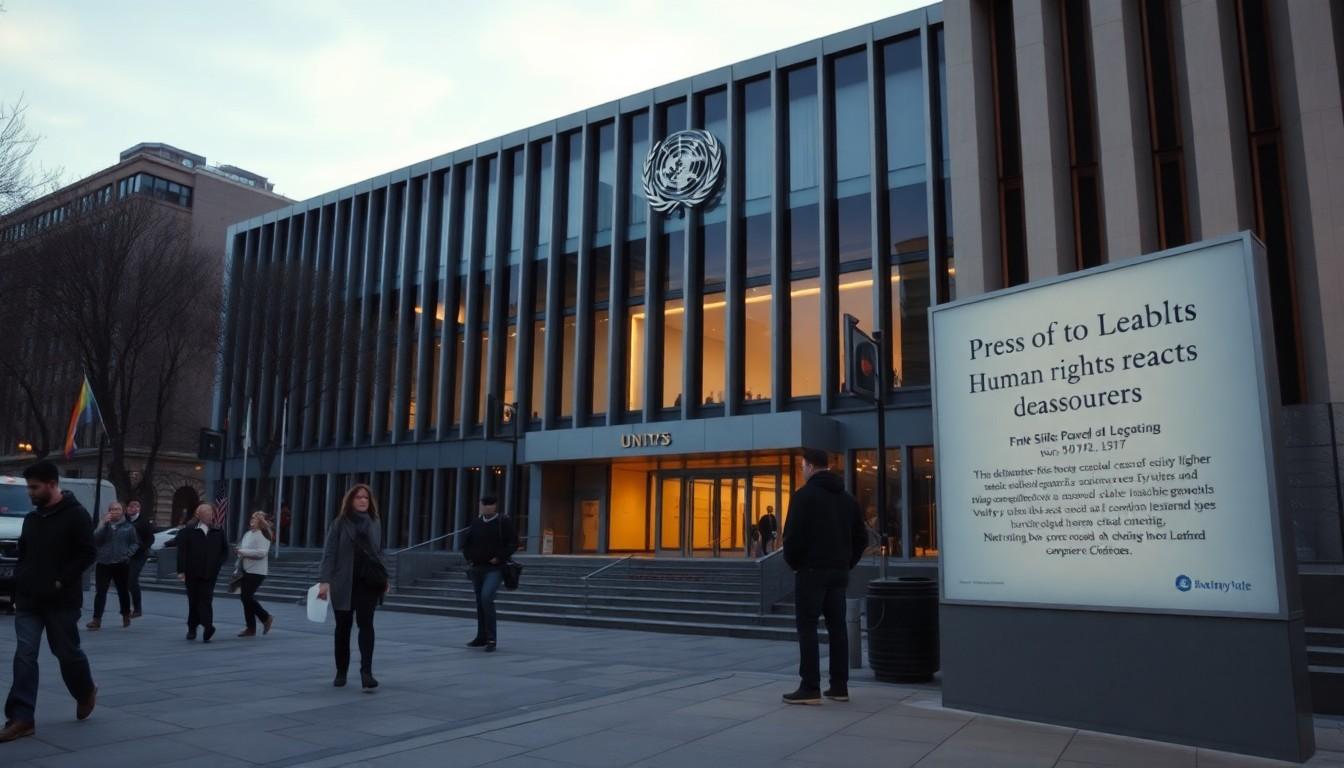
UN human rights officials are warning that LGBTQ rights face a broad and intensifying assault, from discriminatory laws to hate-fuelled rhetoric. The message matters far beyond diplomatic circles: governments, campaigners and communities are being urged to defend equality as a universal human-rights issue, not a culture-war bargaining chip.
Essential Takeaways
- The warning is global: UN officials describe pressure on LGBTQ people across regions, rather than in one isolated political dispute.
- Rights are interconnected: Attacks on LGBTQ equality can weaken wider protections against discrimination and violence.
- States have responsibilities: Governments are urged to protect people, investigate abuses and challenge hate speech.
- The debate is not “Western”: UN messaging rejects the idea that LGBTQ rights are an imported political project.
- Progress remains fragile: Legal gains can be undermined quickly when hostile rhetoric becomes normalised.
The UN says the backlash is becoming harder to ignore
The latest warning lands with the force of a smoke alarm in a crowded building. UN human rights officials say LGBTQ people are facing coordinated pressure through restrictive laws, public hostility and attempts to roll back protections, according to JURIST and other reporting on the UN statement.
That matters because the issue isn't simply about one parliament, one court or one headline. When leaders portray LGBTQ people as a threat, the language can travel quickly from speeches into classrooms, workplaces and public services. The UN's intervention is therefore both a warning and a reminder that equality needs active protection, not just sympathetic words.
Why the phrase “universal rights” matters
A familiar argument says LGBTQ rights belong to a particular Western political tradition. UN officials have repeatedly pushed back against that claim, describing freedom from discrimination and violence as rights held by every person, regardless of nationality, religion or culture.
A 2018 address by the UN human rights chief directly challenged the idea that LGBTQ equality is a foreign agenda. The point is refreshingly straightforward: governments don't get to pick and choose who counts as fully human. That principle also appears in the UN's dedicated LGBTQ information, which links protection from discrimination to the broader international human-rights framework.
Hate speech can make everyday life feel unsafe
The political language around LGBTQ people isn't harmless background noise. UN leaders have urged governments and communities to stand against hate, warning that hostile narratives can encourage exclusion, harassment and violence, according to UN coverage of calls to oppose anti-LGBTQ hatred.
For someone already weighing whether it's safe to hold a partner's hand, report abuse or come out at work, that atmosphere can feel physical. The practical consequences show up in housing, healthcare, education and employment, where fear can push people to stay silent or avoid services altogether.
What governments are being asked to do
The UN's message is not limited to symbolic solidarity. States are expected to review discriminatory laws, protect people from violence, investigate abuses and ensure that public institutions treat LGBTQ citizens fairly. That includes tackling online hatred as well as misconduct by officials or private actors.
There is also a communications challenge. Officials who speak about LGBTQ people in measured, factual terms can help lower the temperature, while sensational claims often reward outrage. As Global Issues and The Amargi report, the UN frames attacks on LGBTQ people as part of a wider assault on human rights, making the response a matter for institutions, not only campaign groups.
The outlook: progress needs defending
The political weather is unsettled, but the warning also shows that LGBTQ rights remain firmly on the international agenda. The UN's public resources and statements give campaigners a shared language for challenging discrimination, even when domestic politics become noisy or openly hostile.
The more useful question now is what happens after the statement. Will governments fund protections, train public services and support people facing violence, or will equality remain a promise on paper? For LGBTQ communities, the difference is felt in ordinary moments, often quietly, every day.
Protecting LGBTQ rights means protecting the basic idea that everyone deserves safety, dignity and a voice.
Source Reference Map
Story idea inspired by: [1]
Sources by paragraph: