Audiences are stepping into Taylor Mac and Matt Ray's Songs from Bark of Millions for a glittering, unruly lesson in queer history. With live music, extravagant costumes and tributes stretching from ancient myth to modern activism, the performance turns a concert into a joyous communal celebration, even when the sound gets a little too loud.
Essential Takeaways
- A queer historical parade: The song cycle honours figures including Marsha P. Johnson, Audre Lorde, James Baldwin and Storme DeLarverie.
- Big theatrical energy: Matt Ray leads a live band while Taylor Mac hosts in spectacular, brightly coloured costumes.
- A wide musical range: Songs move between rock, gospel, disco, hip hop, balladry and theatrical showmanship.
- Expect visual overload: Machine Dazzle's designs include towering headpieces, feathered silhouettes, masks and surreal accessories.
- It's a substantial experience: The wider Bark of Millions project runs for more than four hours, while this concert version lasts around two and a half hours.
A queer history lesson with a beat
The evening begins with the title song, drawing on the ancient Egyptian image of a divine boat carrying the sun through the sky. It's a fitting launchpad for a production interested in cycles, survival and the stubborn return of light after darkness.
From there, the performance becomes a fast-moving roll call of queer heroes. Marsha P. Johnson receives a lively number that blends the snap of hip hop with the theatrical bounce of Gilbert and Sullivan. The effect is both celebratory and slightly mischievous, as if history has been given better lighting and a much louder backing band.
The Guardian described Bark of Millions as a bombastic queer history told through dozens of songs, and that scale is central to its appeal. This isn't a quiet lecture with a few musical interludes. It's history in sequins, feathers and full voice.
Taylor Mac and Matt Ray make history feel communal
Taylor Mac's role is part host, part storyteller and part ringmaster. The invitation is clear: audiences aren't simply watching a catalogue of names, they're being encouraged to feel more connected to queer lives, struggles and traditions by the time they leave.
Matt Ray anchors the production from the piano and musical direction, while the company brings a strikingly varied sound. Audre Lorde's tribute leans towards gospel, Storme DeLarverie's song has a gentle rhythmic sway, and Greta Garbo's number shifts from ballad to disco with delicious theatrical ease.
That variety keeps the evening moving. Even when a lyric turns mournful, the show rarely loses its sense of pleasure. As Stage and Cinema's coverage of the Boston presentation suggests, the piece works best when its historical ambition and its concert energy meet in the same moment.
Machine Dazzle's costumes are half the spectacle
You could spend the entire night watching the costumes. Mac appears in a riot of pink, complete with clown-like footwear, glittering leggings and ruffles that seem determined to escape in every direction.
Machine Dazzle's designs push the performers into a world of visual fantasy. A balloon rainbow rises above one look, masks become part of a skirt, and another headpiece appears to erupt with chips. Heather Christian's feathered purple ensemble and silver bird headdress give the stage a dreamlike, almost mythological quality.
BroadwayWorld's listing highlights the production's large ensemble and fantastical costume design, and that visual abundance is more than decoration. Each performer arrives with an instant character, turning historical references into living, moving tableaux.
The songs honour icons, activists and outsiders
The strongest passages are often the most personal. A plaintive tribute to Morgan Jenness, Mac's longtime activist and dramaturg, brings a noticeably tender change of temperature, with bowed strings creating a ghostly, intimate atmosphere.
Elsewhere, the evening honours James Baldwin through a soulful, sermon-like performance, while Chavela Vargas is remembered in Spanish. Le Gateau Chocolat brings warmth and gravity to the story of Area Scatter, a figure associated with transformation and celebration rather than punishment.
The show also makes room for humour. A Margaret Cho song becomes a celebration of making your own party when nobody else has prepared one, while Machine Dazzle's exaggerated comic suffering provides a welcome release from the heavier material. That balance matters. A history built entirely from solemnity would feel narrower; here, laughter becomes part of the resistance.
What to know before you book
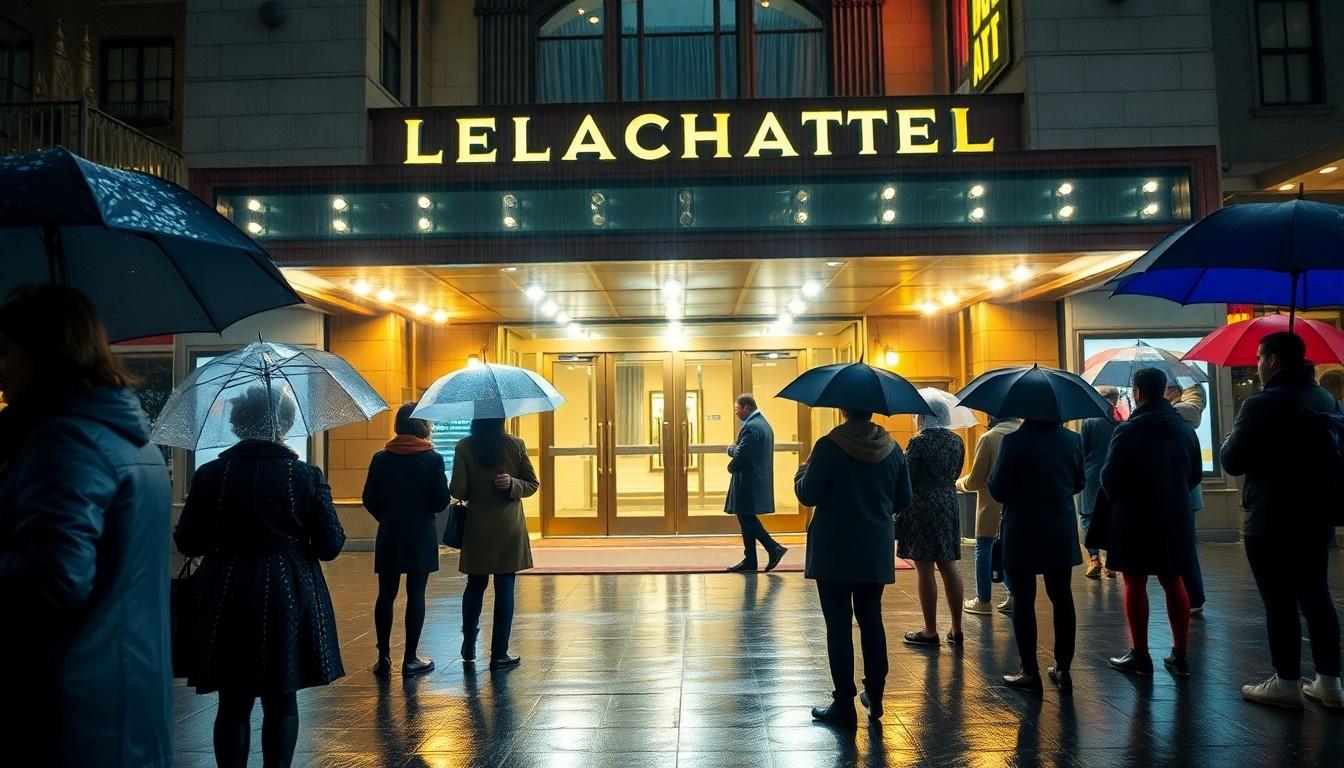
This is not a minimalist recital. The company is large, the costumes are huge and the musical arrangements can be forceful. The New York performance was staged outdoors, which added an element of adventure when rain threatened the evening and the performers carried on beneath open tents.
There are practical caveats, too. The sound can overwhelm the lyrics, particularly when the full band and ensemble are firing at once. Bright lighting is also directed towards the audience, so those who are sensitive to glare may want to prepare for a few uncomfortable flashes.
Still, the scale is part of the point. Bark of Millions began as a much longer rock opera and performance spectacle, first presented at the Sydney Opera House before travelling to BAM. A book based on the project is scheduled for publication in 2026, extending its archive beyond the stage.
A joyful invitation to remember differently
Songs from Bark of Millions doesn't offer a neat timeline or a tidy academic survey. Instead, it creates a noisy, generous gathering where ancient figures, artists, activists and contemporary performers share the same musical universe.
That may be the show's most powerful idea. Queer history isn't presented as a museum display behind glass; it's sung, danced, teased and carried forward by a living company. For audiences ready for spectacle with a beating heart, Taylor Mac and Matt Ray have made a celebration that's difficult to forget.
Explore the performance if you want queer history served with music, mischief and plenty of glitter.
Source Reference Map
Story idea inspired by: [1]
Sources by paragraph: