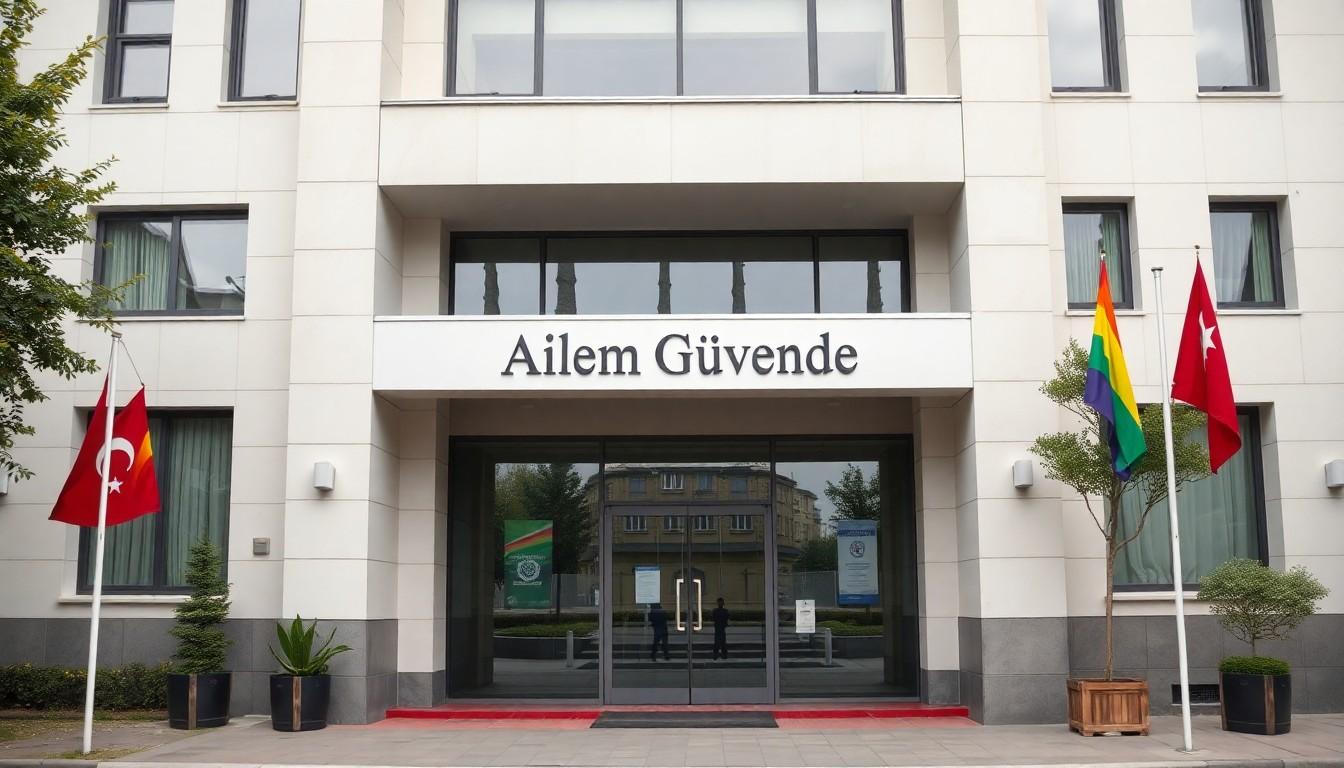
Turkey’s “Ailem Güvende” operations have put LGBT organisations, venues and activists at the centre of a widening debate about family policy, civil liberties and political polarisation. Critics argue that protecting families means tackling economic hardship, domestic violence and insecurity, not targeting people because of their identity or private lives.
Essential Takeaways
- The campaign’s stated aim: Authorities have presented “Ailem Güvende”, meaning “My Family Is Safe”, as a defence of family and social order.
- Critics’ concern: LGBT groups and opposition figures say the operations amount to pressure on minority identities and civil society.
- The wider context: Rising living costs, housing problems and domestic violence are among the issues directly affecting families.
- Why it matters: The debate reaches beyond LGBT rights, touching on due process, freedom of association and Turkey’s increasingly polarised politics.
A family-safety campaign with a much wider impact
The most striking feature of the “Ailem Güvende” operations is the gap between their public message and their practical effect. A slogan built around safety sounds reassuring, but raids, arrests and pressure on LGBT organisations create a very different atmosphere for people already living under scrutiny. Reports described action across multiple cities, involving associations, venues and community networks. According to Yolculuk, the operations extended to LGBT organisations and entertainment spaces in 15 provinces. [5]
That contrast has made the campaign a flashpoint. Supporters of the government’s approach frame it as a defence of traditional family life, while critics see a political effort to define one acceptable way of living. Bianet reported that officials linked the measures to arguments about family and social order, language that has become increasingly prominent in Turkey’s public debate. [6]
The issue isn't simply whether governments may discuss family policy. They clearly can. The harder question is whether that policy protects people from harm, or turns a minority group into a convenient symbol of social decline.
LGBT organisations become the latest target in a polarised debate
Turkey's LGBT community has long faced a difficult public climate, but recent rhetoric has pushed identity and private life further into political conflict. Opposition figures have questioned why LGBT organisations are being treated as a threat to families when the constitution and criminal law do not ban homosexuality, bisexuality or transgender identity. The criticism is that enforcement is being used to stigmatise lawful association rather than address a clear public danger.
The debate has also attracted international attention. El Pais reported that members of Turkey's LGBT community felt they had been cast as an enemy while the country faced serious economic and political pressures. [7] That perception matters because public campaigns often shape daily life as much as formal legislation does. A community can feel excluded long before a law explicitly removes its rights.
There is also a distinctly Turkish irony here. The country has historically embraced prominent performers whose public identities challenged conventional expectations, even if social acceptance was uneven. That cultural memory sits uneasily beside a newer political language that treats LGBT visibility as an organised threat.
What actually puts Turkish families under pressure?
If the goal is genuinely to make families safer, the most urgent problems are rather less theatrical than a police raid. Household finances, rising rents, insecure employment and unaffordable living costs can place enormous strain on relationships. Critics of the government argue that these pressures deserve more attention than claims about LGBT organisations causing family breakdown. [4]
Domestic violence and abuse are even more direct threats. Protecting spouses and children requires reliable prevention, effective investigations, safe shelters and a justice system that people can trust. It also requires acknowledging that danger often comes from within the home, not from a minority group outside it.
The same applies to drug trafficking and organised crime. A family is unlikely to feel secure when neighbourhoods are affected by criminal networks, economic desperation or weak institutions. In that sense, the most persuasive family policy would be practical and unglamorous: affordable housing, accessible support services, protection from violence and dependable legal safeguards.
Why due process belongs in the family debate
The controversy also raises questions about arrests, detention and the treatment of civil society. When activists, organisers, journalists or elected officials are imprisoned, the consequences rarely stop with the individual. Parents, children, partners and wider families can be left dealing with financial pressure, stigma and sudden separation.
Opposition politicians have made this point while criticising the operations. Haberler reported comments from DEM Party figures who challenged the idea that targeting LGBT circles could be described as protecting families. [4] The argument is broader than party politics: a government cannot credibly present itself as the guardian of family life while disregarding the effects of prolonged detention and legal uncertainty on families themselves.
Associated Press reporting has also helped place the Turkish measures within a wider international discussion about LGBT rights, state power and democratic freedoms. [2] Due process may sound like a dry legal principle, but it becomes intensely personal when someone doesn't come home, a child loses contact with a parent or a household suddenly loses its main income.
The argument is likely to continue
The “Ailem Güvende” campaign is unlikely to settle the question of what family protection should mean in Turkey. Instead, it has sharpened a much older dispute over whether national unity is built through shared rules and mutual respect, or through pressure to conform.
Critics say families are not made safer by treating LGBT people as a public enemy. They argue that a secure society must protect people regardless of their identity, beliefs or private lives, while confronting violence, poverty and organised crime directly. Elmuhabir’s coverage reflected the intensity of the reaction around the operations and the concern that LGBT groups were being targeted under a family-protection banner. [3]
For many readers, that may be the most uncomfortable part of the story. Family is not a single template, and protecting it should not require making another group feel unsafe. A healthier approach would begin with a simple principle: people are safer when their rights are secure.
A family is strongest when safety means protection for everyone, not conformity imposed on some.
Source Reference Map
Story idea inspired by: [1]
Sources by paragraph: