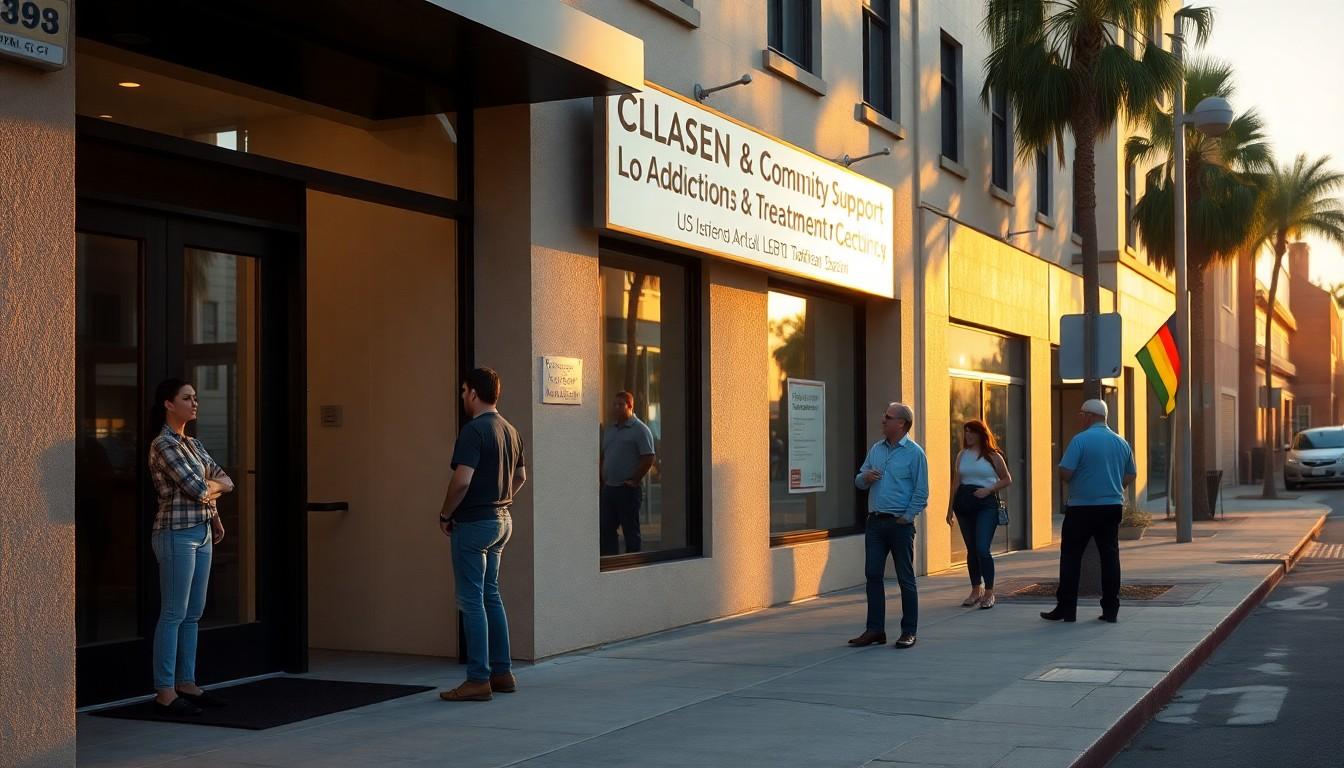
People seeking addiction treatment can feel invisible when services assume everyone is straight, gay or lesbian. For bisexual adults, that gap matters: research links identity-based stress and erasure with higher substance-use risks, anxiety and depression. More inclusive, dual-diagnosis care offers a clearer route to recovery without asking anyone to edit who they are.
Essential Takeaways
- Erasure has a cost: Being told to “pick a side” can reinforce isolation and chronic stress.
- Risk is not identity: Higher substance-use rates are linked to minority stress, not bisexuality itself.
- Mental health matters: Anxiety and depression may sit alongside substance use and need treatment too.
- Small details reveal inclusion: Partner-neutral language and flexible forms are useful signs of affirming care.
- The right setting helps: Recovery works better when people aren't busy defending their identity.
When treatment asks people to choose a side
The harm of erasure is often quiet rather than dramatic. It can be a raised eyebrow, an intake form with no suitable option, or the assumption that someone's partner tells the whole story. Over time, those moments can leave a person feeling as though they must repeatedly prove something deeply personal.
Research on bisexual health disparities shows that this is more than an irritating social habit. According to research published in LGBT Health, bisexual adults can experience distinct forms of minority stress, including rejection and pressure from both heterosexual and LGBTQ+ communities. That double bind can make belonging feel conditional, which is exhausting when someone is already trying to recover.
The key point is simple: bisexuality isn't the problem. The stress created by invalidation, isolation and discrimination is where the risk lies.
Why minority stress can increase substance-use risk
Substances can become a form of short-term relief when someone feels watched, questioned or excluded. A drink may quiet the mental replay after another dismissive conversation, while drugs can seem to offer a temporary escape from anxiety or loneliness. The relief doesn't last, of course, but the brain remembers that it arrived quickly.
Studies examining sexual orientation and substance use consistently report higher levels of alcohol and drug-related harm among sexual-minority adults than among heterosexual adults. Work indexed through the National Library of Medicine also highlights how minority stress, stigma and social conditions shape these outcomes.
That context matters because blaming someone's identity misses the mechanism. Effective care needs to ask what the substance is doing for the person, what pressure surrounds them, and whether their support network genuinely feels safe.
Anxiety and depression can tighten the loop
Substance use rarely sits in a neat little box. Anxiety may make sleep difficult, depression may flatten motivation, and both can make social situations feel like hard work. Using a substance to manage one symptom can then intensify the others, creating a cycle that's difficult to break without proper support.
Research in addiction and mental-health literature points to the importance of treating co-occurring conditions rather than focusing only on consumption. According to findings published in Drug and Alcohol Dependence, sexual-minority populations can face overlapping mental-health and substance-use disparities shaped by stress and discrimination.
That's why dual-diagnosis care is so important. Therapy, medical support and recovery planning should address substance use alongside anxiety, depression, trauma or other concerns, rather than waiting for one problem to disappear before treating the next.
The details that show whether a service is genuinely inclusive
A programme doesn't become affirming simply by adding a rainbow logo to its website. The real test is often found in ordinary moments: how staff ask about relationships, whether forms allow self-description, and whether group discussions avoid treating one type of partnership as universal.
A bisexual person shouldn't have to correct a therapist's assumptions before discussing cravings, trauma or relapse risk. Partner-neutral language is a small but meaningful start, while staff training and clear policies show whether inclusion is part of the service or just marketing decoration.
Before choosing a provider, ask how it supports bisexual clients, whether clinicians understand minority stress, and how it treats co-occurring mental-health conditions. The answers can be revealing, especially if staff respond with specifics rather than vague promises.
What a safer recovery plan can include
Affirming treatment may combine evidence-based therapies with practical support around relationships, identity, trauma and community. Depending on the person's needs, that can include cognitive behavioural therapy, dialectical behaviour therapy, trauma-focused work, medication management, peer groups and continuing care after residential treatment.
Research published in the Journal of LGBT Issues and related clinical journals supports a broader view of LGBTQ+ health, one that recognises how discrimination and social context affect treatment access and outcomes. That doesn't mean every bisexual client needs an LGBTQ+-specific programme, but it does mean services should be capable of seeing bisexuality accurately.
Recovery should create room for the whole person, not demand a tidier version for administrative convenience. When someone no longer has to spend energy translating their identity, they can focus more fully on the difficult, hopeful work of healing.
A more inclusive treatment room can make recovery feel possible, not performative.
Source Reference Map
Story idea inspired by: [1]
Sources by paragraph:
- Paragraph 1: [2], [3]
- Paragraph 2: [4], [7]
- Paragraph 3: [3], [5]
- Paragraph 4: [5], [6]
- Paragraph 5: [2], [4]
- Paragraph 6: [3], [6]
- Paragraph 7: [5], [7]
- Paragraph 8: [2], [3]
- Paragraph 9: [4], [6]
- Paragraph 10: [3], [5]
- Paragraph 11: [2], [7]
- Paragraph 12: [4], [6]
- Paragraph 13: [3], [5]
- Paragraph 14: [2], [4]
- Paragraph 15: [5], [7]