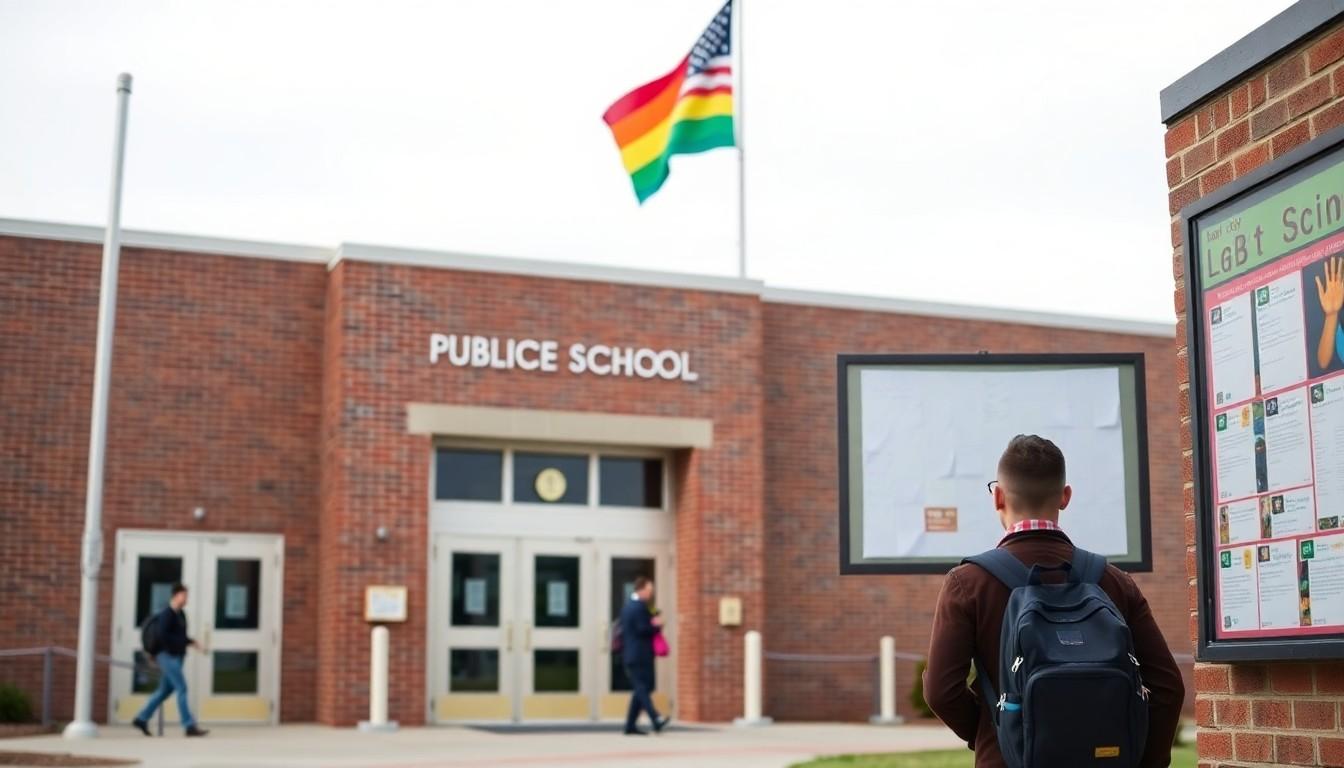
A Washington father is suing Lake Washington School District after his son attended lessons involving LGBTQ+ topics, while the school says the sessions focused on empathy, inclusion and bullying prevention. The case arrives as schools across America grapple with how to balance religious objections, parental rights and the need to make LGBTQ+ pupils feel safe.
Essential Takeaways
- The dispute: Konstantin Averkiev says he wasn't properly notified about lessons involving sexuality and gender.
- The school's account: Officials say the sessions centred on bullying, school belonging and the impact of biased remarks.
- The legal argument: Alliance Defending Freedom claims the district violated religious-freedom and due-process rights.
- The wider backdrop: The case follows the Supreme Court's 2025 decision in Mahmoud v Taylor on religious opt-outs.
- Why it matters: The outcome could influence how schools define LGBTQ+-related teaching and when parents must be offered an alternative.
A classroom lesson has become a constitutional fight
The dispute began with a familiar school concern, but it has quickly moved into much bigger territory. Averkiev says he asked to be told about lessons touching on sexuality and gender, yet only learned about them after his son discussed a classroom session at home.
According to the Alliance Defending Freedom, the father believes the teaching conflicted with his religious convictions. The organisation says he asked for an opt-out and was told that the district allowed exemptions only for state-required sex education. ADF has filed the case on his behalf.
The school district presents a notably different picture. Its communications director, Shannon Parthemer, said the lessons were about empathy, inclusion, bullying prevention and school belonging, rather than a standalone course on sexual health. That distinction may prove central, because the legal question is likely to turn on what pupils were actually taught, not simply how the material was described afterwards.
The school says it was teaching safety, not surgery
Averkiev's lawyers say his son came home talking about gender-change surgeries, a detail that helped trigger the complaint. But the district says pupils examined school-climate information, considered the effects of prejudice and reflected on how to help all children, including LGBTQ+ classmates, feel safer.
That gap in description is more than a public-relations disagreement. A lesson about preventing bullying may mention LGBTQ+ identities without being a lesson in sex education, while a parent may regard any such discussion as instruction on gender or sexuality. In practice, the same classroom activity can look very different depending on where a family draws that line.
The California Department of Education's guidance on related school responsibilities reflects the broader challenge: schools are expected to address discrimination and maintain inclusive learning environments, while families may also have rights connected to specific health or survey content. The Washington case could test how those categories fit together.
Why the Supreme Court's Mahmoud ruling matters
The lawsuit comes after the Supreme Court's 2025 decision in Mahmoud v Taylor, which Cornell Law School's legal materials describe as recognising a right for some religious parents to seek exemptions from lessons containing LGBTQ+ content. That ruling has given campaigners a powerful new legal framework for challenging school policies.
It doesn't necessarily mean that every reference to LGBTQ+ pupils requires an automatic opt-out. The practical questions are likely to include whether the material substantially burdens a family's religious exercise, whether the school gave enough notice and whether an alternative activity would be workable.
That uncertainty is where the case could become important. A ruling that treats inclusion lessons as materially different from sex education could protect schools' anti-bullying work. A broader interpretation could require districts to rethink how they notify families and handle objections.
ADF's wider campaign gives the case extra weight
The Alliance Defending Freedom has become a major force in US religious-liberty litigation, particularly in disputes involving LGBTQ+ rights, education and public services. Its recent Supreme Court record includes high-profile cases such as 303 Creative v Elenis, Kennedy v Bremerton School District and Masterpiece Cakeshop v Colorado Civil Rights Commission.
The organisation's involvement means this is unlikely to remain a local disagreement over one primary-school lesson. ADF's cases often seek principles that can be applied well beyond the individual client, potentially affecting school boards and families across the country.
Cornell's Supreme Court records show how legal battles over religious objections can move from a single institution to a national debate about constitutional boundaries. For educators, that can make ordinary classroom planning feel surprisingly high-stakes.
Parents and schools face an awkward balancing act
Schools will need to be clearer about course descriptions, lesson objectives and notification procedures, particularly where discussions of identity overlap with health education. Parents, meanwhile, may need to distinguish between a formal sex-education unit and a broader lesson on bullying, respect or school climate.
That won't settle every disagreement. A family may object to a lesson even when the school considers it essential to protecting vulnerable pupils, and LGBTQ+ children may feel the consequences if inclusion teaching is treated as optional or routinely removed.
The Supreme Court material and legal commentary surrounding Mahmoud v Taylor point towards a continuing debate over liberal pluralism: how far public schools should accommodate different beliefs while still offering a common, safe education. It's a difficult line, and this Washington lawsuit shows just how quickly it can become a national test case.
The final outcome may turn on a deceptively simple question: was this sex education, or was it anti-bullying teaching that happened to include LGBTQ+ pupils?
It's a small classroom distinction with very large consequences.
Source Reference Map
Story idea inspired by: [1]
Sources by paragraph: