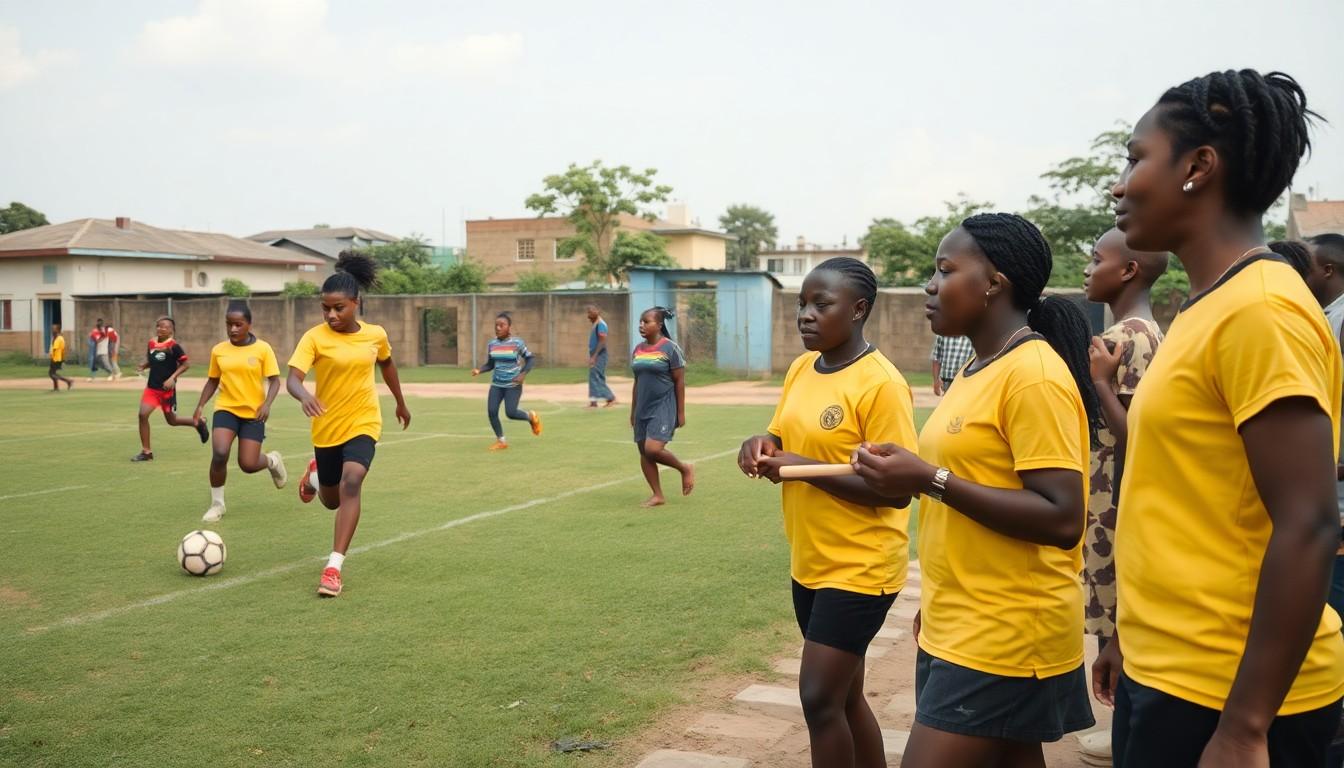
Organisers have turned a Nigerian sports ground into a vivid, joyful meeting place, bringing nearly 100 queer people together in Ibadan for the first Pride Playoffs. With football, races, dancing and friendly rivalry on the programme, the Pride Month event offered something more lasting than a trophy: a visible community tradition in a city rarely centred in stories about queer Nigerian life.
A sports day, but with much more at stake
The field was bright with colour, movement and noise. Four teams, known as houses, wore yellow, green, blue and red, while participants prepared for football matches, relay races, sack races, egg-and-spoon contests and tug-of-war.
Before anyone raced, the houses made an entrance. Participants carried flags, danced, vogued and performed choreographed routines, turning the opening parade into a celebration in its own right. The atmosphere sounded less like a formal tournament and more like a party that happened to have a scoreboard.
That sense of ease mattered. According to Autostraddle's photo essay, the gathering took place against a backdrop of legal restrictions and hostility towards queer people in Nigeria, giving the event a significance far beyond ordinary community sport.
Six women build a new queer tradition
The Pride Playoffs were organised by a collective of six women who wanted to create a Pride Month gathering in Ibadan. Their idea was deliberately community-led, placing queer people from the city and surrounding area at the centre of the event.
Ibadan doesn't always feature prominently in international accounts of Nigeria's queer life, which often focus on larger cultural hubs. That made the decision to host a full-day event there especially meaningful. Community is not only something that happens in the most visible cities.
The organisers' plans don't end with the inaugural competition. They intend to make the Pride Playoffs an annual gathering, offering participants the reassuring promise that this wasn't a one-off afternoon but the beginning of a tradition.
Where competition met camaraderie
There was plenty of proper sporting drama. Teams competed fiercely, argued over points and celebrated loudly when a runner crossed the line or a match went their way. Yellow House eventually finished as overall champion, taking home the first trophy.
Yet the strongest images from the day were just as likely to come from the sidelines. People shared food, posed for photographs, encouraged teammates and made new connections between events. The games gave strangers an easy reason to talk, laugh and pull together.
That combination is part of what makes queer sports gatherings so powerful. They offer competition without requiring anyone to shrink themselves to fit in. A football pitch becomes a meeting point, a dance floor and, for a few precious hours, a place where people can simply be present.
Why visibility looks different in Nigeria
Pride is often pictured through marches, parties and political rallies, but the Pride Playoffs show another route to visibility. Running a race, painting a face, joining a relay or cheering from the edge of the pitch can all become acts of presence when safe public gathering isn't guaranteed.
The event also pushes back against a narrow narrative in which queer Nigerian life is described only through danger. Those risks are real and shouldn't be softened, but joy is part of the picture too. So are friendship, silliness, athletic ambition and the pleasure of arguing over a game.
Related queer cultural scenes in Lagos and elsewhere have similarly shown how people create their own spaces, often with creativity and care. The Ibadan event adds a sporting language to that wider story, proving that celebration doesn't have to look the same everywhere.
What the Pride Playoffs could mean next
The most encouraging detail is the plan to return. In places where queer spaces can be temporary or difficult to sustain, an annual event can provide a useful anchor. People know when to expect it, organisers can build on what worked and newcomers have a clear doorway into the community.
For anyone hoping to create a similar gathering, the formula is refreshingly practical: choose accessible games, make room for spectators, build in moments for performance and let teams create their own identity. The colour-coded houses gave the day structure, while the parade and shared rituals made it feel distinctive.
A trophy is nice, naturally. But the bigger win is the tradition itself, and the knowledge that queer people in Ibadan can create a sports day that belongs entirely to them.
It's a small-looking sporting event with a wonderfully large sense of possibility.
Source Reference Map
Story idea inspired by: [1]
Sources by paragraph:
- Paragraph 1: [2], [4]
- Paragraph 2: [2], [3]
- Paragraph 3: [2], [5]
- Paragraph 4: [2], [6]
- Paragraph 5: [2], [7]
- Paragraph 6: [2], [4]
- Paragraph 7: [2], [3]
- Paragraph 8: [2], [7]
- Paragraph 9: [2], [4]
- Paragraph 10: [2], [6]
- Paragraph 11: [2], [7]
- Paragraph 12: [2], [3]
- Paragraph 13: [2], [4]
- Paragraph 14: [2], [5]
- Paragraph 15: [2], [3]