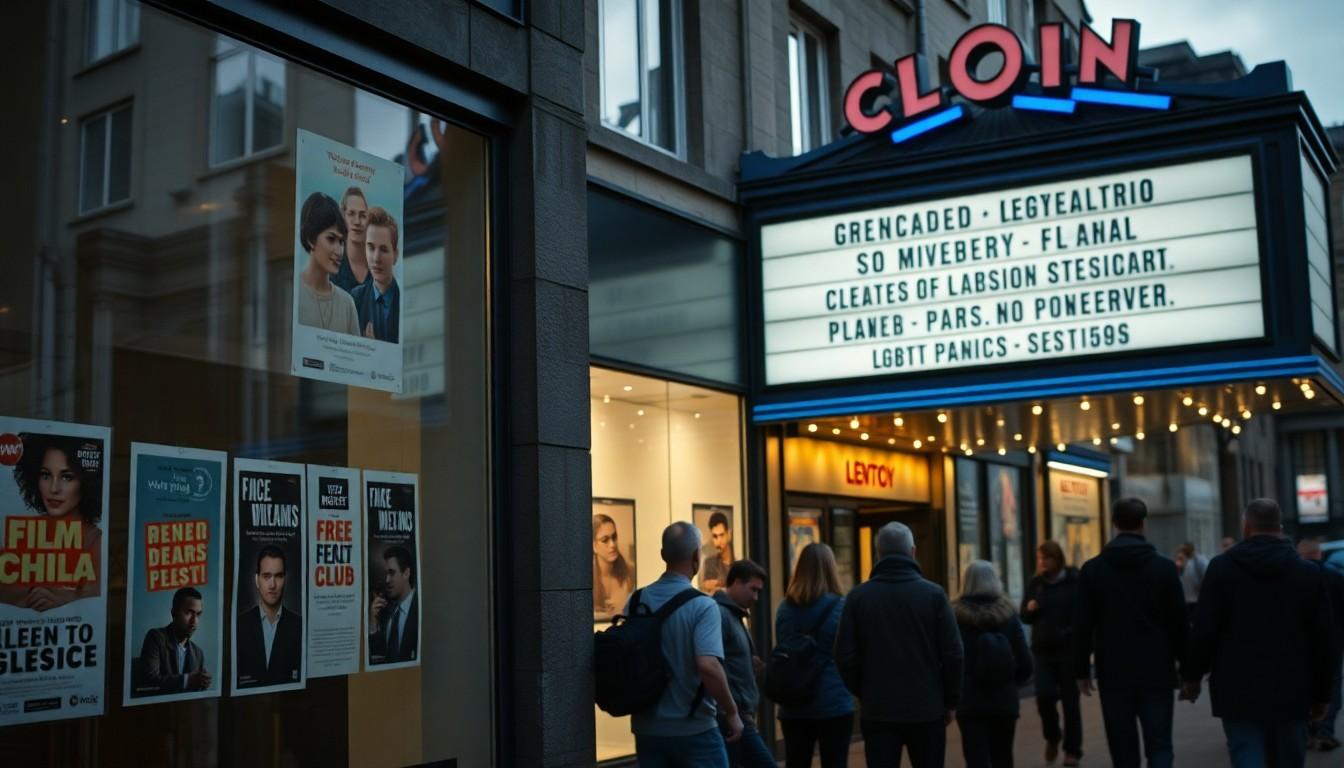
Students, cinephiles and LGBTQ+ audiences are finding a lively new home in Glasgow’s queer film scene, where established festivals and friendly grassroots clubs are creating space for bold stories, local talent and plenty of post-screening chat.
Essential Takeaways
- SQIFF leads the way: The Scottish Queer International Film Festival remains a major fixture in Glasgow’s LGBTQ+ arts calendar.
- Local filmmaking matters: Training, networking and pitch funding are helping queer filmmakers develop work in Scotland.
- Sapphic cinema has found its audience: Sapphic Cinema Club pairs carefully chosen films with an intimate, social atmosphere.
- Bi representation gets its own spotlight: Bi Movies Film Club explores bisexual characters while challenging tired screen stereotypes.
- Access remains central: Affordable tickets, subtitles, content warnings and step-free access help more people take part.
Glasgow’s queer film scene is growing up, and branching out
The strongest sign of a healthy film culture isn't simply a packed screening. It's seeing audiences return, filmmakers meet collaborators and new clubs appear between festival seasons. In Glasgow, queer cinema now feels less like an occasional event and more like a connected community.
SQIFF, or the Scottish Queer International Film Festival, is the scene's established anchor. Its programme brings together international features, Scottish shorts, experimental work and conversations that stretch beyond the cinema itself. The festival's official materials show how its remit has expanded from annual screenings into year-round support for filmmakers and audiences.
That wider role matters. A festival can offer a brilliant few days, but regular groups and development programmes create something more lasting: familiar faces, practical skills and the confidence to make the next film.
SQIFF gives Scottish filmmakers room to experiment
SQIFF has increasingly invested in the people behind the screen, with filmmaking groups, training opportunities and funding initiatives designed to help queer creatives move from an idea to a finished project. According to the festival's own information, supporting filmmakers and building a sustainable queer screen culture remain central to its work.
The approach is refreshingly hands-on. New creators can find collaborators, learn about independent production and share work with audiences already interested in queer storytelling. That can be invaluable in a sector where emerging filmmakers often need community as much as they need equipment.
Its commitment to access is just as important. Sliding-scale or pay-what-you-can pricing, captions, content information and interpretation can make the difference between an event feeling technically open and genuinely welcoming. For anyone choosing queer film events in Glasgow, it's worth checking the access details before booking, particularly if a venue or format is unfamiliar.
Sapphic Cinema Club makes film nights feel personal
Sapphic Cinema Club brings a different energy. Rather than treating queer cinema as a broad label, its programming focuses on films rooted in sapphic lives, histories and artistic perspectives. The result is a sharper curatorial identity, with space for cult favourites, documentaries, archive discoveries and work that rarely receives a mainstream cinema run.
The club's connection with 16 Collective is part of that appeal. The organisation supports LGBTQIA+ and class-marginalised artists, while its wider programme champions experimental practice and community-led culture. That gives the screenings a creative, informal feel rather than the slightly solemn atmosphere that can sometimes surround specialist cinema.
For newcomers, this is a useful entry point. You don't need to arrive with a reading list or an encyclopaedic knowledge of lesbian film history. You just need curiosity, and perhaps enough time afterwards for the conversation to continue over a drink.
Bi Movies Film Club tackles representation with humour
Bi Movies Film Club fills a particularly visible gap by putting bisexual characters and stories at the centre of its programme. Its selections embrace camp, melodrama, horror and other wonderfully unruly corners of cinema, while also questioning the stereotypes that have shaped bisexual representation for decades.
That balance is key. A film can be entertaining and still deserve a critical conversation, especially when bisexual characters have too often been presented as deceptive, indecisive or dangerous. By laughing at familiar tropes while examining where they came from, the club turns a screening into something more generous and useful.
The social side is equally important. Regular events and informal discussion can make an evening feel less like a lecture and more like finding your people. For students arriving in Glasgow, that low-pressure atmosphere may be as valuable as the film itself.
Why these clubs matter when arts spaces feel precarious
Glasgow's queer film organisations are operating during a difficult period for arts venues. Rising costs, changing premises and uncertain funding can force small groups to become nomadic, even when audiences are enthusiastic and events sell out.
That instability makes collaboration especially powerful. Festivals, collectives and film clubs can share audiences, venues, knowledge and creative energy, helping one another build momentum without losing their individual identities. The ecosystem becomes richer when a major festival can sit alongside a tiny themed club or a one-off community screening.
It also explains why attending matters. Buying a ticket, bringing a friend or joining a mailing list isn't just a personal night out. It helps demonstrate that these spaces have an audience, and that queer cinema deserves a reliable place in Glasgow's cultural life.
How to find the right queer cinema night
Start with the format you enjoy. SQIFF is the obvious choice for a broad programme and a festival atmosphere, while Sapphic Cinema Club suits viewers looking for focused curation and intimate discussion. Bi Movies Film Club is ideal if you like camp, complicated representation and a screening that might continue in the pub afterwards.
Check the practical details before travelling, including venue changes, ticket prices, access information and whether a film contains material you may want to prepare for. Following the organisations online is the simplest way to catch new dates, collaborations and calls for filmmakers.
Most importantly, go even if you don't consider yourself a film expert. Glasgow's queer screen scene is built around participation, not performance. As any enthusiastic audience member will tell you, your taste in cinema can remain gloriously chaotic.
Explore the programme that feels most like your kind of night, then stay for the conversation.
Source Reference Map
Story idea inspired by: [1]
Sources by paragraph:
- Paragraph 1: [2], [4]
- Paragraph 2: [5], [6]
- Paragraph 3: [3], [4]
- Paragraph 4: [2], [4]
- Paragraph 5: [5], [6]
- Paragraph 6: [3], [5]
- Paragraph 7: [2], [4]
- Paragraph 8: [5], [6]
- Paragraph 9: [2], [4]
- Paragraph 10: [3], [5]
- Paragraph 11: [6], [7]
- Paragraph 12: [2], [4]
- Paragraph 13: [3], [6]
- Paragraph 14: [2], [5]
- Paragraph 15: [4], [7]