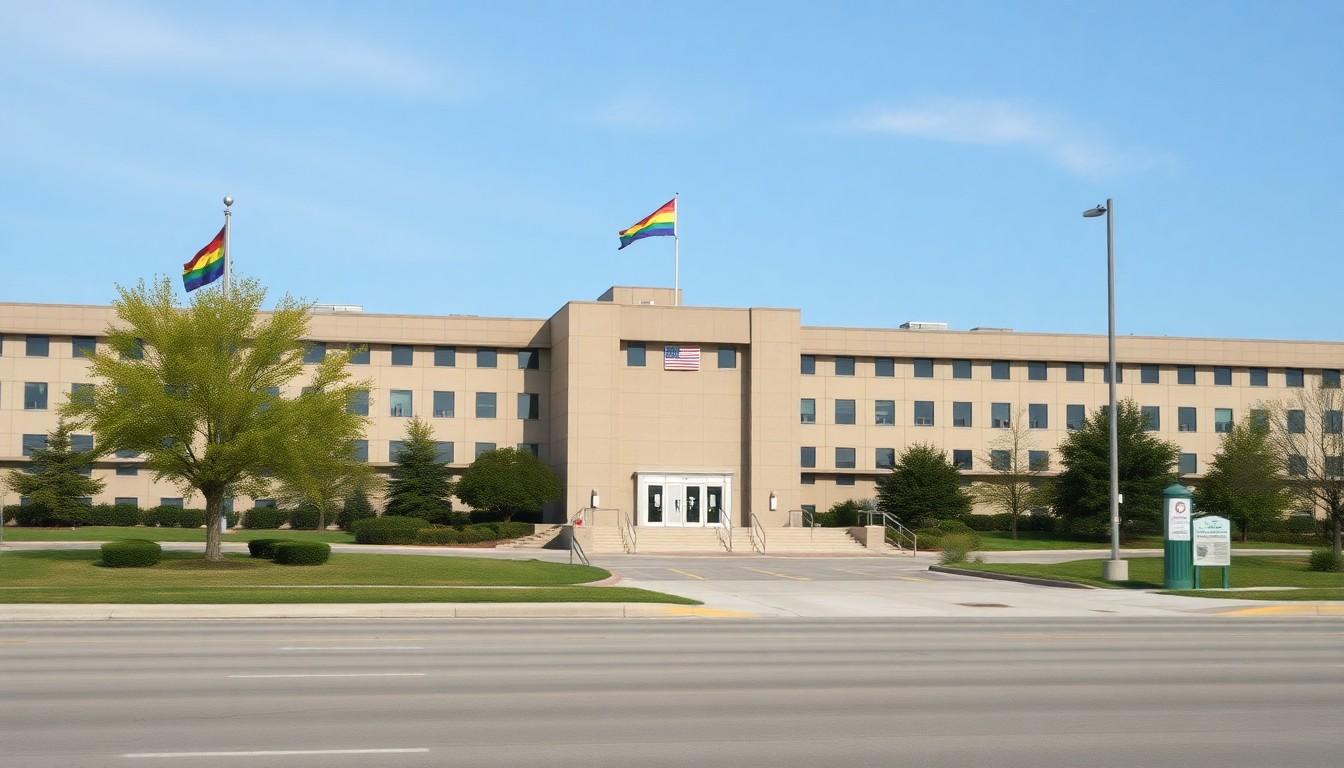
History takes a surprisingly busy turn on 20 September, with milestones spanning exploration, space travel, sport, politics and civil rights. The date marks the end of the US military’s ban on openly gay service members, while also recalling Magellan’s famous expedition, Billie Jean King’s landmark tennis victory and the first successful lunar sample mission.
Why 20 September stands out in history
Some dates gather a remarkable mix of turning points, and 20 September is one of them. According to historical timelines, the day links a pioneering voyage from Spain with scientific progress, democratic change and major cultural moments.
The stories are strikingly varied. One entry is about ships leaving port in search of a spice route; another concerns a spacecraft quietly landing on the Moon. Together, they show how exploration has shifted from oceans to outer space, even as political and social struggles continue on Earth.
A landmark moment for LGBTQ+ service members
One of the most significant modern anniversaries is the 2011 repeal of the US military policy that barred openly gay people from serving. The change formally took effect on 20 September, ending the long-running "Don't Ask, Don't Tell" era.
The policy had allowed gay and bisexual personnel to serve only if they concealed their sexuality. Its repeal was widely seen as an important civil rights milestone, although debates about equality, military culture and discrimination did not end there.
For many service members and their families, the change carried a deeply personal meaning. It meant that honesty about one's life no longer automatically threatened a military career.
From Sanlúcar to the first journey around the world
On 20 September 1519, five ships under Ferdinand Magellan sailed from Sanlúcar de Barrameda in southern Spain. The expedition was searching for a western route to the lucrative spice markets, but it became one of the greatest voyages in maritime history.
Magellan died before the expedition was completed, and Juan Sebastián Elcano eventually led the surviving crew home. The voyage ended three years later as the first recorded circumnavigation of the globe, a feat that reshaped European understanding of the world's geography.
It was also a brutal undertaking, marked by hunger, disease, conflict and enormous loss of life. The romance of the map-making adventure is compelling, but the human cost was immense.
Space, sport and a very different kind of breakthrough
The date also recalls Luna 16, the Soviet spacecraft that successfully landed on the Moon in 1970, collected lunar material and returned it to Earth. It was the first uncrewed mission to achieve that feat, proving that robotic exploration could accomplish what had previously required astronauts.
Four years later, Billie Jean King defeated Bobby Riggs in Houston in the much-publicised "Battle of the Sexes". The match became more than a sporting contest, challenging widely held assumptions about women's athletic ability and helping push gender equality into the mainstream conversation.
King's victory still resonates because it combined sporting skill with a cultural argument. The court was bright, public and impossible to ignore, which made the symbolism almost as powerful as the result.
Political upheaval and difficult memories
Several other 20 September anniversaries carry a much darker tone. In 1974, Hurricane Fifi devastated Honduras, with reports of up to 10,000 deaths. The disaster remains a reminder of how extreme weather can magnify poverty, weak infrastructure and limited emergency resources.
The date also recalls political violence in Central America, the overthrow of Jean-Bédel Bokassa in the Central African Republic, and the delivery of Argentina's Nunca Más report during the presidency of Raúl Alfonsín. The report documented thousands of people who disappeared during the country's military dictatorship.
More recent entries include deadly attacks in Beirut, Islamabad and Kabul. These events sit uneasily alongside celebrations and scientific achievements, but that contrast is precisely what makes historical anniversaries useful: they preserve progress and pain in the same frame.
Birthdays, culture and a changing historical record
20 September is also associated with figures from film, writing and sport, including Italian actor Sophia Loren, Spanish author Javier Marías, Colombian racing driver Juan Pablo Montoya and Spanish tennis player Feliciano López.
The date has cultural milestones too. The first Cannes Film Festival opened in 1946, while Game of Thrones set a record at the Emmy Awards in 2015 after winning 12 prizes. Elsewhere, Greece's Syriza returned to power in 2015, and Latvia voted in favour of joining the European Union in 2003.
Taken together, these anniversaries offer more than a list of facts. They show how a single date can hold ambition, protest, tragedy, entertainment and social change, all waiting for a fresh look.
It's a reminder that history rarely moves in a straight line, and 20 September proves it.
Source Reference Map
Story idea inspired by: [1]
Sources by paragraph:
- Paragraph 1: [2], [3]
- Paragraph 2: [4], [5]
- Paragraph 3: [6], [7]
- Paragraph 4: [2], [3]
- Paragraph 5: [4], [6]
- Paragraph 6: [5], [7]
- Paragraph 7: [2], [4]
- Paragraph 8: [3], [6]
- Paragraph 9: [5], [7]
- Paragraph 10: [2], [3]
- Paragraph 11: [4], [6]
- Paragraph 12: [5], [7]
- Paragraph 13: [2], [3]
- Paragraph 14: [4], [6]
- Paragraph 15: [5], [7]