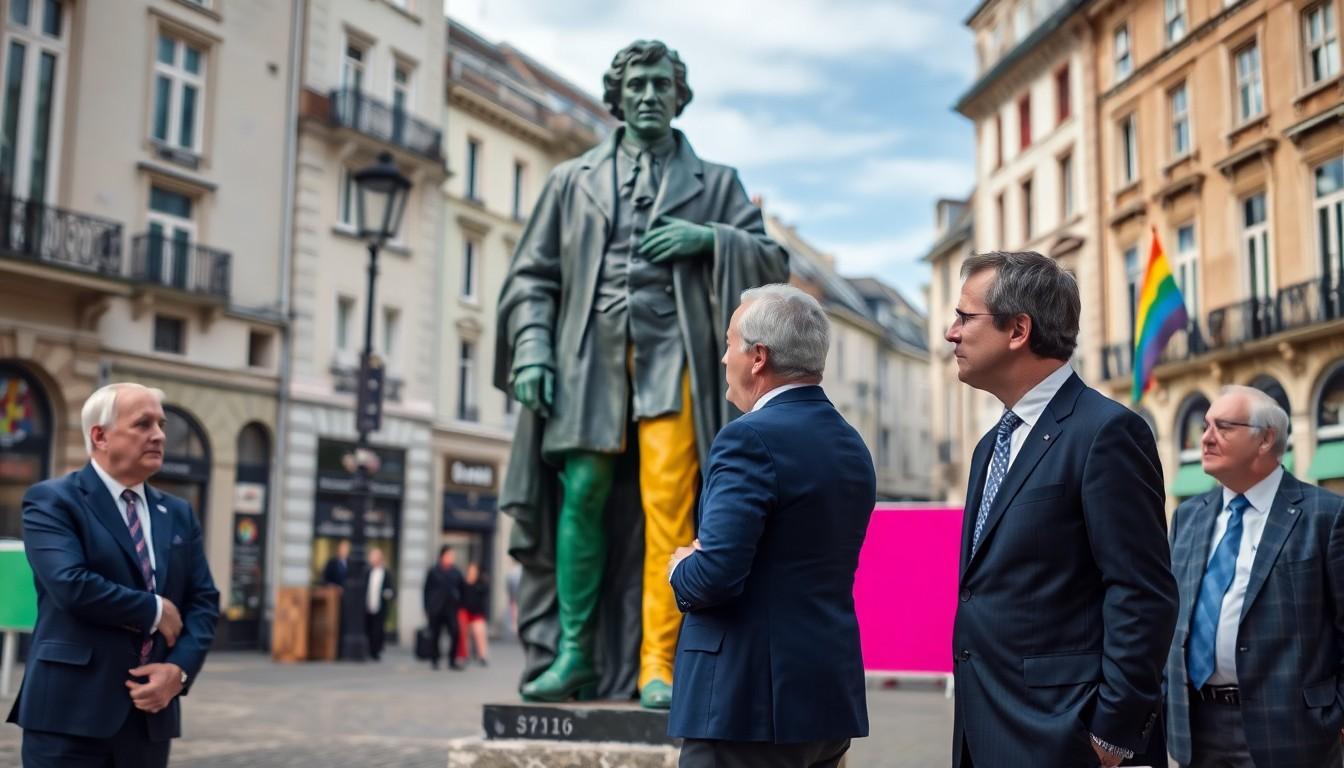
Residents and politicians in Ploiesti are arguing over a rainbow-coloured statue of Caragiale's Domnul Goe near Gara de Sud. What some see as playful urban art, others regard as an unauthorised change to a familiar city landmark, raising questions about approval, public space and culture-war politics.
Essential Takeaways
- The statue was repainted: Domnul Goe now appears in bright rainbow colours, prompting an immediate local backlash.
- Politicians are divided: Local figures have demanded explanations and, in some cases, restoration.
- The artist has responded: The intervention has been defended as a visual statement connected with Ploiesti's rainy identity.
- The bigger issue is permission: Residents still want clarity over who approved the work and whether the statue was officially altered.
- The debate has widened: A small public artwork has become part of Romania's increasingly heated arguments about identity and LGBT symbolism.
A familiar character suddenly becomes a political flashpoint
A bright coat of colour has turned a quiet public landmark into one of Ploiesti's loudest arguments. The Domnul Goe statue, positioned near Gara de Sud, is recognisable to locals and especially familiar to children encountering Ion Luca Caragiale's mischievous character. Now its rainbow finish has made the sculpture impossible to ignore.
Several local reports describe the repainting as the start of a new LGBT-related controversy in the city. The disagreement isn't really about paint alone. It touches on who gets to reshape shared spaces, how public art should be judged and whether a beloved cultural image can be changed without wider consultation.
Why the rainbow has divided Ploiesti
Critics say the statue represents local identity rather than an empty canvas. PNL MP Mircea Rosca called for its restoration, while other political figures portrayed the repainting as an ideological intervention rather than a legitimate artistic act. According to B1 TV and local reporting, the response quickly moved from aesthetic criticism into a broader political dispute.
That shift explains the intensity of the reaction. A rainbow can suggest colour, hope or a familiar weather symbol, but it can also carry clear LGBT associations. In a tense political climate, the same image can look like a cheerful urban flourish to one passer-by and deliberate messaging to another.
The artist offers a different reading
The artist involved has pushed back against the idea that the work was simply political provocation. In comments reported by Observatorul Prahovean, the rainbow was linked to Ploiesti's identity as the city of rain, with the familiar image of colour appearing after a shower.
It's a more playful interpretation than the one dominating the political statements. The phrase "a rainbow is just a rainbow" captures the central problem: public art rarely arrives with only one meaning. Once a symbol is placed on a prominent statue, viewers bring their own experiences, beliefs and anxieties to it.
The real question is who approved the repainting
Whatever people think of the colours, the practical issue is straightforward: was the intervention authorised? Local leaders have asked who approved the work and whether the statue can be modified without permission. Reports from Prahova Libera and other outlets say the approval process remains a key part of the controversy.
That matters more than the online shouting. Councils and artists need a clear route for temporary installations, repainting and community-facing projects. If the work was approved, officials should explain the artistic brief and the decision-making process. If it wasn't, the city needs to say how the alteration happened and what happens next.
A small sculpture, a much bigger argument
The row shows how quickly public art can become a proxy battle. Some politicians have framed the episode as an attack on traditional or Christian values, while others have treated the criticism as another example of culture-war politics. Telegrama and other local publications reported strong condemnation from political voices, underlining just how quickly the dispute escalated.
For residents, though, the most useful outcome would be less dramatic. Ploiesti needs facts, not rumours: a clear account of the repainting, an explanation from the municipality and a decision about whether the colours stay. The city may eventually keep the rainbow, remove it or replace it with a properly approved design. Whichever choice is made, the process should be visible and respectful.
A child seeing Domnul Goe for the first time probably won't care about the political argument. Adults, however, should be able to discuss the artwork without turning every splash of colour into a civic emergency.
It's a bright reminder that public art belongs to everyone, so its rules should be clear to everyone too.
Source Reference Map
Story idea inspired by: [1]
Sources by paragraph: