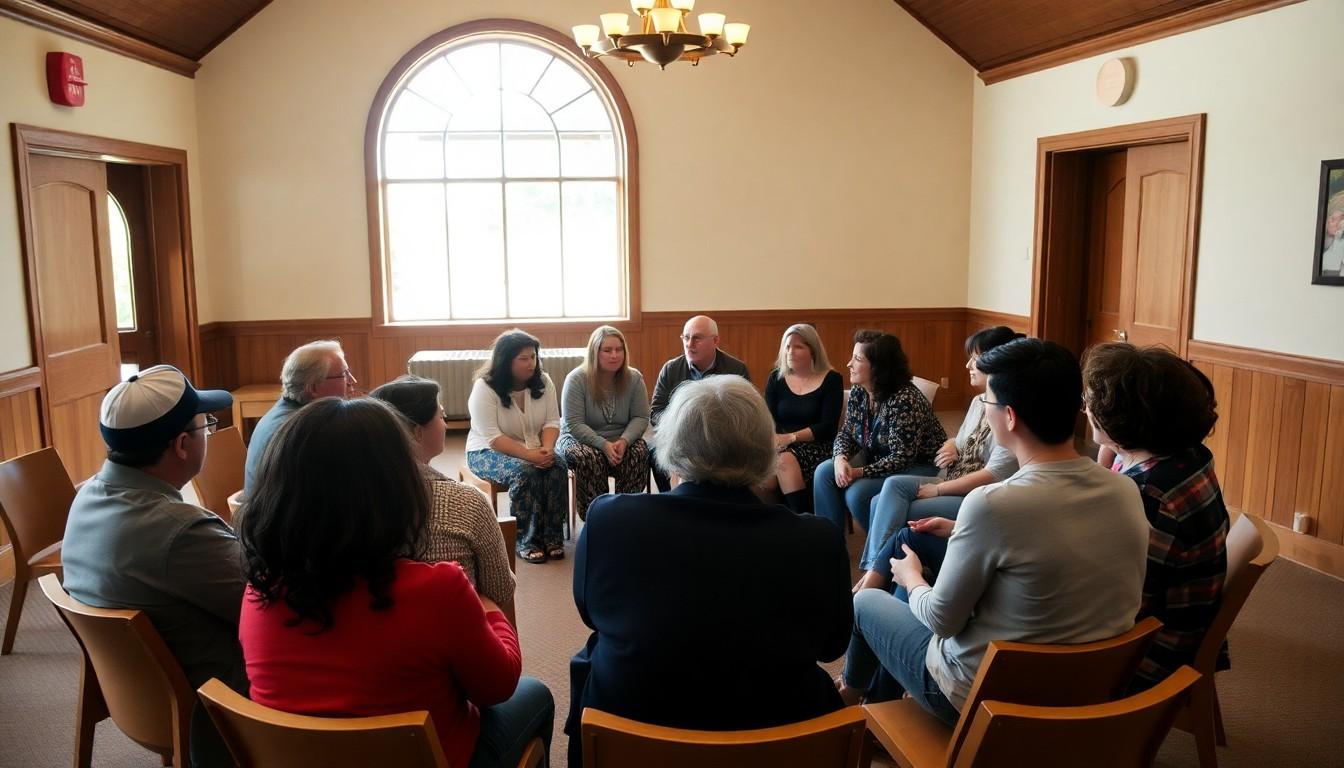
A Portland Torah study group is offering LGBTQ+ Jews a welcoming way to explore scripture, identity and belonging. By reading familiar passages through a queer lens, Congregation Shir Tikvah’s community is challenging the idea that queer people sit outside Jewish history, tradition or faith.
Essential Takeaways
- A Portland gathering: Congregation Shir Tikvah hosts a queer Torah study group for LGBTQ+ Jews and allies.
- Many possible readings: Participants draw on the Jewish tradition that Torah can be understood in numerous ways.
- Fresh questions: The group examines passages without insisting that biblical figures must be labelled with modern identities.
- A healing welcome: Members say open study can replace religious alienation with recognition and community.
- Inclusion is still uneven: Progressive congregations are more welcoming, while Orthodox institutions continue to debate LGBTQ+ participation.
A different way to enter the conversation
The most powerful part of the Portland Torah study group isn't a dramatic reinterpretation of scripture. It's the simple feeling of being invited in.
At Congregation Shir Tikvah, LGBTQ+ participants are encouraged to approach Jewish texts with curiosity rather than the anxiety of trying to prove they belong. The atmosphere turns study into something warm and communal, rather than a test of religious acceptability. Oregon Public Broadcasting reported that the group sees questioning itself as central to Jewish learning.
Rabbi Emerita Ariel Stone, who helped establish the group, described Torah as something that becomes richer when revisited from different viewpoints. That idea gives queer readers room to bring their full selves to the page, including experiences that traditional interpretations may have overlooked.
Why queer readings of Torah matter
The group isn't trying to claim that every biblical character can be neatly assigned a modern LGBTQ+ label. Instead, participants are asking what the stories leave open, what assumptions readers bring to them and whose experiences have been treated as authoritative.
Angel Ya'el Murauskas, a lay leader at the synagogue, pointed to the opening of Genesis as one example. The creation story's early description of Adam can prompt questions about bodies, gender and division before later interpretations settle the image into a familiar shape. It's a small shift in emphasis, but it can make a well-known passage feel newly alive.
The story of Ruth and Naomi also invites discussion about devotion between two women. Their promise to remain together is among the Bible's most emotionally striking expressions of loyalty, and queer readers can engage with that intimacy without needing to force it into one definitive category.
Belonging can be a form of healing
For some participants, the study group offers more than an interesting evening with a text. It provides a correction to years of being told, directly or indirectly, that queerness and religious life are incompatible.
That matters because exclusion often arrives through repetition. A person may hear that their identity is a problem, then encounter the same message in family life, community spaces and religious teaching. A group that says the tradition already contains room for them can interrupt that pattern in a surprisingly profound way.
Congregation Shir Tikvah presents itself as an inclusive Jewish community, with worship, learning and community programmes designed for a broad range of participants. Its approach reflects a wider effort among progressive congregations to make LGBTQ+ inclusion part of everyday religious life, rather than a once-a-year statement of support.
Inclusion looks different across Jewish communities
The Portland example also sits within a much wider and more complicated Jewish landscape. Progressive synagogues may openly welcome LGBTQ+ members, while Orthodox communities continue to negotiate questions of Jewish law, leadership and public recognition.
The divide isn't simply about whether queer people are present. It can involve whether they can marry openly, lead services, study for the rabbinate or participate in organised campus life without being treated as an exception. Those distinctions are why a welcoming study circle can feel both ordinary and quietly significant.
Developments in Orthodox Jewish institutions have shown that change is possible, but often slow and contested. Yeshivat Chovevei Torah's ordination of an openly gay rabbi in 2025 marked a notable moment, while Yeshiva University's recognition of an LGBTQ+ student club followed years of legal and institutional pressure. These steps don't settle the argument, but they show how visibility can gradually alter the boundaries of communal life.
What other faith groups can learn
The Portland model is practical as well as theological. It begins with a familiar activity, studying sacred text, and changes who gets to speak, which questions are welcomed and whose experience counts as relevant.
For communities hoping to create something similar, the details matter. A group needs clear ground rules, thoughtful facilitation and space for disagreement without allowing hostile debate to dominate. It also helps to be honest about the difference between exploring a text and claiming certainty about its original meaning.
Most of all, the group shows that inclusion doesn't have to mean abandoning tradition. Sometimes it means returning to a tradition's own habits of questioning, argument and layered interpretation. For queer Jewish participants in Portland, that can make an old book feel less like a gatekeeper and more like a home.
A welcoming question can sometimes open a door that years of argument left shut.
Source Reference Map
Story idea inspired by: [1]
Sources by paragraph:
- Paragraph 1: [2], [5]
- Paragraph 2: [2], [5]
- Paragraph 3: [2]
- Paragraph 4: [2], [5]
- Paragraph 5: [2]
- Paragraph 6: [2]
- Paragraph 7: [2]
- Paragraph 8: [5]
- Paragraph 9: [3], [4]
- Paragraph 10: [3], [4]
- Paragraph 11: [5], [6]
- Paragraph 12: [7]
- Paragraph 13: [5], [6]
- Paragraph 14: [2], [5]
- Paragraph 15: [2], [5]